
Controversy Erupts Over Renaming of Kennedy Center to Trump-Kennedy Center
In This Article
HIGHLIGHTS
- The Kennedy Center board voted to rename the institution the Trump-Kennedy Center, citing Trump's contributions to its renovation.
- The decision has sparked controversy, with some board members and Kennedy family members disputing the legality and unanimity of the vote.
- Trump had previously replaced the board with allies, who then voted to make him chairman, raising questions about the board's independence.
- Critics argue that the renaming may violate federal statutes that protect the Kennedy Center's status as a memorial.
- The renaming reflects broader efforts by the Trump administration to reshape cultural institutions in Washington DC.
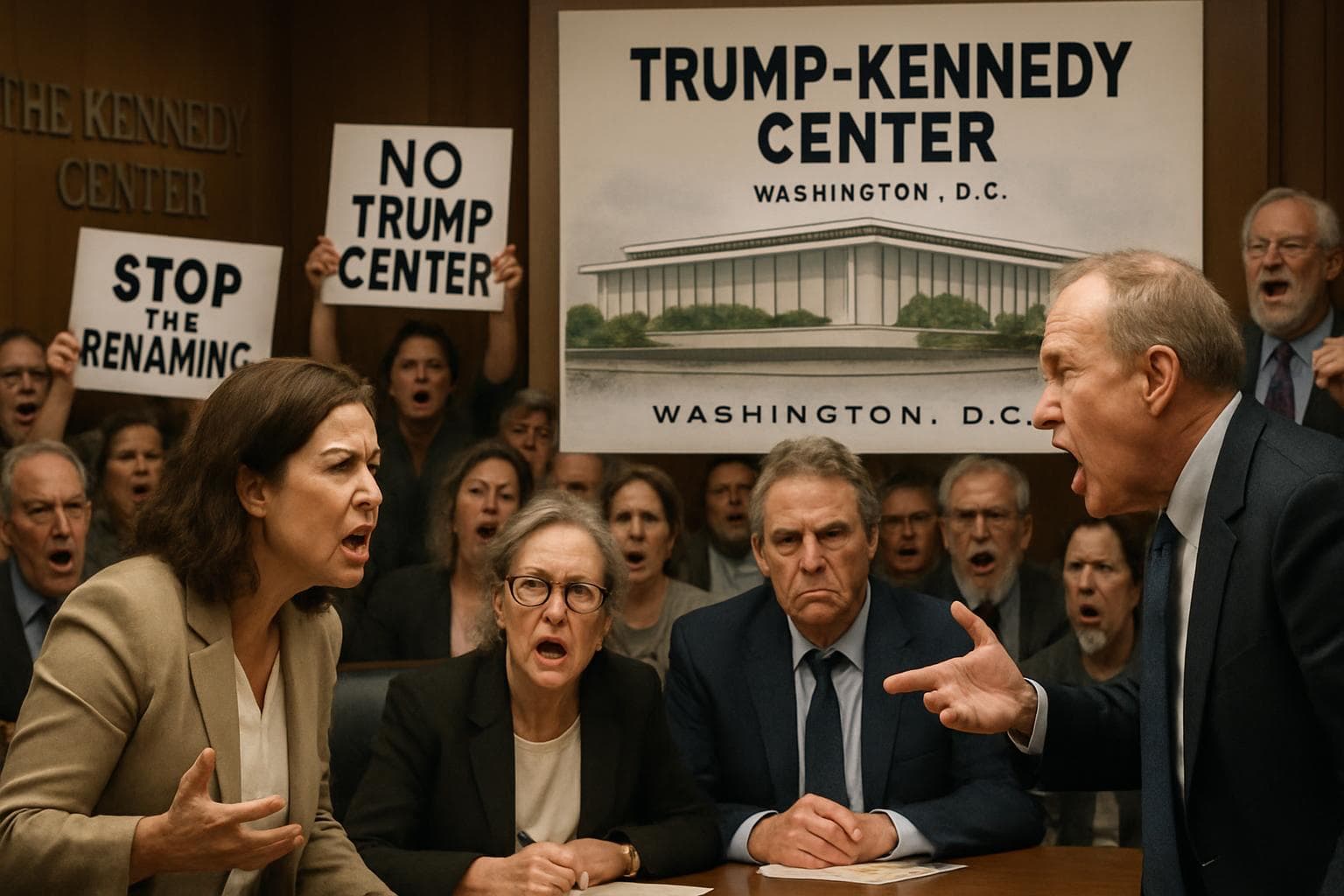
The Kennedy Center, a cornerstone of Washington DC's cultural landscape, is at the center of a heated debate following a board decision to rename it the Trump-Kennedy Center. The White House announced that the board voted unanimously to honor former President Donald Trump for his role in the center's recent renovations. However, this decision has been met with significant opposition from some board members and the Kennedy family, who question both the legality and the process of the vote.
Board Decision and Controversy
The announcement, made by White House Press Secretary Karoline Leavitt, praised Trump for saving the center from financial and physical decline. "This will be a truly great team long into the future," Leavitt stated. However, the claim of a unanimous vote has been contested. Ohio Democratic Representative Joyce Beatty, a board member, alleged she was muted during the vote, preventing her from voicing opposition. Similarly, Jack Schlossberg, JFK's grandson, criticized the decision, emphasizing that the Kennedy Center is a federally protected memorial.
Legal and Cultural Implications
The renaming effort is part of a broader initiative by the Trump administration to influence cultural institutions in the capital. Critics, including Joe Kennedy III, argue that federal law prohibits such changes, likening it to renaming the Lincoln Memorial. The Kennedy Center's establishment as a memorial to President John F. Kennedy is enshrined in federal statute, raising questions about the legality of the board's decision.
Trump's Influence on the Board
Shortly after taking office, Trump replaced the Kennedy Center's board with allies, appointing himself as chairman. This move has been criticized as a takeover, with opponents arguing it undermines the board's independence. The board's current composition includes several Trump administration officials and political allies, further fueling the controversy.
WHAT THIS MIGHT MEAN
The renaming of the Kennedy Center could face legal challenges, particularly if it is deemed to violate federal statutes protecting its status as a memorial. Legal experts suggest that any attempt to enforce the name change may be met with lawsuits from the Kennedy family or other stakeholders. Politically, the decision could deepen divisions in Washington DC, as it reflects broader efforts by the Trump administration to reshape cultural institutions. As the situation unfolds, it remains to be seen whether the board's decision will withstand legal scrutiny or public opposition.
Related Articles
Senate Blocks Resolution to Limit Trump's Military Actions in Iran
Spain's Sánchez Stands Firm Against Trump's Trade Threat Over Iran Stance

US-Iran Tensions Escalate Amid Renewed Nuclear Talks and Protests

Greenland Politely Declines Trump's Hospital Ship Offer Amid Healthcare Debate
Congress Subpoenas Attorney General Bondi in Epstein Investigation

UK-Iran Tensions: Starmer Defends Cautious Approach Amid Trump Criticism
Controversy Erupts Over Renaming of Kennedy Center to Trump-Kennedy Center
In This Article
 Ethan Brooks| Published
 HIGHLIGHTS
- The Kennedy Center board voted to rename the institution the Trump-Kennedy Center, citing Trump's contributions to its renovation.
- The decision has sparked controversy, with some board members and Kennedy family members disputing the legality and unanimity of the vote.
- Trump had previously replaced the board with allies, who then voted to make him chairman, raising questions about the board's independence.
- Critics argue that the renaming may violate federal statutes that protect the Kennedy Center's status as a memorial.
- The renaming reflects broader efforts by the Trump administration to reshape cultural institutions in Washington DC.
The Kennedy Center, a cornerstone of Washington DC's cultural landscape, is at the center of a heated debate following a board decision to rename it the Trump-Kennedy Center. The White House announced that the board voted unanimously to honor former President Donald Trump for his role in the center's recent renovations. However, this decision has been met with significant opposition from some board members and the Kennedy family, who question both the legality and the process of the vote.
Board Decision and Controversy
The announcement, made by White House Press Secretary Karoline Leavitt, praised Trump for saving the center from financial and physical decline. "This will be a truly great team long into the future," Leavitt stated. However, the claim of a unanimous vote has been contested. Ohio Democratic Representative Joyce Beatty, a board member, alleged she was muted during the vote, preventing her from voicing opposition. Similarly, Jack Schlossberg, JFK's grandson, criticized the decision, emphasizing that the Kennedy Center is a federally protected memorial.
Legal and Cultural Implications
The renaming effort is part of a broader initiative by the Trump administration to influence cultural institutions in the capital. Critics, including Joe Kennedy III, argue that federal law prohibits such changes, likening it to renaming the Lincoln Memorial. The Kennedy Center's establishment as a memorial to President John F. Kennedy is enshrined in federal statute, raising questions about the legality of the board's decision.
Trump's Influence on the Board
Shortly after taking office, Trump replaced the Kennedy Center's board with allies, appointing himself as chairman. This move has been criticized as a takeover, with opponents arguing it undermines the board's independence. The board's current composition includes several Trump administration officials and political allies, further fueling the controversy.
WHAT THIS MIGHT MEAN
The renaming of the Kennedy Center could face legal challenges, particularly if it is deemed to violate federal statutes protecting its status as a memorial. Legal experts suggest that any attempt to enforce the name change may be met with lawsuits from the Kennedy family or other stakeholders. Politically, the decision could deepen divisions in Washington DC, as it reflects broader efforts by the Trump administration to reshape cultural institutions. As the situation unfolds, it remains to be seen whether the board's decision will withstand legal scrutiny or public opposition.
Related Articles
Senate Blocks Resolution to Limit Trump's Military Actions in Iran
Spain's Sánchez Stands Firm Against Trump's Trade Threat Over Iran Stance
US-Iran Tensions Escalate Amid Renewed Nuclear Talks and Protests
Greenland Politely Declines Trump's Hospital Ship Offer Amid Healthcare Debate
Congress Subpoenas Attorney General Bondi in Epstein Investigation
UK-Iran Tensions: Starmer Defends Cautious Approach Amid Trump Criticism