
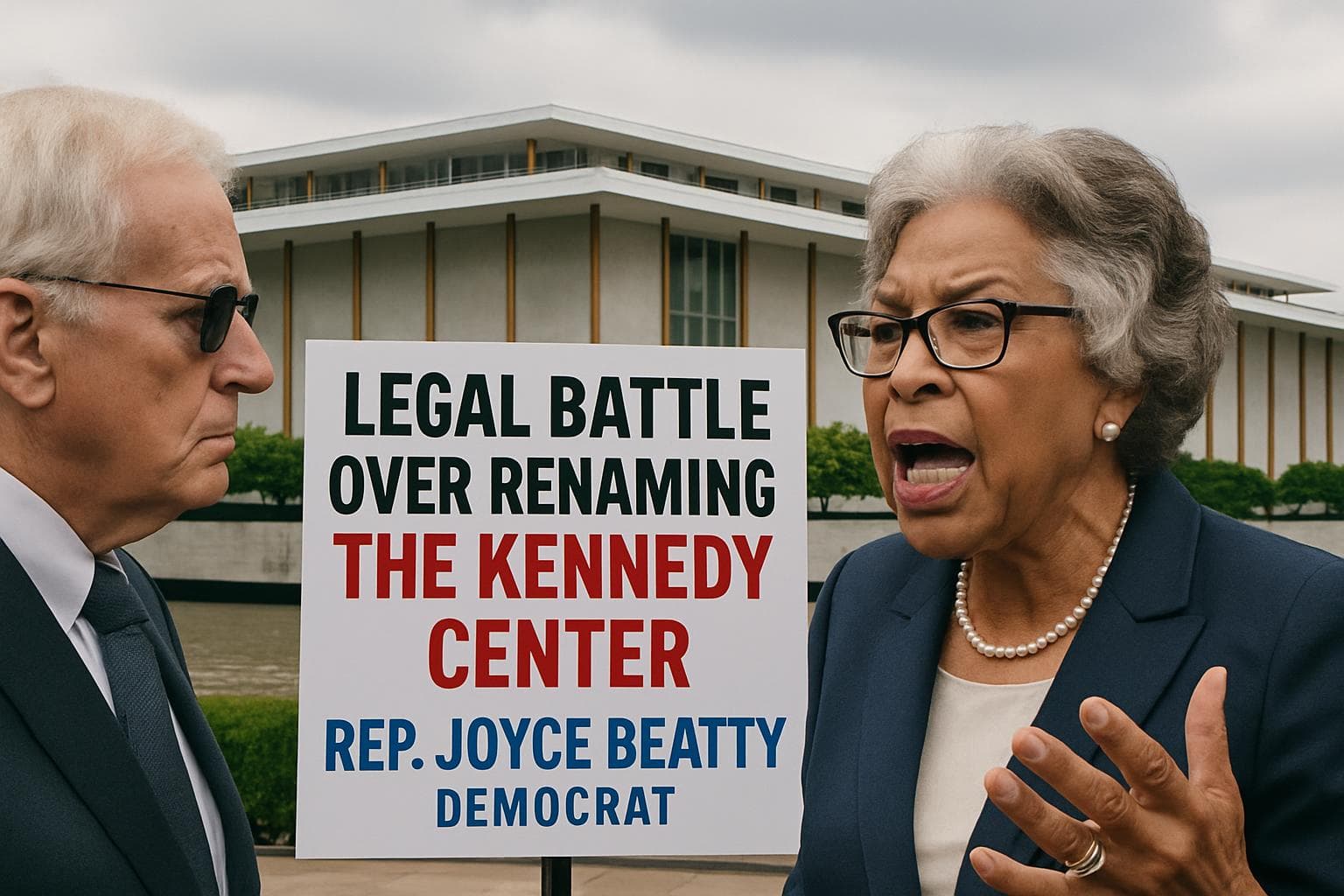
Legal Battle Erupts Over Renaming of Kennedy Center to Trump-Kennedy Center
In This Article
HIGHLIGHTS
- Democratic Representative Joyce Beatty has filed a lawsuit to remove Donald Trump's name from the Kennedy Center, claiming the renaming is illegal without Congressional approval.
- The Kennedy Center board, filled with Trump allies, voted unanimously to rename it the Trump-Kennedy Center, sparking widespread criticism.
- Beatty alleges she was muted during the board meeting, preventing her from voicing opposition to the name change.
- The White House defends the renaming, citing Trump's financial contributions and modernization efforts at the center.
- Critics, including Joe Kennedy III, argue the center is a memorial to President Kennedy and question the legality of the name change.
Democratic Representative Joyce Beatty has initiated legal proceedings to challenge the recent decision to rename the John F. Kennedy Center for the Performing Arts in Washington, D.C., to the Trump-Kennedy Center. Beatty's lawsuit contends that the renaming, approved by a board dominated by Trump appointees, violates federal law, which mandates Congressional approval for such changes.
The Kennedy Center, a landmark cultural institution, has been at the heart of a political storm since the board's unanimous vote to add former President Donald Trump's name. Beatty, an ex-officio trustee, claims she was silenced during the board meeting, unable to express her opposition to the renaming. "Congress intended the Center to be a living memorial to President Kennedy," her lawsuit states, emphasizing the need for judicial intervention to uphold the law.
The White House, through spokesperson Liz Huston, defended the decision, highlighting Trump's role in securing $257 million for renovations and modernizing the center. "The Board of the Kennedy Center voted unanimously to rename it the Trump-Kennedy Center," Huston stated, describing it as a move towards "success, prestige, and restored grandeur."
The renaming has drawn sharp criticism from various quarters, including members of the Kennedy family. Joe Kennedy III, a former congressman and grandnephew of President Kennedy, took to social media to question the legality of the decision, likening it to renaming the Lincoln Memorial. The controversy underscores ongoing tensions surrounding Trump's influence on cultural institutions and the broader implications of his board appointments.
WHAT THIS MIGHT MEAN
The lawsuit filed by Joyce Beatty could set a significant legal precedent regarding the governance of cultural institutions and the extent of executive influence. If the court rules in Beatty's favor, it may reinforce the necessity of Congressional oversight in such matters, potentially curbing similar actions in the future. Conversely, a ruling supporting the name change could embolden further alterations to historic landmarks under executive influence.
Politically, the case highlights the deepening divide over Trump's legacy and its impact on American cultural symbols. As the legal battle unfolds, it may fuel further debate on the balance between honoring historical figures and recognizing contemporary contributions. Experts suggest that the outcome could influence future board appointments and the governance structure of federally supported cultural entities.
Related Articles
Senate Blocks Resolution to Limit Trump's Military Actions in Iran
Spain's Sánchez Stands Firm Against Trump's Trade Threat Over Iran Stance

Armed Intruder Fatally Shot at Mar-a-Lago by Secret Service

US-Iran Tensions Escalate Amid Renewed Nuclear Talks and Protests

Greenland Politely Declines Trump's Hospital Ship Offer Amid Healthcare Debate
Congress Subpoenas Attorney General Bondi in Epstein Investigation
Legal Battle Erupts Over Renaming of Kennedy Center to Trump-Kennedy Center
In This Article
 Ethan Brooks| Published
 HIGHLIGHTS
- Democratic Representative Joyce Beatty has filed a lawsuit to remove Donald Trump's name from the Kennedy Center, claiming the renaming is illegal without Congressional approval.
- The Kennedy Center board, filled with Trump allies, voted unanimously to rename it the Trump-Kennedy Center, sparking widespread criticism.
- Beatty alleges she was muted during the board meeting, preventing her from voicing opposition to the name change.
- The White House defends the renaming, citing Trump's financial contributions and modernization efforts at the center.
- Critics, including Joe Kennedy III, argue the center is a memorial to President Kennedy and question the legality of the name change.
Democratic Representative Joyce Beatty has initiated legal proceedings to challenge the recent decision to rename the John F. Kennedy Center for the Performing Arts in Washington, D.C., to the Trump-Kennedy Center. Beatty's lawsuit contends that the renaming, approved by a board dominated by Trump appointees, violates federal law, which mandates Congressional approval for such changes.
The Kennedy Center, a landmark cultural institution, has been at the heart of a political storm since the board's unanimous vote to add former President Donald Trump's name. Beatty, an ex-officio trustee, claims she was silenced during the board meeting, unable to express her opposition to the renaming. "Congress intended the Center to be a living memorial to President Kennedy," her lawsuit states, emphasizing the need for judicial intervention to uphold the law.
The White House, through spokesperson Liz Huston, defended the decision, highlighting Trump's role in securing $257 million for renovations and modernizing the center. "The Board of the Kennedy Center voted unanimously to rename it the Trump-Kennedy Center," Huston stated, describing it as a move towards "success, prestige, and restored grandeur."
The renaming has drawn sharp criticism from various quarters, including members of the Kennedy family. Joe Kennedy III, a former congressman and grandnephew of President Kennedy, took to social media to question the legality of the decision, likening it to renaming the Lincoln Memorial. The controversy underscores ongoing tensions surrounding Trump's influence on cultural institutions and the broader implications of his board appointments.
WHAT THIS MIGHT MEAN
The lawsuit filed by Joyce Beatty could set a significant legal precedent regarding the governance of cultural institutions and the extent of executive influence. If the court rules in Beatty's favor, it may reinforce the necessity of Congressional oversight in such matters, potentially curbing similar actions in the future. Conversely, a ruling supporting the name change could embolden further alterations to historic landmarks under executive influence.
Politically, the case highlights the deepening divide over Trump's legacy and its impact on American cultural symbols. As the legal battle unfolds, it may fuel further debate on the balance between honoring historical figures and recognizing contemporary contributions. Experts suggest that the outcome could influence future board appointments and the governance structure of federally supported cultural entities.
Related Articles
Senate Blocks Resolution to Limit Trump's Military Actions in Iran
Spain's Sánchez Stands Firm Against Trump's Trade Threat Over Iran Stance
Armed Intruder Fatally Shot at Mar-a-Lago by Secret Service
US-Iran Tensions Escalate Amid Renewed Nuclear Talks and Protests
Greenland Politely Declines Trump's Hospital Ship Offer Amid Healthcare Debate
Congress Subpoenas Attorney General Bondi in Epstein Investigation