
Kennedy Center to Undergo Two-Year Renovation Amid Controversy
In This Article
HIGHLIGHTS
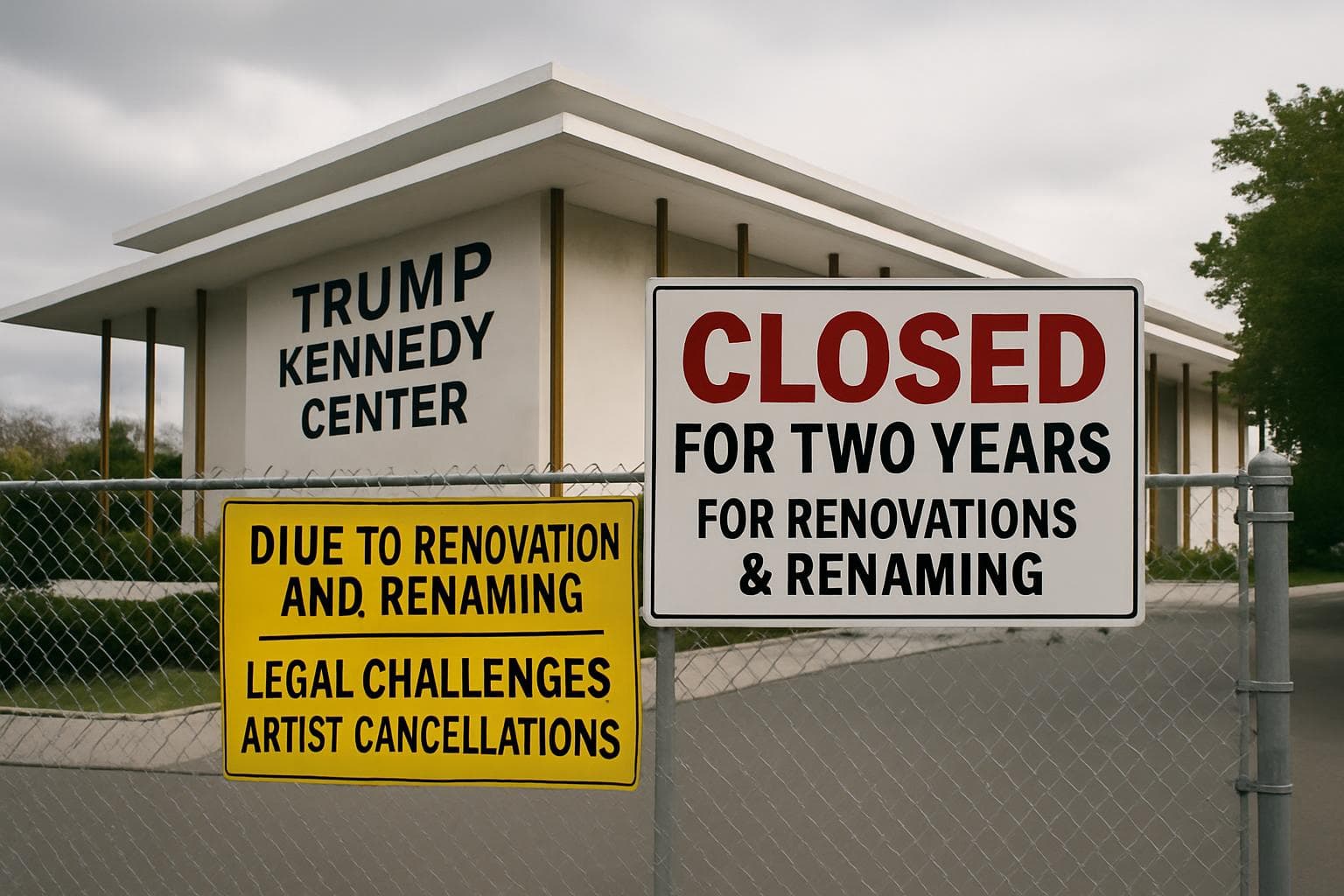
- The Kennedy Center in Washington DC will close for two years starting July 4 for renovations, as announced by President Donald Trump.
- The center was renamed the Trump Kennedy Center after Trump overhauled its leadership, leading to numerous performer cancellations.
- Trump secured over $250 million for the renovations, aiming to create a world-class performing arts venue.
- Legal debates have arisen over the renaming, as the center's original name was established by a 1964 law.
- The center's closure follows a period of low ticket sales and controversy over its new direction under Trump's leadership.
The Kennedy Center in Washington DC, a cornerstone of American cultural life, is set to close for two years starting July 4 for extensive renovations, President Donald Trump announced on Truth Social. This decision follows a tumultuous period marked by leadership changes and a controversial renaming of the institution.
Renovation Plans and Financial Backing
President Trump, who has been at the helm of the Kennedy Center's transformation, stated that the closure is necessary to achieve a "complete rebuilding" of the venue. He emphasized that the renovations, already financed with over $250 million, will elevate the center to "the finest performing arts facility of its kind, anywhere in the world." The decision comes after Trump criticized the center's physical state and worked with Congress to secure funding for the project.
Leadership Overhaul and Renaming Controversy
The Kennedy Center has been embroiled in controversy since Trump overhauled its leadership early in his second term. The new board, appointed by Trump, voted to rename the venue the Trump Kennedy Center, sparking backlash from artists and legal scholars. The original name, established by a 1964 law, was intended as a memorial to President John F. Kennedy, and some argue that any name change requires congressional approval. Democratic Representative Joyce Beatty has filed a lawsuit challenging the renaming, and members of the Kennedy family have publicly opposed the move.
Impact on Performances and Cultural Backlash
The renaming and leadership changes have led to a wave of performer cancellations, including notable figures like composer Philip Glass and Hamilton producer Jeffrey Seller. These artists have cited a conflict with the center's new direction under Trump's leadership. The center, which historically hosted over 2,000 events annually, has seen a significant drop in ticket sales, reflecting the broader cultural backlash.
WHAT THIS MIGHT MEAN
The Kennedy Center's closure and renovation could reshape its role in the cultural landscape of Washington DC. If the renovations succeed in creating a world-class venue, it may attract new performers and audiences, potentially reversing the recent trend of cancellations and low ticket sales. However, the legal challenges surrounding the renaming could lead to further disputes, especially if Congress decides to intervene. The outcome of Representative Beatty's lawsuit may set a precedent for how cultural institutions can be renamed or rebranded in the future. As the center prepares for its grand reopening, its ability to balance artistic integrity with political influences will be closely watched by both supporters and critics.
Related Articles

Greenland Politely Declines Trump's Hospital Ship Offer Amid Healthcare Debate

Tech Giants Pledge to Cover AI Data Center Energy Costs Amid Rising Electricity Concerns
Congress Subpoenas Attorney General Bondi in Epstein Investigation
Cuba Faces Widespread Blackout Amid Deepening Fuel Crisis

UK Faces Dilemmas Amid Iran Conflict and China Spying Allegations
Senate Blocks Resolution to Limit Trump's Military Actions in Iran
Kennedy Center to Undergo Two-Year Renovation Amid Controversy
In This Article
 Marcus Blake| Published
 HIGHLIGHTS
- The Kennedy Center in Washington DC will close for two years starting July 4 for renovations, as announced by President Donald Trump.
- The center was renamed the Trump Kennedy Center after Trump overhauled its leadership, leading to numerous performer cancellations.
- Trump secured over $250 million for the renovations, aiming to create a world-class performing arts venue.
- Legal debates have arisen over the renaming, as the center's original name was established by a 1964 law.
- The center's closure follows a period of low ticket sales and controversy over its new direction under Trump's leadership.
The Kennedy Center in Washington DC, a cornerstone of American cultural life, is set to close for two years starting July 4 for extensive renovations, President Donald Trump announced on Truth Social. This decision follows a tumultuous period marked by leadership changes and a controversial renaming of the institution.
Renovation Plans and Financial Backing
President Trump, who has been at the helm of the Kennedy Center's transformation, stated that the closure is necessary to achieve a "complete rebuilding" of the venue. He emphasized that the renovations, already financed with over $250 million, will elevate the center to "the finest performing arts facility of its kind, anywhere in the world." The decision comes after Trump criticized the center's physical state and worked with Congress to secure funding for the project.
Leadership Overhaul and Renaming Controversy
The Kennedy Center has been embroiled in controversy since Trump overhauled its leadership early in his second term. The new board, appointed by Trump, voted to rename the venue the Trump Kennedy Center, sparking backlash from artists and legal scholars. The original name, established by a 1964 law, was intended as a memorial to President John F. Kennedy, and some argue that any name change requires congressional approval. Democratic Representative Joyce Beatty has filed a lawsuit challenging the renaming, and members of the Kennedy family have publicly opposed the move.
Impact on Performances and Cultural Backlash
The renaming and leadership changes have led to a wave of performer cancellations, including notable figures like composer Philip Glass and Hamilton producer Jeffrey Seller. These artists have cited a conflict with the center's new direction under Trump's leadership. The center, which historically hosted over 2,000 events annually, has seen a significant drop in ticket sales, reflecting the broader cultural backlash.
WHAT THIS MIGHT MEAN
The Kennedy Center's closure and renovation could reshape its role in the cultural landscape of Washington DC. If the renovations succeed in creating a world-class venue, it may attract new performers and audiences, potentially reversing the recent trend of cancellations and low ticket sales. However, the legal challenges surrounding the renaming could lead to further disputes, especially if Congress decides to intervene. The outcome of Representative Beatty's lawsuit may set a precedent for how cultural institutions can be renamed or rebranded in the future. As the center prepares for its grand reopening, its ability to balance artistic integrity with political influences will be closely watched by both supporters and critics.
Related Articles
Greenland Politely Declines Trump's Hospital Ship Offer Amid Healthcare Debate
Tech Giants Pledge to Cover AI Data Center Energy Costs Amid Rising Electricity Concerns
Congress Subpoenas Attorney General Bondi in Epstein Investigation
Cuba Faces Widespread Blackout Amid Deepening Fuel Crisis
UK Faces Dilemmas Amid Iran Conflict and China Spying Allegations
Senate Blocks Resolution to Limit Trump's Military Actions in Iran