
Deadly Clashes Erupt in Kenya as Protests Mark Anniversary of Anti-Government Unrest
In This Article
HIGHLIGHTS
- At least 16 people were killed and 400 injured during nationwide protests in Kenya against President William Ruto's government.
- The demonstrations marked the first anniversary of last year's anti-government protests, which resulted in over 60 deaths.
- Police clashed with protesters in major cities, including Nairobi, where roads were barricaded and access to key buildings was restricted.
- The Kenyan government attempted to ban live media coverage of the protests, but this was overturned by the High Court.
- Amnesty International Kenya and other groups condemned the police's violent response, calling for dialogue and reform.
In a stark reminder of Kenya's ongoing political tensions, at least 16 people have been killed and 400 injured in protests across the country. The demonstrations, which took place on Wednesday, marked the first anniversary of last year's deadly anti-government protests against President William Ruto's administration.
Protests and Police Response
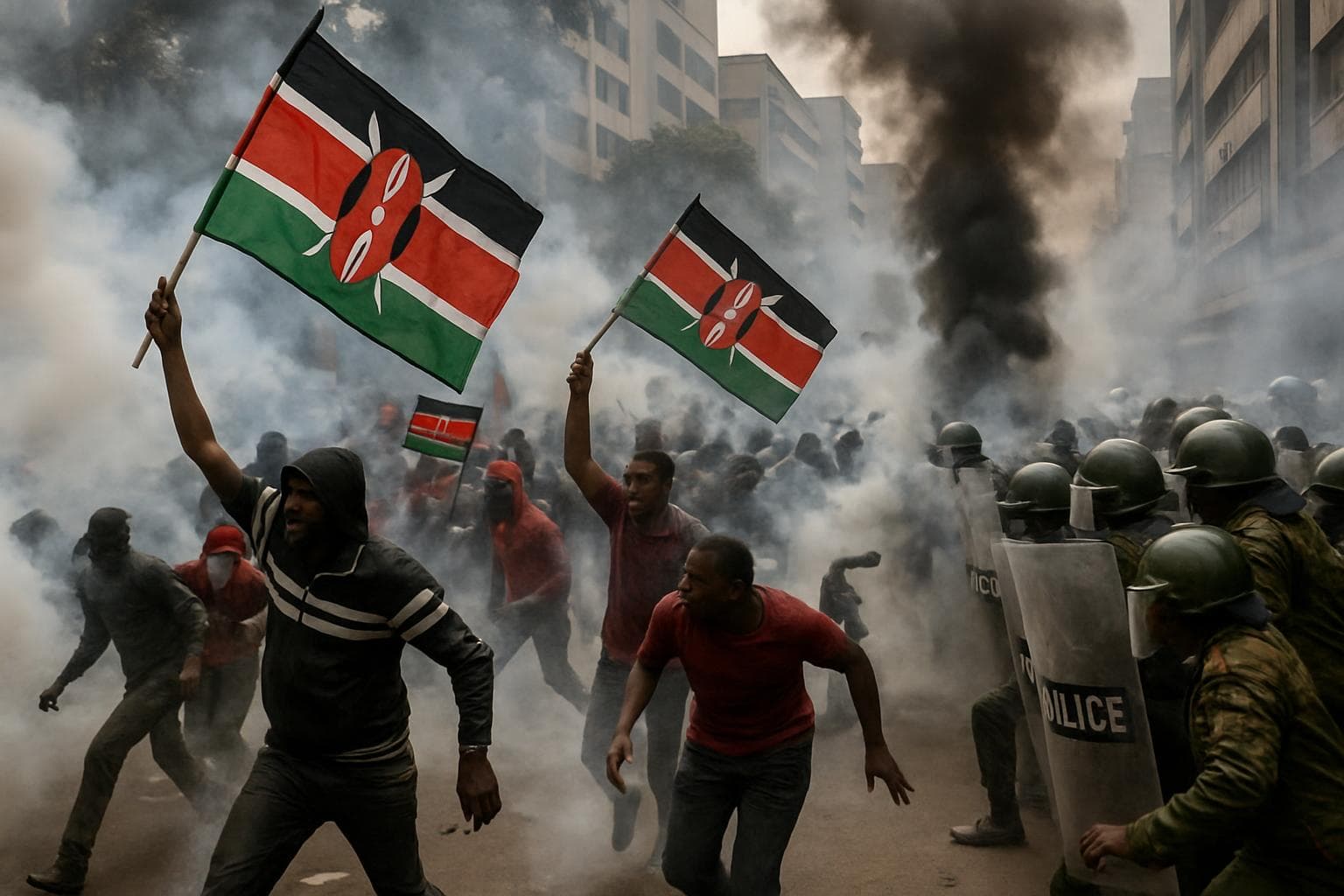
Thousands of Kenyans took to the streets in cities like Nairobi, Mombasa, and Kisumu, chanting slogans against President Ruto and waving Kenyan flags. The protests, initially intended to honor the more than 60 people killed in last year's unrest, quickly turned violent as police clashed with demonstrators. In Nairobi, police used tear gas and water cannons to disperse crowds, while protesters retaliated by throwing stones and setting fires.
Media Blackout and Legal Challenges
The Kenyan government attempted to suppress media coverage by ordering a ban on live broadcasts of the protests. However, this decree was overturned by the High Court in Nairobi, allowing media outlets to resume coverage. Despite the ban, several TV stations were temporarily taken off air, sparking criticism from rights groups and media organizations.
Human Rights Concerns
Amnesty International Kenya and other advocacy groups have condemned the police's heavy-handed tactics. "Most of the deaths were caused by police," said Irũngũ Houghton, Amnesty International Kenya's executive director. The Law Society of Kenya and the Kenya Medical Association have called for dialogue and a peaceful resolution to the ongoing political impasse.
Public Sentiment and Government Response
The protests reflect deep-seated frustrations over issues such as police brutality, corruption, and rising living costs. Despite President Ruto's previous efforts to address public grievances by scrapping a controversial finance bill and restructuring his cabinet, many Kenyans remain dissatisfied. Political analyst Mikhail Nyamweya noted that the youth view the government as "unresponsive and detached from everyday struggles."
WHAT THIS MIGHT MEAN
The recent protests in Kenya highlight the country's fragile political climate and the potential for further unrest. If the government fails to address the underlying issues of police brutality and economic hardship, tensions could escalate, leading to more violence and instability. Legal challenges, such as those filed by the Katiba Institute against police roadblocks, may increase pressure on the government to uphold constitutional rights. As Kenya navigates this turbulent period, the international community will be closely watching for signs of reform or further deterioration.
Related Articles
British Soldier Faces Extradition to Kenya Over 2012 Murder Allegations
Kenyan Inquiry Alleges Decades of Abuse by British Soldiers
Kenyan Nationals Recruited for Russia-Ukraine War Amid Allegations of Human Trafficking
South Africa Probes Mysterious Arrival of Palestinians Amidst Humanitarian Concerns
Kenyan President Orders Police to Shoot Protesters Amid Rising Unrest

Pioneering Elephant Conservationist Iain Douglas-Hamilton Dies at 83
Deadly Clashes Erupt in Kenya as Protests Mark Anniversary of Anti-Government Unrest
In This Article
 Ethan Brooks| Published
 HIGHLIGHTS
- At least 16 people were killed and 400 injured during nationwide protests in Kenya against President William Ruto's government.
- The demonstrations marked the first anniversary of last year's anti-government protests, which resulted in over 60 deaths.
- Police clashed with protesters in major cities, including Nairobi, where roads were barricaded and access to key buildings was restricted.
- The Kenyan government attempted to ban live media coverage of the protests, but this was overturned by the High Court.
- Amnesty International Kenya and other groups condemned the police's violent response, calling for dialogue and reform.
In a stark reminder of Kenya's ongoing political tensions, at least 16 people have been killed and 400 injured in protests across the country. The demonstrations, which took place on Wednesday, marked the first anniversary of last year's deadly anti-government protests against President William Ruto's administration.
Protests and Police Response
Thousands of Kenyans took to the streets in cities like Nairobi, Mombasa, and Kisumu, chanting slogans against President Ruto and waving Kenyan flags. The protests, initially intended to honor the more than 60 people killed in last year's unrest, quickly turned violent as police clashed with demonstrators. In Nairobi, police used tear gas and water cannons to disperse crowds, while protesters retaliated by throwing stones and setting fires.
Media Blackout and Legal Challenges
The Kenyan government attempted to suppress media coverage by ordering a ban on live broadcasts of the protests. However, this decree was overturned by the High Court in Nairobi, allowing media outlets to resume coverage. Despite the ban, several TV stations were temporarily taken off air, sparking criticism from rights groups and media organizations.
Human Rights Concerns
Amnesty International Kenya and other advocacy groups have condemned the police's heavy-handed tactics. "Most of the deaths were caused by police," said Irũngũ Houghton, Amnesty International Kenya's executive director. The Law Society of Kenya and the Kenya Medical Association have called for dialogue and a peaceful resolution to the ongoing political impasse.
Public Sentiment and Government Response
The protests reflect deep-seated frustrations over issues such as police brutality, corruption, and rising living costs. Despite President Ruto's previous efforts to address public grievances by scrapping a controversial finance bill and restructuring his cabinet, many Kenyans remain dissatisfied. Political analyst Mikhail Nyamweya noted that the youth view the government as "unresponsive and detached from everyday struggles."
WHAT THIS MIGHT MEAN
The recent protests in Kenya highlight the country's fragile political climate and the potential for further unrest. If the government fails to address the underlying issues of police brutality and economic hardship, tensions could escalate, leading to more violence and instability. Legal challenges, such as those filed by the Katiba Institute against police roadblocks, may increase pressure on the government to uphold constitutional rights. As Kenya navigates this turbulent period, the international community will be closely watching for signs of reform or further deterioration.
Related Articles
British Soldier Faces Extradition to Kenya Over 2012 Murder Allegations
Kenyan Inquiry Alleges Decades of Abuse by British Soldiers
Kenyan Nationals Recruited for Russia-Ukraine War Amid Allegations of Human Trafficking
South Africa Probes Mysterious Arrival of Palestinians Amidst Humanitarian Concerns
Kenyan President Orders Police to Shoot Protesters Amid Rising Unrest
Pioneering Elephant Conservationist Iain Douglas-Hamilton Dies at 83