
Khaleda Zia: Pioneering Female Leader of Bangladesh Dies at 80
In This Article
HIGHLIGHTS
- Khaleda Zia, Bangladesh's first female prime minister, has died at 80 after a prolonged illness.
- Zia led the Bangladesh Nationalist Party (BNP) and served as prime minister in the 1990s and early 2000s.
- Her political career was marked by a fierce rivalry with Sheikh Hasina, leading to alternating leadership in Bangladesh.
- Zia was convicted of corruption in 2018 but was released following a 2024 uprising that ousted Hasina.
- Her son, Tarique Rahman, has returned from exile to lead the BNP in upcoming elections.
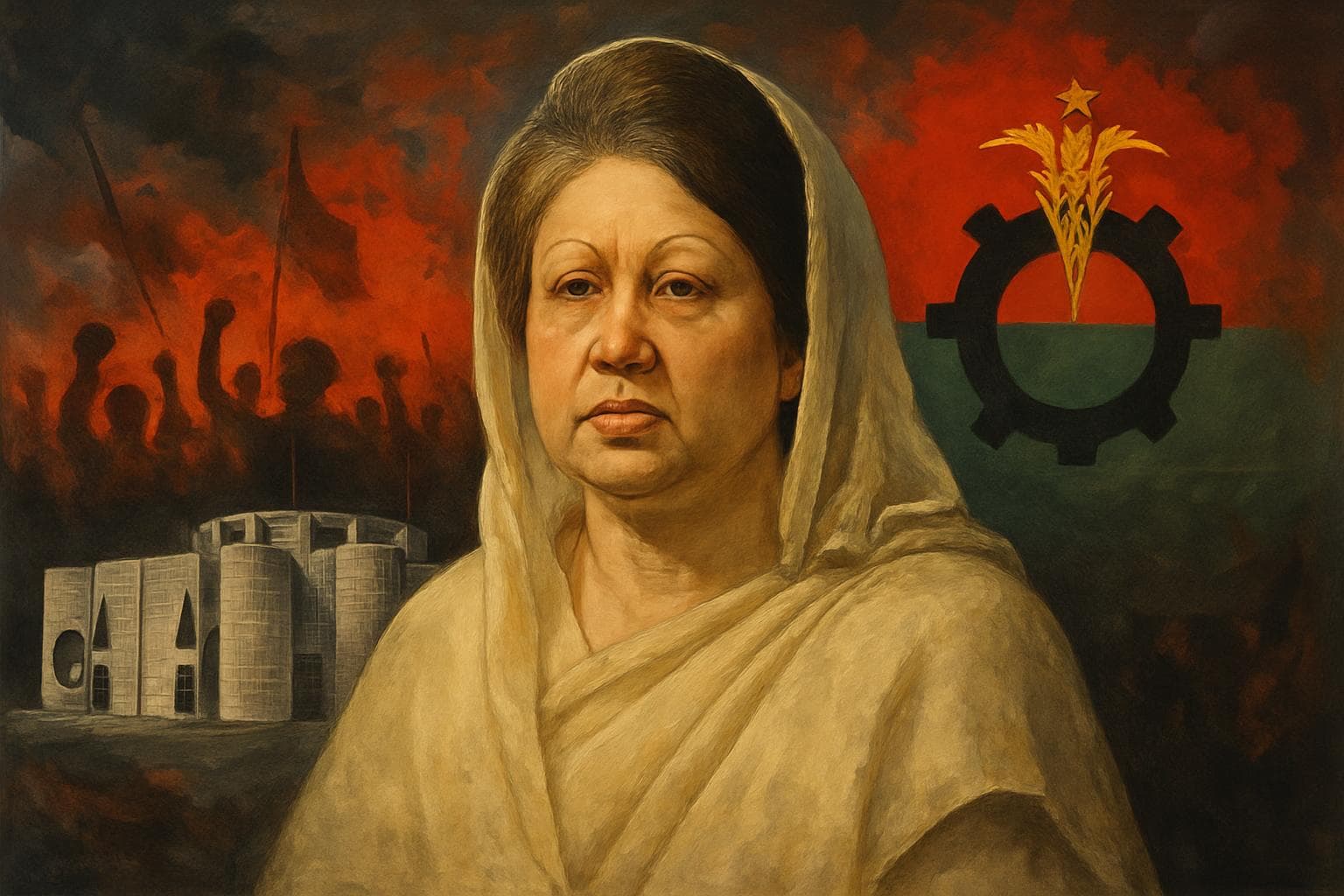
Khaleda Zia, a pivotal figure in Bangladesh's political landscape and the country's first female prime minister, has passed away at the age of 80. Her death marks the end of an era defined by her long-standing rivalry with Sheikh Hasina, which shaped the nation's politics for decades.
Rise to Political Prominence
Born in 1945 in Dinajpur, then part of British India, Khaleda Zia emerged from a life of relative obscurity following the assassination of her husband, Ziaur Rahman, in 1981. Rahman, a former president and military hero, had played a crucial role in Bangladesh's independence. After his death, Zia took up the mantle of leadership, joining the Bangladesh Nationalist Party (BNP) and eventually becoming its leader.
Leadership and Legacy
Zia first assumed the role of prime minister in 1991, following Bangladesh's first democratic elections in two decades. Her tenure was marked by significant reforms, including the reintroduction of parliamentary democracy and efforts to improve women's education. Despite losing power in 1996, she returned to office in 2001, forming alliances with Islamist parties, which drew criticism over the years.
Political Turmoil and Imprisonment
Zia's political journey was fraught with challenges, including accusations of corruption during her second term. In 2018, she was convicted and sentenced to prison, a move her party claimed was politically motivated by her rival, Sheikh Hasina. Zia's health deteriorated during her imprisonment, but she was released following a 2024 uprising that ousted Hasina from power.
A New Chapter for the BNP
As Bangladesh prepares for elections in February 2026, Zia's son, Tarique Rahman, has returned from 17 years of self-imposed exile to lead the BNP. The party, now seen as a frontrunner, aims to capitalize on the political shift following Hasina's fall. Rahman's return signals a potential new chapter for the BNP, as it seeks to regain influence in Bangladesh's political arena.
WHAT THIS MIGHT MEAN
Khaleda Zia's death leaves a significant void in Bangladesh's political landscape, potentially altering the dynamics of the upcoming elections. With Tarique Rahman stepping into the spotlight, the BNP may experience a resurgence, especially given the recent political upheaval. However, the party faces challenges in maintaining unity and addressing past criticisms of its alliances. The elections will be a critical test for Bangladesh's democracy, as the nation navigates the legacy of its two most prominent political figures.
Related Articles
Bangladesh Nationalist Party Wins Historic Election Amidst Political Transformation
Tarique Rahman Set to Lead Bangladesh Amid Promises of Reform
Rising Tensions: India-Bangladesh Relations Strained Amid Escalating Violence
UK MP Tulip Siddiq Sentenced in Bangladesh Corruption Trial Amid Controversy
Violent Protests Erupt in Bangladesh Following Youth Leader's Death
Myanmar Faces Genocide Allegations at UN's Top Court
Khaleda Zia: Pioneering Female Leader of Bangladesh Dies at 80
In This Article
 Alex Carter| Published
 HIGHLIGHTS
- Khaleda Zia, Bangladesh's first female prime minister, has died at 80 after a prolonged illness.
- Zia led the Bangladesh Nationalist Party (BNP) and served as prime minister in the 1990s and early 2000s.
- Her political career was marked by a fierce rivalry with Sheikh Hasina, leading to alternating leadership in Bangladesh.
- Zia was convicted of corruption in 2018 but was released following a 2024 uprising that ousted Hasina.
- Her son, Tarique Rahman, has returned from exile to lead the BNP in upcoming elections.
Khaleda Zia, a pivotal figure in Bangladesh's political landscape and the country's first female prime minister, has passed away at the age of 80. Her death marks the end of an era defined by her long-standing rivalry with Sheikh Hasina, which shaped the nation's politics for decades.
Rise to Political Prominence
Born in 1945 in Dinajpur, then part of British India, Khaleda Zia emerged from a life of relative obscurity following the assassination of her husband, Ziaur Rahman, in 1981. Rahman, a former president and military hero, had played a crucial role in Bangladesh's independence. After his death, Zia took up the mantle of leadership, joining the Bangladesh Nationalist Party (BNP) and eventually becoming its leader.
Leadership and Legacy
Zia first assumed the role of prime minister in 1991, following Bangladesh's first democratic elections in two decades. Her tenure was marked by significant reforms, including the reintroduction of parliamentary democracy and efforts to improve women's education. Despite losing power in 1996, she returned to office in 2001, forming alliances with Islamist parties, which drew criticism over the years.
Political Turmoil and Imprisonment
Zia's political journey was fraught with challenges, including accusations of corruption during her second term. In 2018, she was convicted and sentenced to prison, a move her party claimed was politically motivated by her rival, Sheikh Hasina. Zia's health deteriorated during her imprisonment, but she was released following a 2024 uprising that ousted Hasina from power.
A New Chapter for the BNP
As Bangladesh prepares for elections in February 2026, Zia's son, Tarique Rahman, has returned from 17 years of self-imposed exile to lead the BNP. The party, now seen as a frontrunner, aims to capitalize on the political shift following Hasina's fall. Rahman's return signals a potential new chapter for the BNP, as it seeks to regain influence in Bangladesh's political arena.
WHAT THIS MIGHT MEAN
Khaleda Zia's death leaves a significant void in Bangladesh's political landscape, potentially altering the dynamics of the upcoming elections. With Tarique Rahman stepping into the spotlight, the BNP may experience a resurgence, especially given the recent political upheaval. However, the party faces challenges in maintaining unity and addressing past criticisms of its alliances. The elections will be a critical test for Bangladesh's democracy, as the nation navigates the legacy of its two most prominent political figures.
Related Articles
Bangladesh Nationalist Party Wins Historic Election Amidst Political Transformation
Tarique Rahman Set to Lead Bangladesh Amid Promises of Reform
Rising Tensions: India-Bangladesh Relations Strained Amid Escalating Violence
UK MP Tulip Siddiq Sentenced in Bangladesh Corruption Trial Amid Controversy
Violent Protests Erupt in Bangladesh Following Youth Leader's Death
Myanmar Faces Genocide Allegations at UN's Top Court