
Kim Jong Un Travels to China for Historic Military Parade
In This Article
HIGHLIGHTS
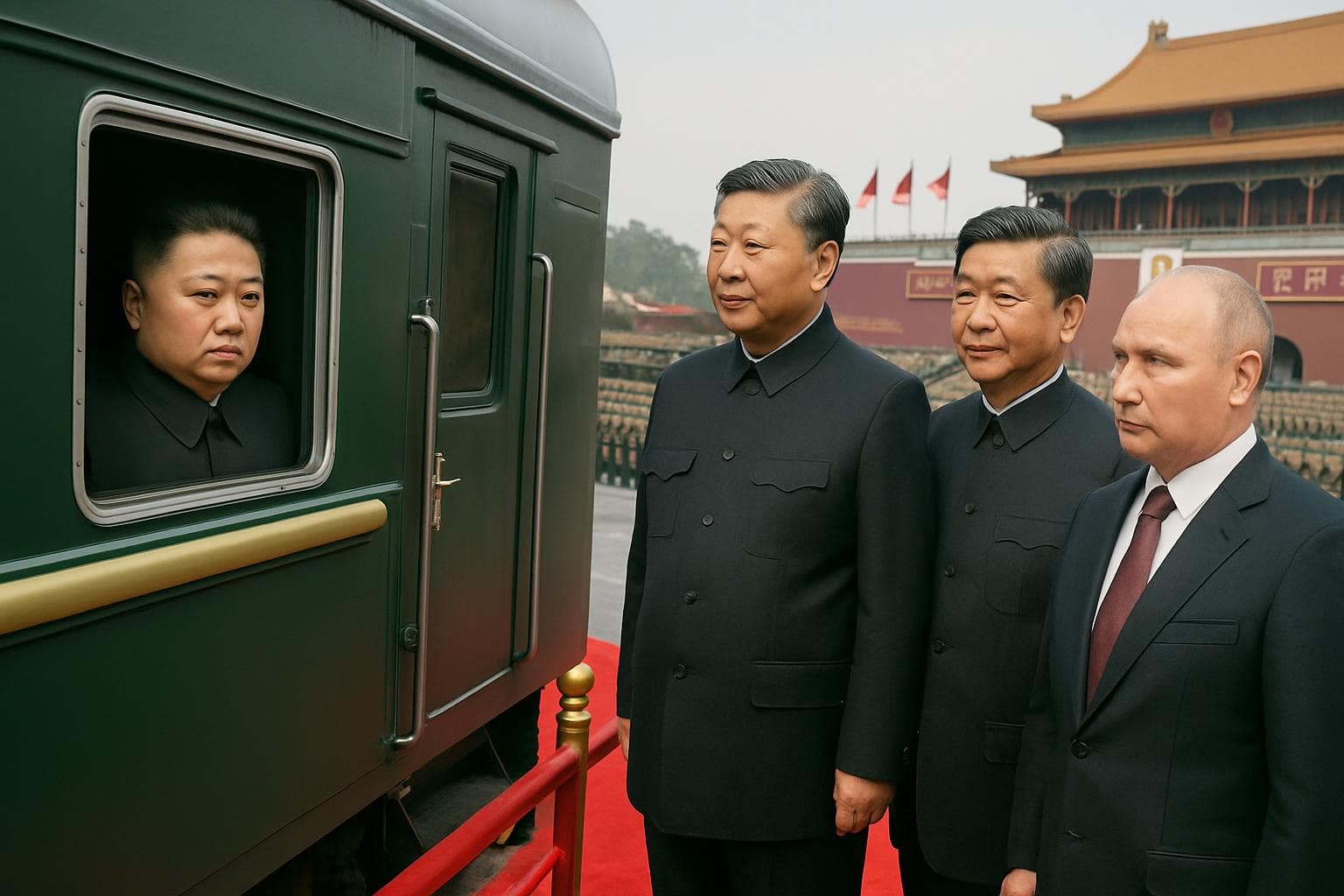
- North Korean leader Kim Jong Un is traveling to Beijing on his armoured train to attend a military parade marking Japan's WWII surrender.
- The parade will feature leaders like China's Xi Jinping and Russia's Vladimir Putin, highlighting international relations amid global tensions.
- Kim's train journey, a tradition among North Korean leaders, is expected to take up to 24 hours due to its slow speed and heavy protection.
- This marks Kim's first multilateral international meeting, with 26 world leaders attending, including those from Myanmar, Iran, and Cuba.
- Western leaders are largely absent from the event, reflecting geopolitical divides over Russia's actions in Ukraine.
North Korean leader Kim Jong Un has embarked on a significant journey to Beijing aboard his signature armoured train to participate in a grand military parade commemorating the 80th anniversary of Japan's surrender in World War II. This event, set to take place on Wednesday, will see Kim alongside prominent figures such as China's President Xi Jinping and Russia's President Vladimir Putin, marking his first major multilateral international engagement.
A Journey Steeped in Tradition
Kim's journey began on Monday, with his train crossing into China early Tuesday morning, as reported by North Korea's state newspaper, Rodong Sinmun. The train, described as a "moving fortress" by South Korea's Yonhap news agency, travels at a modest 60 kilometers per hour, making the trip to Beijing approximately 20 hours long. This mode of transport, favored by North Korean leaders for decades, offers a secure and comfortable environment for Kim and his entourage, complete with conference rooms and luxurious amenities.
A Gathering of Global Leaders
The Victory Day parade in Beijing will be attended by 26 world leaders, including those from Myanmar, Iran, and Cuba. This gathering underscores the complex web of international relations, particularly as Western leaders largely abstain from the event due to geopolitical tensions surrounding Russia's invasion of Ukraine. Kim's presence at the parade is a notable upgrade from previous years, reflecting North Korea's evolving diplomatic stance.
Historical and Political Significance
This event marks the first time a North Korean leader has attended a Chinese military parade since 1959. Kim's participation highlights the strengthening ties between North Korea and China, as well as the broader geopolitical dynamics at play. The parade will showcase China's latest military advancements, including cutting-edge weaponry and anti-drone systems, further emphasizing the nation's growing military prowess.
WHAT THIS MIGHT MEAN
Kim Jong Un's attendance at the Beijing military parade signals a potential shift in North Korea's diplomatic strategy, as the nation seeks to bolster its international presence. This move could lead to strengthened alliances with China and Russia, potentially impacting global geopolitical dynamics. Experts suggest that Kim's engagement in multilateral events may pave the way for future diplomatic initiatives, although the absence of Western leaders highlights ongoing divisions. As North Korea navigates these complex relationships, the international community will be closely monitoring the implications for regional stability and global security.
Related Articles
Russian LNG Tanker Sinks in Mediterranean Amid Accusations of Ukrainian Drone Attack

UK Faces Dilemmas Amid Iran Conflict and China Spying Allegations
China Sets Lowest GDP Growth Target in Decades Amid Economic Challenges

Canada and Australia Forge Strategic Partnership Amid Global Uncertainty
Cuba Faces Widespread Blackout Amid Deepening Fuel Crisis

Middle East Conflict Drives UK Energy Prices to New Highs
Kim Jong Un Travels to China for Historic Military Parade
In This Article
HIGHLIGHTS
- North Korean leader Kim Jong Un is traveling to Beijing on his armoured train to attend a military parade marking Japan's WWII surrender.
- The parade will feature leaders like China's Xi Jinping and Russia's Vladimir Putin, highlighting international relations amid global tensions.
- Kim's train journey, a tradition among North Korean leaders, is expected to take up to 24 hours due to its slow speed and heavy protection.
- This marks Kim's first multilateral international meeting, with 26 world leaders attending, including those from Myanmar, Iran, and Cuba.
- Western leaders are largely absent from the event, reflecting geopolitical divides over Russia's actions in Ukraine.
North Korean leader Kim Jong Un has embarked on a significant journey to Beijing aboard his signature armoured train to participate in a grand military parade commemorating the 80th anniversary of Japan's surrender in World War II. This event, set to take place on Wednesday, will see Kim alongside prominent figures such as China's President Xi Jinping and Russia's President Vladimir Putin, marking his first major multilateral international engagement.
A Journey Steeped in Tradition
Kim's journey began on Monday, with his train crossing into China early Tuesday morning, as reported by North Korea's state newspaper, Rodong Sinmun. The train, described as a "moving fortress" by South Korea's Yonhap news agency, travels at a modest 60 kilometers per hour, making the trip to Beijing approximately 20 hours long. This mode of transport, favored by North Korean leaders for decades, offers a secure and comfortable environment for Kim and his entourage, complete with conference rooms and luxurious amenities.
A Gathering of Global Leaders
The Victory Day parade in Beijing will be attended by 26 world leaders, including those from Myanmar, Iran, and Cuba. This gathering underscores the complex web of international relations, particularly as Western leaders largely abstain from the event due to geopolitical tensions surrounding Russia's invasion of Ukraine. Kim's presence at the parade is a notable upgrade from previous years, reflecting North Korea's evolving diplomatic stance.
Historical and Political Significance
This event marks the first time a North Korean leader has attended a Chinese military parade since 1959. Kim's participation highlights the strengthening ties between North Korea and China, as well as the broader geopolitical dynamics at play. The parade will showcase China's latest military advancements, including cutting-edge weaponry and anti-drone systems, further emphasizing the nation's growing military prowess.
WHAT THIS MIGHT MEAN
Kim Jong Un's attendance at the Beijing military parade signals a potential shift in North Korea's diplomatic strategy, as the nation seeks to bolster its international presence. This move could lead to strengthened alliances with China and Russia, potentially impacting global geopolitical dynamics. Experts suggest that Kim's engagement in multilateral events may pave the way for future diplomatic initiatives, although the absence of Western leaders highlights ongoing divisions. As North Korea navigates these complex relationships, the international community will be closely monitoring the implications for regional stability and global security.
Related Articles
Russian LNG Tanker Sinks in Mediterranean Amid Accusations of Ukrainian Drone Attack
UK Faces Dilemmas Amid Iran Conflict and China Spying Allegations
China Sets Lowest GDP Growth Target in Decades Amid Economic Challenges
Canada and Australia Forge Strategic Partnership Amid Global Uncertainty
Cuba Faces Widespread Blackout Amid Deepening Fuel Crisis
Middle East Conflict Drives UK Energy Prices to New Highs