
Calls for Legal Review Intensify Following Mass Arrests at Palestine Action Protest
In This Article
HIGHLIGHTS
- Over 500 people were arrested under the Terrorism Act for supporting the banned group Palestine Action during a protest in London.
- The Liberal Democrats and various rights groups have called for a review of the law, citing concerns over its impact on free speech and democratic dissent.
- The Equality and Human Rights Commission warned against heavy-handed policing, emphasizing the need for clear legal guidance to protect protest rights.
- A judicial review challenging the ban on Palestine Action is scheduled for November, with rights groups urging a suspension of prosecutions until the review is concluded.
- Home Secretary Yvette Cooper defended the ban, citing security assessments and the group's involvement in violent activities.
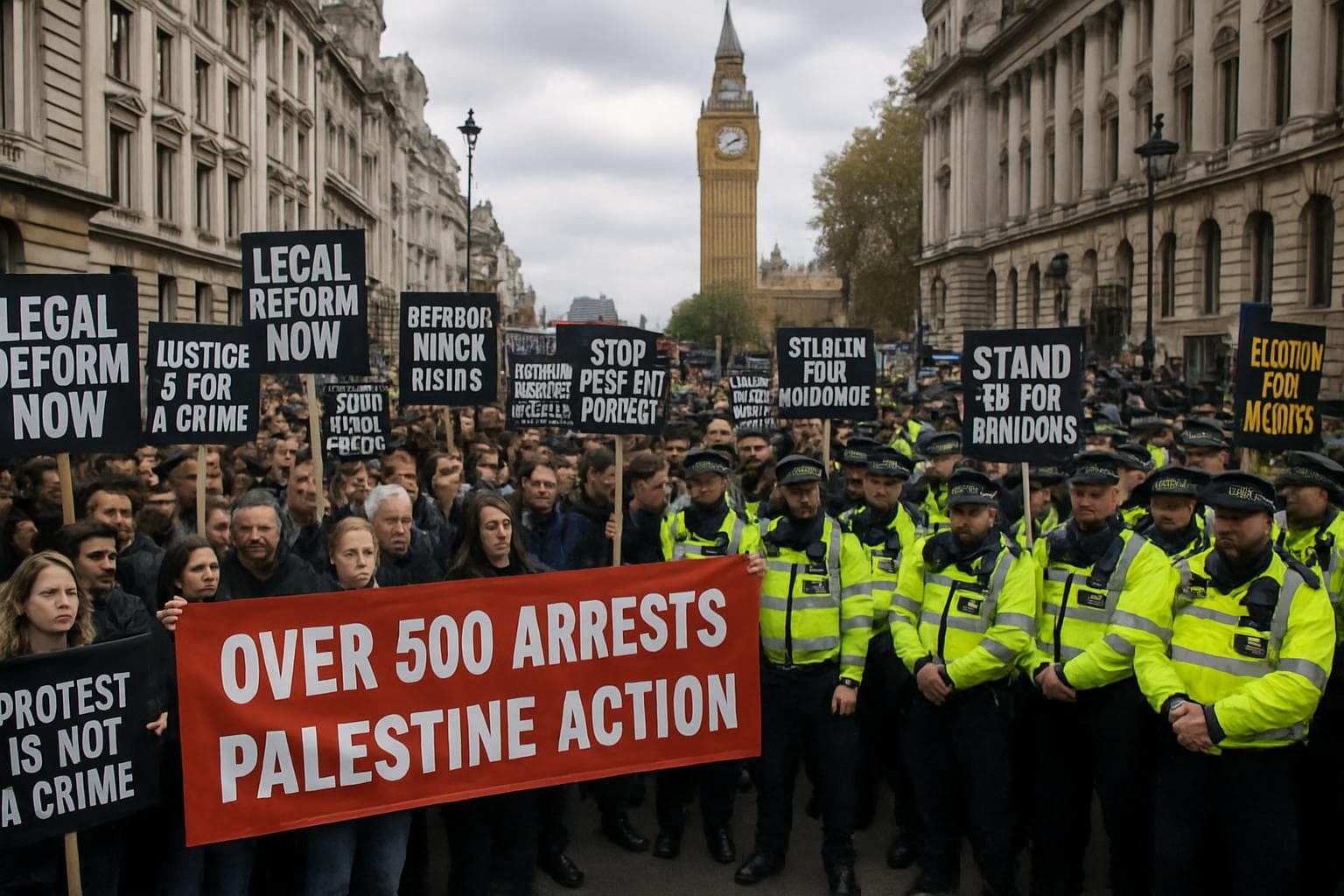
In a significant development, over 500 individuals were arrested under the Terrorism Act during a protest in London supporting the banned group Palestine Action. The arrests have sparked widespread calls for a review of the legislation, with critics arguing that its application risks stifling free speech and legitimate protest.
Concerns Over Free Speech and Policing
The Liberal Democrats have expressed deep concern over the use of terrorism powers against peaceful protesters. Lisa Smart, the party's home affairs spokesperson, emphasized the need to differentiate between violent acts and peaceful dissent, suggesting that existing laws, such as the Public Order Act, could address violent or hateful conduct without invoking terrorism legislation. The party has urged Jonathan Hall KC, the independent reviewer of terrorism legislation, to assess whether the law requires amendments to prevent future misuse.
Meanwhile, the Equality and Human Rights Commission (EHRC) has voiced apprehensions about the policing of protests related to events in Gaza, the West Bank, and Israel. In a letter to Home Secretary Yvette Cooper and Met Police Chief Mark Rowley, EHRC Chair Baroness Kishwer Falkner highlighted the potential "chilling effect" of heavy-handed policing on citizens' rights to freedom of expression and assembly. The commission stressed the importance of proportionate policing based on clear legal standards.
Judicial Review and Legal Implications
The controversy surrounding the arrests is further complicated by an upcoming judicial review of the ban on Palestine Action. Rights groups, including Greenpeace and Human Rights Watch, have urged the attorney general to halt prosecutions until the review is completed. They argue that proceeding with charges could lead to significant legal and moral dilemmas, especially if the judicial review results in the ban being overturned.
Areeba Hamid, co-executive director of Greenpeace UK, criticized the government's broad definition of terrorism, which she believes disproportionately restricts freedom of expression. The judicial review, scheduled for November, could potentially alter the legal landscape for those arrested.
Government's Stance
Home Secretary Yvette Cooper has defended the decision to ban Palestine Action, citing the group's involvement in violent activities and significant criminal damage to national security infrastructure. Cooper maintains that the ban was based on clear security assessments, asserting that the group's actions warranted such measures.
WHAT THIS MIGHT MEAN
As the judicial review approaches, the legal landscape surrounding the arrests could shift significantly. If the court finds the ban on Palestine Action to be unlawful, it may lead to the quashing of charges against those arrested, setting a precedent for future cases involving protest rights. Legal experts suggest that a ruling in favor of the protesters could prompt a reevaluation of the Terrorism Act's application, potentially leading to legislative amendments to safeguard freedom of expression. Politically, the situation underscores the delicate balance between national security and civil liberties, a debate likely to intensify in the coming months.
Related Articles
Senate Blocks Resolution to Limit Trump's Military Actions in Iran

US Ambassador's Biblical Land Remarks Spark Outcry from Arab Nations
Palestinian-American Teen Killed by Israeli Settlers in West Bank Sparks Calls for Accountability

Middle East Conflict Drives UK Energy Prices to New Highs

UK Faces Dilemmas Amid Iran Conflict and China Spying Allegations

US and Israel Intensify Military Campaign as Iran's Capabilities Dwindle
Calls for Legal Review Intensify Following Mass Arrests at Palestine Action Protest
In This Article
 Alex Carter| Published
 HIGHLIGHTS
- Over 500 people were arrested under the Terrorism Act for supporting the banned group Palestine Action during a protest in London.
- The Liberal Democrats and various rights groups have called for a review of the law, citing concerns over its impact on free speech and democratic dissent.
- The Equality and Human Rights Commission warned against heavy-handed policing, emphasizing the need for clear legal guidance to protect protest rights.
- A judicial review challenging the ban on Palestine Action is scheduled for November, with rights groups urging a suspension of prosecutions until the review is concluded.
- Home Secretary Yvette Cooper defended the ban, citing security assessments and the group's involvement in violent activities.
In a significant development, over 500 individuals were arrested under the Terrorism Act during a protest in London supporting the banned group Palestine Action. The arrests have sparked widespread calls for a review of the legislation, with critics arguing that its application risks stifling free speech and legitimate protest.
Concerns Over Free Speech and Policing
The Liberal Democrats have expressed deep concern over the use of terrorism powers against peaceful protesters. Lisa Smart, the party's home affairs spokesperson, emphasized the need to differentiate between violent acts and peaceful dissent, suggesting that existing laws, such as the Public Order Act, could address violent or hateful conduct without invoking terrorism legislation. The party has urged Jonathan Hall KC, the independent reviewer of terrorism legislation, to assess whether the law requires amendments to prevent future misuse.
Meanwhile, the Equality and Human Rights Commission (EHRC) has voiced apprehensions about the policing of protests related to events in Gaza, the West Bank, and Israel. In a letter to Home Secretary Yvette Cooper and Met Police Chief Mark Rowley, EHRC Chair Baroness Kishwer Falkner highlighted the potential "chilling effect" of heavy-handed policing on citizens' rights to freedom of expression and assembly. The commission stressed the importance of proportionate policing based on clear legal standards.
Judicial Review and Legal Implications
The controversy surrounding the arrests is further complicated by an upcoming judicial review of the ban on Palestine Action. Rights groups, including Greenpeace and Human Rights Watch, have urged the attorney general to halt prosecutions until the review is completed. They argue that proceeding with charges could lead to significant legal and moral dilemmas, especially if the judicial review results in the ban being overturned.
Areeba Hamid, co-executive director of Greenpeace UK, criticized the government's broad definition of terrorism, which she believes disproportionately restricts freedom of expression. The judicial review, scheduled for November, could potentially alter the legal landscape for those arrested.
Government's Stance
Home Secretary Yvette Cooper has defended the decision to ban Palestine Action, citing the group's involvement in violent activities and significant criminal damage to national security infrastructure. Cooper maintains that the ban was based on clear security assessments, asserting that the group's actions warranted such measures.
WHAT THIS MIGHT MEAN
As the judicial review approaches, the legal landscape surrounding the arrests could shift significantly. If the court finds the ban on Palestine Action to be unlawful, it may lead to the quashing of charges against those arrested, setting a precedent for future cases involving protest rights. Legal experts suggest that a ruling in favor of the protesters could prompt a reevaluation of the Terrorism Act's application, potentially leading to legislative amendments to safeguard freedom of expression. Politically, the situation underscores the delicate balance between national security and civil liberties, a debate likely to intensify in the coming months.
Related Articles
Senate Blocks Resolution to Limit Trump's Military Actions in Iran
US Ambassador's Biblical Land Remarks Spark Outcry from Arab Nations
Palestinian-American Teen Killed by Israeli Settlers in West Bank Sparks Calls for Accountability
Middle East Conflict Drives UK Energy Prices to New Highs
UK Faces Dilemmas Amid Iran Conflict and China Spying Allegations
US and Israel Intensify Military Campaign as Iran's Capabilities Dwindle