
Mexico Extradites 37 Cartel Members to US Amid Rising Tensions Over Drug Trafficking
In This Article
HIGHLIGHTS
- Mexico extradited 37 alleged cartel members to the US, marking the third such transfer under President Claudia Sheinbaum.
- The extraditions are part of efforts to address US demands for stronger action against drug cartels, amid Trump's threats of unilateral action.
- US prosecutors have assured Mexico that the death penalty will not be pursued for the extradited individuals.
- President Sheinbaum has rejected the idea of US military involvement on Mexican soil, citing national sovereignty.
- The extraditions coincide with a reported 50% decrease in fentanyl seizures at the US-Mexico border.
In a significant move to address escalating pressure from the United States, Mexico has extradited 37 alleged cartel members to face trial in the US. This marks the third such operation under President Claudia Sheinbaum's administration, as she navigates the complex demands of the Trump administration for more aggressive action against drug trafficking networks.
Extradition Details and Legal Context
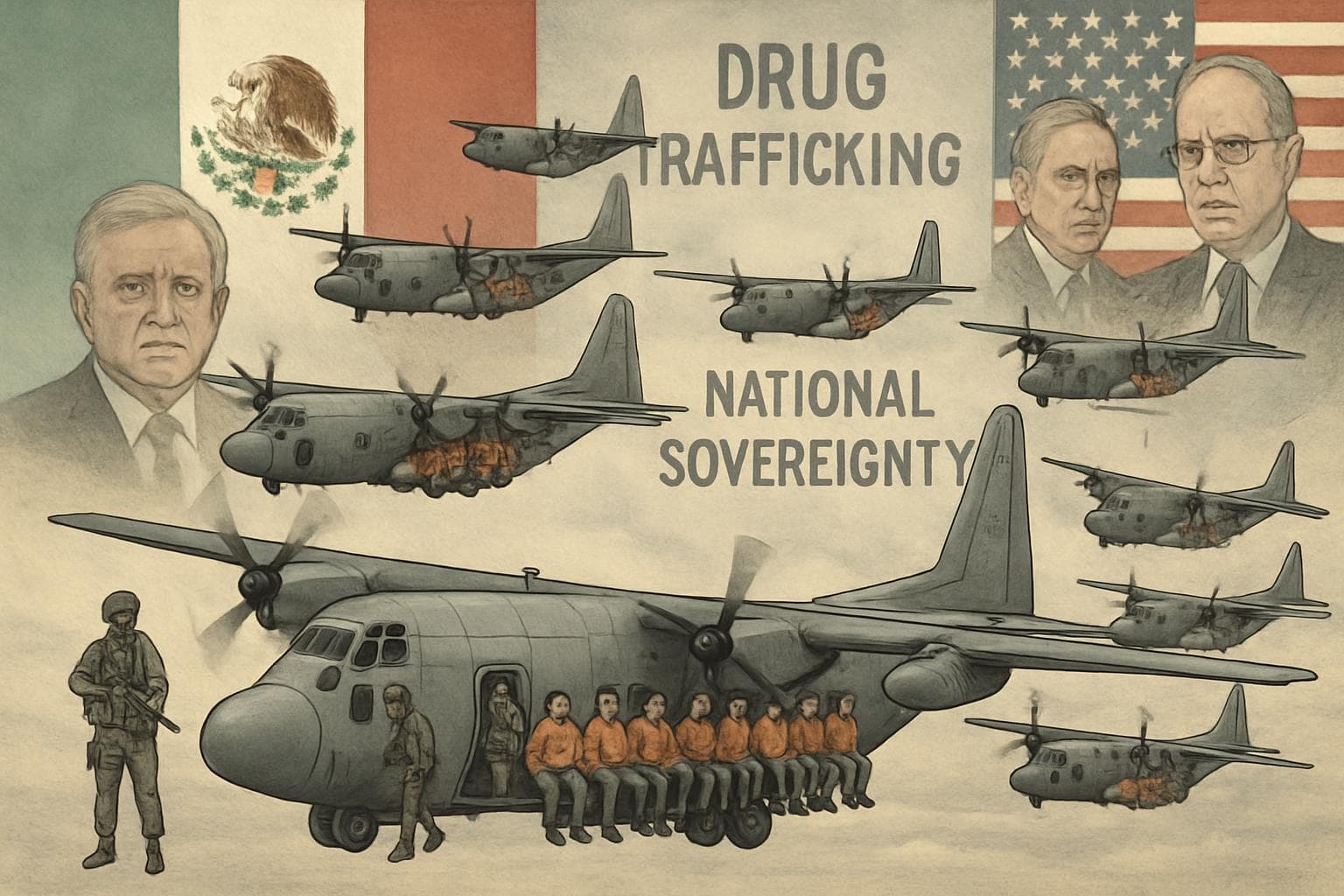
The extradited individuals, linked to powerful drug cartels, were transported to various US cities, including Washington, New York, and San Diego, on seven armed Mexican aircraft. Mexico's Secretary of Security, Omar García Harfuch, emphasized that these individuals posed a "threat to the country's security." The US Justice Department welcomed the move, with Attorney General Pam Bondi stating, "These 37 cartel members will now pay for their crimes against the American people on American soil." Importantly, US prosecutors have committed to not seeking the death penalty for these individuals, respecting Mexico's legal stipulations.
Political and Diplomatic Implications
President Sheinbaum has defended the extraditions as a "sovereign decision," aiming to alleviate the pressure from the Trump administration, which has repeatedly criticized Mexico for being "run by cartels." The US has intensified its push for military involvement in joint operations on Mexican soil, a proposal Sheinbaum has firmly rejected, emphasizing national sovereignty. The extraditions are part of a broader strategy to combat drug trafficking, with Sheinbaum citing a 50% reduction in fentanyl seizures at the US-Mexico border as evidence of progress.
Expert Opinions and Future Challenges
Security experts, like Rodrigo Peña, warn that while extraditions serve as an effective pressure valve, they may not suffice in the long term. The intertwining of security and trade agendas, especially with the ongoing renegotiation of the US-Mexico-Canada free trade deal, adds another layer of complexity. Diego Marroquín Bitar, a trade analyst, cautions that the security agenda's entanglement with trade negotiations could derail these discussions.
WHAT THIS MIGHT MEAN
The extradition of cartel members to the US is a significant step in addressing drug trafficking, but it also highlights the delicate balance Mexico must maintain in its relationship with the US. As the Trump administration continues to push for more aggressive measures, including potential military involvement, Mexico faces the challenge of asserting its sovereignty while cooperating on security issues. The renegotiation of the US-Mexico-Canada trade deal further complicates matters, as security concerns become increasingly intertwined with economic discussions. Moving forward, Mexico may need to explore alternative strategies to combat drug trafficking while maintaining diplomatic relations with its northern neighbor.
Related Articles
El Mencho's Death Sparks Violent Unrest Across Mexico
Venezuelan Political Prisoners Seek Amnesty Amidst Hopes for Democratic Transition

China Sets Lowest GDP Growth Target in Decades Amid Economic Challenges

Tech Giants Pledge to Cover AI Data Center Energy Costs Amid Rising Electricity Concerns

Congress Subpoenas Attorney General Bondi in Epstein Investigation

Cuba Faces Widespread Blackout Amid Deepening Fuel Crisis
Mexico Extradites 37 Cartel Members to US Amid Rising Tensions Over Drug Trafficking
In This Article
 Sofia Romano| Published
 HIGHLIGHTS
- Mexico extradited 37 alleged cartel members to the US, marking the third such transfer under President Claudia Sheinbaum.
- The extraditions are part of efforts to address US demands for stronger action against drug cartels, amid Trump's threats of unilateral action.
- US prosecutors have assured Mexico that the death penalty will not be pursued for the extradited individuals.
- President Sheinbaum has rejected the idea of US military involvement on Mexican soil, citing national sovereignty.
- The extraditions coincide with a reported 50% decrease in fentanyl seizures at the US-Mexico border.
In a significant move to address escalating pressure from the United States, Mexico has extradited 37 alleged cartel members to face trial in the US. This marks the third such operation under President Claudia Sheinbaum's administration, as she navigates the complex demands of the Trump administration for more aggressive action against drug trafficking networks.
Extradition Details and Legal Context
The extradited individuals, linked to powerful drug cartels, were transported to various US cities, including Washington, New York, and San Diego, on seven armed Mexican aircraft. Mexico's Secretary of Security, Omar García Harfuch, emphasized that these individuals posed a "threat to the country's security." The US Justice Department welcomed the move, with Attorney General Pam Bondi stating, "These 37 cartel members will now pay for their crimes against the American people on American soil." Importantly, US prosecutors have committed to not seeking the death penalty for these individuals, respecting Mexico's legal stipulations.
Political and Diplomatic Implications
President Sheinbaum has defended the extraditions as a "sovereign decision," aiming to alleviate the pressure from the Trump administration, which has repeatedly criticized Mexico for being "run by cartels." The US has intensified its push for military involvement in joint operations on Mexican soil, a proposal Sheinbaum has firmly rejected, emphasizing national sovereignty. The extraditions are part of a broader strategy to combat drug trafficking, with Sheinbaum citing a 50% reduction in fentanyl seizures at the US-Mexico border as evidence of progress.
Expert Opinions and Future Challenges
Security experts, like Rodrigo Peña, warn that while extraditions serve as an effective pressure valve, they may not suffice in the long term. The intertwining of security and trade agendas, especially with the ongoing renegotiation of the US-Mexico-Canada free trade deal, adds another layer of complexity. Diego Marroquín Bitar, a trade analyst, cautions that the security agenda's entanglement with trade negotiations could derail these discussions.
WHAT THIS MIGHT MEAN
The extradition of cartel members to the US is a significant step in addressing drug trafficking, but it also highlights the delicate balance Mexico must maintain in its relationship with the US. As the Trump administration continues to push for more aggressive measures, including potential military involvement, Mexico faces the challenge of asserting its sovereignty while cooperating on security issues. The renegotiation of the US-Mexico-Canada trade deal further complicates matters, as security concerns become increasingly intertwined with economic discussions. Moving forward, Mexico may need to explore alternative strategies to combat drug trafficking while maintaining diplomatic relations with its northern neighbor.
Related Articles
El Mencho's Death Sparks Violent Unrest Across Mexico
Venezuelan Political Prisoners Seek Amnesty Amidst Hopes for Democratic Transition
China Sets Lowest GDP Growth Target in Decades Amid Economic Challenges
Tech Giants Pledge to Cover AI Data Center Energy Costs Amid Rising Electricity Concerns
Congress Subpoenas Attorney General Bondi in Epstein Investigation
Cuba Faces Widespread Blackout Amid Deepening Fuel Crisis