
Minnesota Protests Erupt Against ICE Operations Amid Controversial Shooting
In This Article
HIGHLIGHTS
- Thousands of Minnesotans participated in a statewide protest against ICE operations, closing businesses and schools in an economic blackout.
- The protests were sparked by the shooting of Renee Good by an ICE agent, leading to demands for accountability and a federal investigation.
- About 100 clergy members were arrested at the Minneapolis airport for protesting against ICE deportation flights.
- The Minneapolis city council and numerous cultural institutions endorsed the protest, highlighting widespread local support.
- Federal prosecutors have reportedly been blocked from investigating the shooting of Renee Good, causing distress among legal officials.
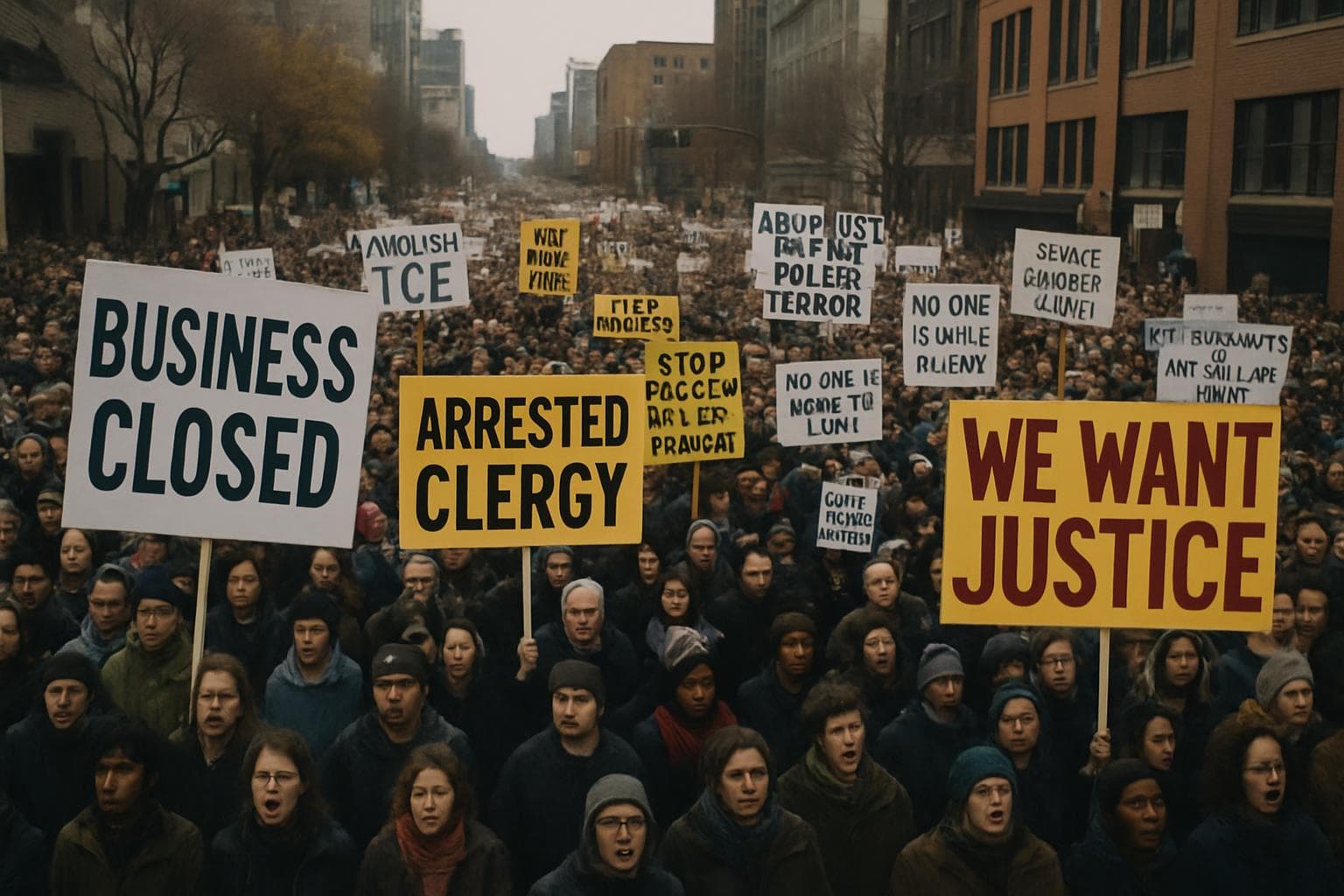
Tens of thousands of Minnesotans took to the streets on Friday in a massive protest against the ongoing Immigration and Customs Enforcement (ICE) operations in the state. The demonstrations, which included an economic blackout with business closures and school absences, were fueled by the recent shooting of Renee Good, an unarmed woman, by an ICE agent in Minneapolis.
Statewide Economic Blackout
The protest, dubbed the "Day of Truth & Freedom," saw participation from community leaders, labor unions, and local businesses. Hundreds of establishments, from restaurants to cultural institutions like the Walker Art Center and the Minneapolis Institute of Art, closed their doors in solidarity. The Minneapolis city council endorsed the action, reflecting the widespread discontent with ICE's presence in the state.
Clergy Arrests and Airport Protests
At the Minneapolis-St. Paul airport, about 100 clergy members were arrested during a protest against ICE deportation flights. The arrests occurred after the demonstration exceeded agreed terms, according to airport officials. Video footage showed protesters braving sub-zero temperatures, singing and praying for an end to the ICE surge.
Calls for Accountability and Investigation
The protests were intensified by the killing of Renee Good, which has sparked demands for the ICE agent involved to be held accountable. Protesters are also calling for a halt to federal funding for ICE and an investigation into potential human rights violations. However, reports indicate that federal prosecutors have been blocked from investigating Good's shooting, causing frustration among legal officials.
Community Impact and Response
The protests have highlighted the broader impact of ICE operations on local communities. Business owners like Corey Lamb, who closed his botanical shop in support, expressed concerns over the economic and moral implications of the immigration crackdown. "When individuals are afraid of being detained, it affects us all," Lamb stated.
WHAT THIS MIGHT MEAN
The protests in Minnesota could lead to increased national scrutiny of ICE operations, particularly in light of the controversial shooting of Renee Good. If federal prosecutors remain unable to investigate, it may fuel further public outcry and pressure on lawmakers to intervene. The involvement of local businesses and cultural institutions suggests a growing movement that could inspire similar actions in other states. As the situation develops, the potential for legislative changes or increased oversight of ICE remains a key area to watch.
Related Articles
Nationwide Protests Erupt Against ICE Following Fatal Shootings
DHS Spokesperson Tricia McLaughlin to Depart Amidst Immigration Policy Controversy
Don Lemon Pleads Not Guilty in Minnesota Church Protest Case
US Immigration Policy Under Scrutiny Amid Rising Tensions and Calls for Transparency
Trump Signals Shift in Immigration Tactics Amid Minnesota Agent Reduction
Trump Signs $1.2 Trillion Budget, Ending Partial Government Shutdown
Minnesota Protests Erupt Against ICE Operations Amid Controversial Shooting
In This Article
 Ethan Brooks| Published
 HIGHLIGHTS
- Thousands of Minnesotans participated in a statewide protest against ICE operations, closing businesses and schools in an economic blackout.
- The protests were sparked by the shooting of Renee Good by an ICE agent, leading to demands for accountability and a federal investigation.
- About 100 clergy members were arrested at the Minneapolis airport for protesting against ICE deportation flights.
- The Minneapolis city council and numerous cultural institutions endorsed the protest, highlighting widespread local support.
- Federal prosecutors have reportedly been blocked from investigating the shooting of Renee Good, causing distress among legal officials.
Tens of thousands of Minnesotans took to the streets on Friday in a massive protest against the ongoing Immigration and Customs Enforcement (ICE) operations in the state. The demonstrations, which included an economic blackout with business closures and school absences, were fueled by the recent shooting of Renee Good, an unarmed woman, by an ICE agent in Minneapolis.
Statewide Economic Blackout
The protest, dubbed the "Day of Truth & Freedom," saw participation from community leaders, labor unions, and local businesses. Hundreds of establishments, from restaurants to cultural institutions like the Walker Art Center and the Minneapolis Institute of Art, closed their doors in solidarity. The Minneapolis city council endorsed the action, reflecting the widespread discontent with ICE's presence in the state.
Clergy Arrests and Airport Protests
At the Minneapolis-St. Paul airport, about 100 clergy members were arrested during a protest against ICE deportation flights. The arrests occurred after the demonstration exceeded agreed terms, according to airport officials. Video footage showed protesters braving sub-zero temperatures, singing and praying for an end to the ICE surge.
Calls for Accountability and Investigation
The protests were intensified by the killing of Renee Good, which has sparked demands for the ICE agent involved to be held accountable. Protesters are also calling for a halt to federal funding for ICE and an investigation into potential human rights violations. However, reports indicate that federal prosecutors have been blocked from investigating Good's shooting, causing frustration among legal officials.
Community Impact and Response
The protests have highlighted the broader impact of ICE operations on local communities. Business owners like Corey Lamb, who closed his botanical shop in support, expressed concerns over the economic and moral implications of the immigration crackdown. "When individuals are afraid of being detained, it affects us all," Lamb stated.
WHAT THIS MIGHT MEAN
The protests in Minnesota could lead to increased national scrutiny of ICE operations, particularly in light of the controversial shooting of Renee Good. If federal prosecutors remain unable to investigate, it may fuel further public outcry and pressure on lawmakers to intervene. The involvement of local businesses and cultural institutions suggests a growing movement that could inspire similar actions in other states. As the situation develops, the potential for legislative changes or increased oversight of ICE remains a key area to watch.
Related Articles
Nationwide Protests Erupt Against ICE Following Fatal Shootings
DHS Spokesperson Tricia McLaughlin to Depart Amidst Immigration Policy Controversy
Don Lemon Pleads Not Guilty in Minnesota Church Protest Case
US Immigration Policy Under Scrutiny Amid Rising Tensions and Calls for Transparency
Trump Signals Shift in Immigration Tactics Amid Minnesota Agent Reduction
Trump Signs $1.2 Trillion Budget, Ending Partial Government Shutdown