
Trump Signals Shift in Immigration Tactics Amid Minnesota Agent Reduction
In This Article
HIGHLIGHTS
- President Trump announced a reduction of 700 federal immigration agents in Minnesota, leaving 2,000 still in place.
- Trump suggested a "softer touch" on immigration enforcement, though he emphasized targeting "really bad criminals."
- The reduction follows backlash over Operation Metro Surge, which led to the deaths of two American citizens.
- Minnesota Governor Tim Walz and other officials demand further drawdowns and state-led investigations into the shootings.
- The federal government plans to equip agents with body-worn cameras to improve accountability.
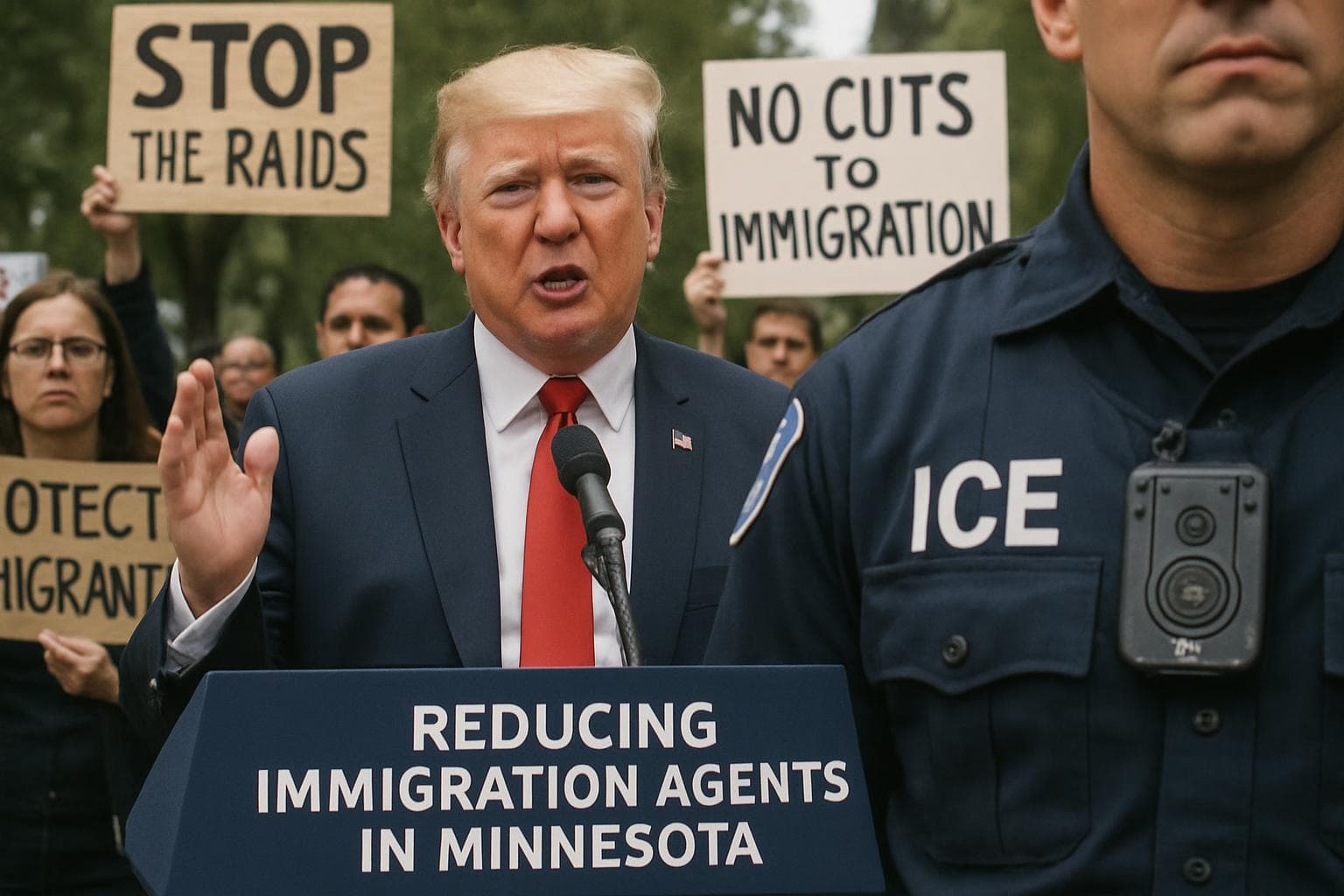
In a notable shift, President Donald Trump has announced a reduction of federal immigration agents in Minnesota, signaling a potential change in his administration's approach to immigration enforcement. This decision comes amid growing criticism of Operation Metro Surge, which has been linked to the deaths of two American citizens, Alex Pretti and Renee Good, during encounters with federal officers.
Federal Presence in Minnesota Reduced
The White House border czar, Tom Homan, confirmed that approximately 700 federal agents would be withdrawn from Minnesota, leaving around 2,000 agents still active in the state. This move, while significant, still maintains a federal presence well above typical levels. Homan noted that the reduction was facilitated by increased cooperation from local jails, although details of these agreements remain unclear.
A Call for Softer Enforcement
In an interview with NBC News, President Trump acknowledged the need for a "softer touch" in immigration enforcement, while maintaining a focus on apprehending "really bad criminals." This statement marks a rare conciliatory tone from the president, who has often championed a hardline stance on immigration.
Backlash and Demands for Accountability
The operation has sparked protests and calls for accountability following the fatal shootings of Pretti and Good. Minnesota Governor Tim Walz has welcomed the reduction but insists on further action, including state-led investigations into the killings. "Today's announcement is a step in the right direction," Walz stated, emphasizing the need for a faster and larger drawdown.
Enhancing Transparency with Body-Worn Cameras
In response to the controversies, Homan announced plans to equip all federal agents in Minneapolis with body-worn cameras, aiming to enhance transparency and accountability. This initiative is part of a broader effort to streamline operations and improve public safety.
WHAT THIS MIGHT MEAN
The reduction of federal agents in Minnesota could signal a strategic pivot in the Trump administration's immigration policy, potentially easing tensions in the state. However, the presence of 2,000 agents still raises concerns among local officials and residents. The implementation of body-worn cameras may help address some accountability issues, but the effectiveness of this measure remains to be seen.
Politically, the move could be seen as an attempt to mitigate backlash and regain public support, particularly in a state that has been vocal in its opposition to aggressive immigration tactics. As the situation unfolds, the administration's ability to balance enforcement with community relations will be critical in shaping the future of immigration policy in the region.
Related Articles
Senate Blocks Resolution to Limit Trump's Military Actions in Iran
Spain's Sánchez Stands Firm Against Trump's Trade Threat Over Iran Stance

US-Iran Tensions Escalate Amid Renewed Nuclear Talks and Protests

Greenland Politely Declines Trump's Hospital Ship Offer Amid Healthcare Debate

Congress Subpoenas Attorney General Bondi in Epstein Investigation

UK-Iran Tensions: Starmer Defends Cautious Approach Amid Trump Criticism
Trump Signals Shift in Immigration Tactics Amid Minnesota Agent Reduction
In This Article
 Ethan Brooks| Published
 HIGHLIGHTS
- President Trump announced a reduction of 700 federal immigration agents in Minnesota, leaving 2,000 still in place.
- Trump suggested a "softer touch" on immigration enforcement, though he emphasized targeting "really bad criminals."
- The reduction follows backlash over Operation Metro Surge, which led to the deaths of two American citizens.
- Minnesota Governor Tim Walz and other officials demand further drawdowns and state-led investigations into the shootings.
- The federal government plans to equip agents with body-worn cameras to improve accountability.
In a notable shift, President Donald Trump has announced a reduction of federal immigration agents in Minnesota, signaling a potential change in his administration's approach to immigration enforcement. This decision comes amid growing criticism of Operation Metro Surge, which has been linked to the deaths of two American citizens, Alex Pretti and Renee Good, during encounters with federal officers.
Federal Presence in Minnesota Reduced
The White House border czar, Tom Homan, confirmed that approximately 700 federal agents would be withdrawn from Minnesota, leaving around 2,000 agents still active in the state. This move, while significant, still maintains a federal presence well above typical levels. Homan noted that the reduction was facilitated by increased cooperation from local jails, although details of these agreements remain unclear.
A Call for Softer Enforcement
In an interview with NBC News, President Trump acknowledged the need for a "softer touch" in immigration enforcement, while maintaining a focus on apprehending "really bad criminals." This statement marks a rare conciliatory tone from the president, who has often championed a hardline stance on immigration.
Backlash and Demands for Accountability
The operation has sparked protests and calls for accountability following the fatal shootings of Pretti and Good. Minnesota Governor Tim Walz has welcomed the reduction but insists on further action, including state-led investigations into the killings. "Today's announcement is a step in the right direction," Walz stated, emphasizing the need for a faster and larger drawdown.
Enhancing Transparency with Body-Worn Cameras
In response to the controversies, Homan announced plans to equip all federal agents in Minneapolis with body-worn cameras, aiming to enhance transparency and accountability. This initiative is part of a broader effort to streamline operations and improve public safety.
WHAT THIS MIGHT MEAN
The reduction of federal agents in Minnesota could signal a strategic pivot in the Trump administration's immigration policy, potentially easing tensions in the state. However, the presence of 2,000 agents still raises concerns among local officials and residents. The implementation of body-worn cameras may help address some accountability issues, but the effectiveness of this measure remains to be seen.
Politically, the move could be seen as an attempt to mitigate backlash and regain public support, particularly in a state that has been vocal in its opposition to aggressive immigration tactics. As the situation unfolds, the administration's ability to balance enforcement with community relations will be critical in shaping the future of immigration policy in the region.
Related Articles
Senate Blocks Resolution to Limit Trump's Military Actions in Iran
Spain's Sánchez Stands Firm Against Trump's Trade Threat Over Iran Stance
US-Iran Tensions Escalate Amid Renewed Nuclear Talks and Protests
Greenland Politely Declines Trump's Hospital Ship Offer Amid Healthcare Debate
Congress Subpoenas Attorney General Bondi in Epstein Investigation
UK-Iran Tensions: Starmer Defends Cautious Approach Amid Trump Criticism