
Modi-Putin Summit Highlights India's Strategic Balancing Act Amid Global Tensions
In This Article
HIGHLIGHTS
- Vladimir Putin's visit to India occurs amid an ICC arrest warrant for alleged war crimes in Ukraine, but India is not an ICC member, allowing the visit to proceed without legal hindrance.
- The summit between Putin and Modi focuses on defense deals, including potential sales of Russian S-400 air defense systems and Sukhoi Su-57 fighter jets.
- Despite US pressure to reduce trade with Russia, India continues to maintain strong defense ties with Moscow, emphasizing strategic autonomy.
- Putin describes India as a "privileged partner" in military cooperation, highlighting shared technology and trust between the two nations.
- The visit underscores India's balancing act between maintaining relations with Russia and navigating Western scrutiny.
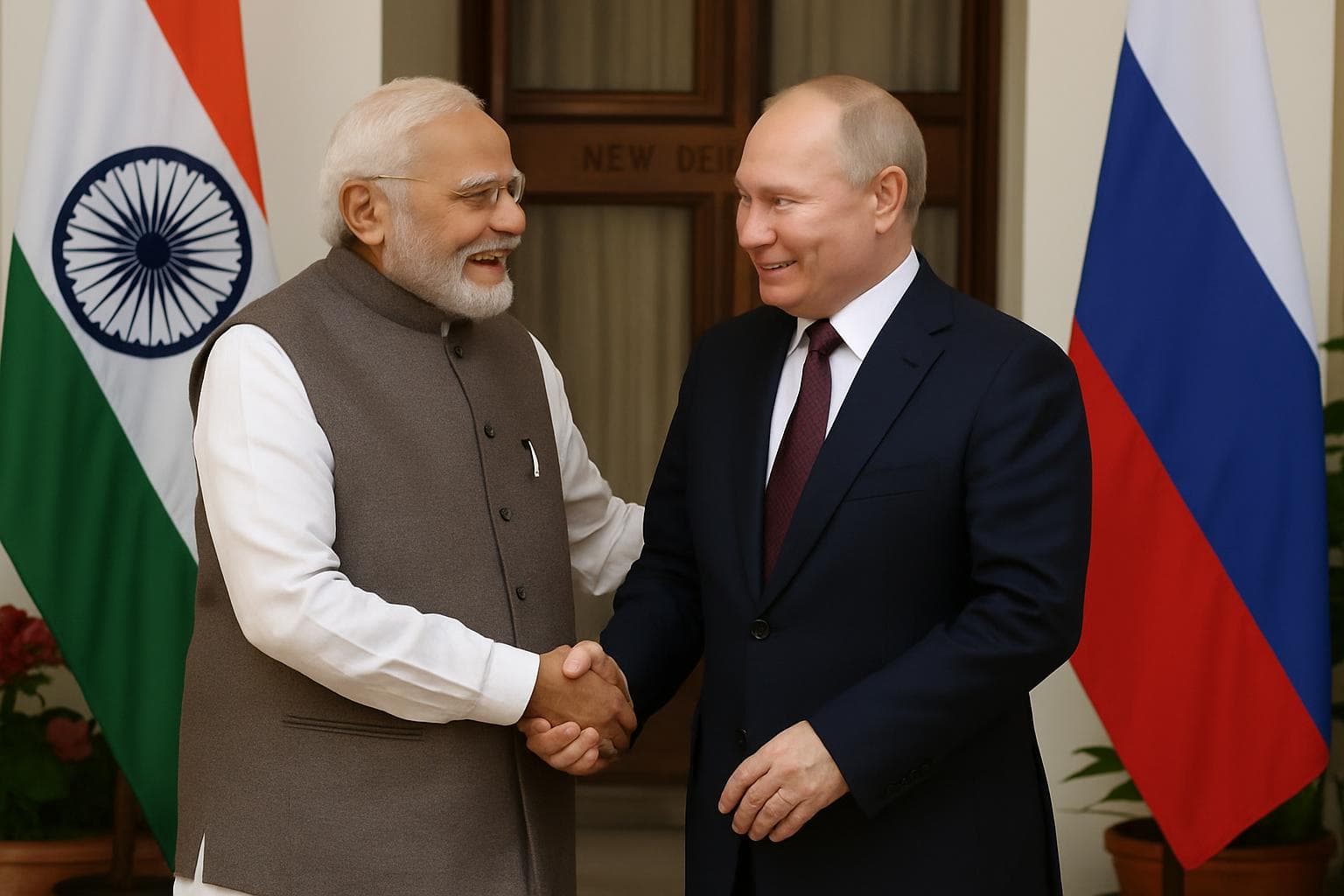
Vladimir Putin's visit to India marks a significant diplomatic engagement as he meets with Prime Minister Narendra Modi in New Delhi. The summit, occurring against the backdrop of an International Criminal Court (ICC) arrest warrant for Putin over alleged war crimes in Ukraine, underscores India's strategic autonomy in foreign relations. Despite the ICC's allegations of unlawful deportation of Ukrainian children, India's non-membership in the ICC allows the visit to proceed without legal complications.
Defense Deals and Strategic Partnerships
The meeting between the two leaders is set to focus on defense cooperation, with Russia remaining a key supplier of military equipment to India. Discussions are expected to include potential sales of the S-400 air defense systems and the advanced Sukhoi Su-57 fighter jets. While India's defense imports from Russia have been declining as it seeks to diversify, the relationship remains robust. Putin emphasized the unique military-technical cooperation between the two countries, stating, "We are not simply selling technology - we are sharing it."
Navigating US Pressure
The summit takes place amid increasing US pressure on India to reduce its trade ties with Russia, particularly in the energy sector. This pressure has been compounded by former US President Donald Trump's public calls for India to halt Russian oil purchases. Despite these challenges, India continues to assert its strategic independence, balancing its defense needs with diplomatic relations.
Warm Welcome and Diplomatic Signals
Putin's arrival in India was marked by a warm reception from Modi, including a hug and a handshake at the airport. This cordial greeting sends a clear message of enduring ties between the two nations, despite external pressures. The leaders' discussions are expected to extend beyond defense, touching on energy purchases and broader economic engagement.
WHAT THIS MIGHT MEAN
The Modi-Putin summit highlights India's delicate balancing act in maintaining its strategic autonomy while navigating international pressures. As India continues to strengthen its defense ties with Russia, it must also manage its relationships with Western nations, particularly the United States. The outcome of this summit could influence India's future defense procurement strategies and its role in global geopolitics. Experts suggest that India's ability to maintain this balance will be crucial in shaping its international standing and economic growth in the coming years.
Related Articles
US Supreme Court Ruling Sparks Trade Uncertainty in Asia and Beyond
Russian LNG Tanker Sinks in Mediterranean Amid Accusations of Ukrainian Drone Attack
Canada Calls for De-escalation Amid US-Israel Strikes on Iran
Cuba Faces Widespread Blackout Amid Deepening Fuel Crisis

UK Faces Dilemmas Amid Iran Conflict and China Spying Allegations
Iran Postpones Khamenei Funeral Amid Escalating US-Israeli Strikes
Modi-Putin Summit Highlights India's Strategic Balancing Act Amid Global Tensions
In This Article
HIGHLIGHTS
- Vladimir Putin's visit to India occurs amid an ICC arrest warrant for alleged war crimes in Ukraine, but India is not an ICC member, allowing the visit to proceed without legal hindrance.
- The summit between Putin and Modi focuses on defense deals, including potential sales of Russian S-400 air defense systems and Sukhoi Su-57 fighter jets.
- Despite US pressure to reduce trade with Russia, India continues to maintain strong defense ties with Moscow, emphasizing strategic autonomy.
- Putin describes India as a "privileged partner" in military cooperation, highlighting shared technology and trust between the two nations.
- The visit underscores India's balancing act between maintaining relations with Russia and navigating Western scrutiny.
Vladimir Putin's visit to India marks a significant diplomatic engagement as he meets with Prime Minister Narendra Modi in New Delhi. The summit, occurring against the backdrop of an International Criminal Court (ICC) arrest warrant for Putin over alleged war crimes in Ukraine, underscores India's strategic autonomy in foreign relations. Despite the ICC's allegations of unlawful deportation of Ukrainian children, India's non-membership in the ICC allows the visit to proceed without legal complications.
Defense Deals and Strategic Partnerships
The meeting between the two leaders is set to focus on defense cooperation, with Russia remaining a key supplier of military equipment to India. Discussions are expected to include potential sales of the S-400 air defense systems and the advanced Sukhoi Su-57 fighter jets. While India's defense imports from Russia have been declining as it seeks to diversify, the relationship remains robust. Putin emphasized the unique military-technical cooperation between the two countries, stating, "We are not simply selling technology - we are sharing it."
Navigating US Pressure
The summit takes place amid increasing US pressure on India to reduce its trade ties with Russia, particularly in the energy sector. This pressure has been compounded by former US President Donald Trump's public calls for India to halt Russian oil purchases. Despite these challenges, India continues to assert its strategic independence, balancing its defense needs with diplomatic relations.
Warm Welcome and Diplomatic Signals
Putin's arrival in India was marked by a warm reception from Modi, including a hug and a handshake at the airport. This cordial greeting sends a clear message of enduring ties between the two nations, despite external pressures. The leaders' discussions are expected to extend beyond defense, touching on energy purchases and broader economic engagement.
WHAT THIS MIGHT MEAN
The Modi-Putin summit highlights India's delicate balancing act in maintaining its strategic autonomy while navigating international pressures. As India continues to strengthen its defense ties with Russia, it must also manage its relationships with Western nations, particularly the United States. The outcome of this summit could influence India's future defense procurement strategies and its role in global geopolitics. Experts suggest that India's ability to maintain this balance will be crucial in shaping its international standing and economic growth in the coming years.
Related Articles
US Supreme Court Ruling Sparks Trade Uncertainty in Asia and Beyond
Russian LNG Tanker Sinks in Mediterranean Amid Accusations of Ukrainian Drone Attack
Canada Calls for De-escalation Amid US-Israel Strikes on Iran
Cuba Faces Widespread Blackout Amid Deepening Fuel Crisis
UK Faces Dilemmas Amid Iran Conflict and China Spying Allegations
Iran Postpones Khamenei Funeral Amid Escalating US-Israeli Strikes