
Modi's China Visit Amid US Trade Tensions Highlights India's Strategic Balancing Act
In This Article
HIGHLIGHTS
- Indian Prime Minister Narendra Modi is set to meet Chinese President Xi Jinping and Russian President Vladimir Putin amid rising US-India trade tensions.
- The US has doubled tariffs on Indian exports to 50%, citing India's ongoing purchases of Russian oil as a key factor.
- Modi's visit to China for the Shanghai Cooperation Organisation summit marks his first in seven years, highlighting a shift in India's foreign policy focus.
- India's strategic balancing act involves maintaining ties with both the US-led Indo-Pacific Quad and the China-Russia-led SCO.
- Analysts suggest India's approach of hedging between global powers is driven by its desire for strategic autonomy and economic necessity.
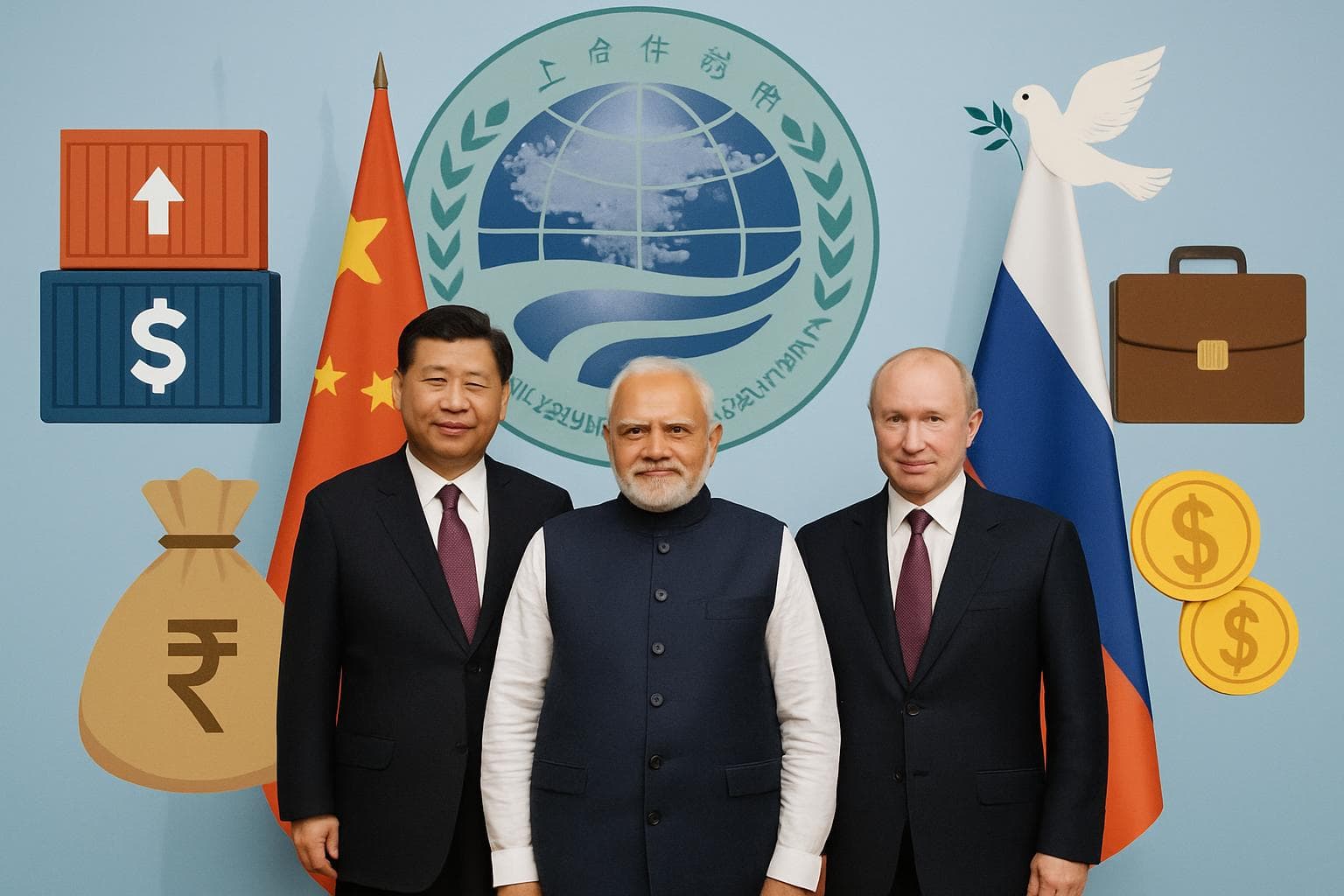
Indian Prime Minister Narendra Modi's upcoming visit to China marks a pivotal moment in India's foreign policy as it navigates escalating trade tensions with the United States. Modi is scheduled to meet Chinese President Xi Jinping and Russian President Vladimir Putin during the Shanghai Cooperation Organisation (SCO) summit in Tianjin, a trip that underscores India's strategic balancing act between competing global powers.
US-India Trade Tensions Escalate
The backdrop to Modi's visit is a significant deterioration in US-India relations, primarily driven by Washington's decision to double tariffs on Indian exports to 50%. The US has cited India's continued purchase of discounted Russian oil as a major factor, arguing that these transactions indirectly support Moscow's war efforts in Ukraine. This move has strained the previously deepening cooperation between the two nations, which was built on shared technological interests and a mutual desire to counter China's global influence.
India's Strategic Hedging
Despite the growing rift with the US, India remains committed to its policy of strategic autonomy. As a member of both the US-led Indo-Pacific Quad and the China-Russia-led SCO, India seeks to leverage its position by engaging with multiple global powers. Former Indian ambassador Jitendra Nath Misra describes this approach as "hedging," a necessary strategy given India's economic and military constraints compared to superpowers like the US and China.
Modi's Diplomatic Maneuvering
Modi's visit to China is his first in seven years and comes at a time when India-China relations are cautiously stabilizing after the 2020 Galwan Valley clashes. The meeting with Xi Jinping is seen as an opportunity to further thaw relations and explore avenues for increased trade and investment. Analysts like Michael Kugelman suggest that the current US-India crisis provides Modi with a compelling reason to accelerate efforts to ease tensions with China.
Economic Implications and Future Prospects
The economic impact of the US tariffs is substantial, affecting approximately $60.2 billion worth of Indian exports, particularly in labor-intensive sectors such as textiles and jewelry. As India seeks to diversify its trade partnerships, the SCO summit presents an opportunity to strengthen ties with China and Russia, potentially offsetting some of the economic fallout from the US tariffs.
WHAT THIS MIGHT MEAN
Looking ahead, India's foreign policy will likely continue to emphasize strategic autonomy, balancing its relationships with major global powers. The outcome of Modi's meetings with Xi and Putin could lead to increased economic cooperation with China and Russia, providing India with a buffer against US trade pressures. However, this approach also risks further alienating Washington, potentially complicating India's participation in the Indo-Pacific Quad. As India navigates these complex dynamics, its ability to maintain a stable and diversified foreign policy will be crucial in shaping its global standing and economic future.
Related Articles
Russian LNG Tanker Sinks in Mediterranean Amid Accusations of Ukrainian Drone Attack
US Supreme Court Ruling Sparks Trade Uncertainty in Asia and Beyond
China Sets Lowest GDP Growth Target in Decades Amid Economic Challenges

UK Faces Dilemmas Amid Iran Conflict and China Spying Allegations
Canada Calls for De-escalation Amid US-Israel Strikes on Iran

Russia-Ukraine Conflict: Four Years of Unyielding Struggle and Human Resilience
Modi's China Visit Amid US Trade Tensions Highlights India's Strategic Balancing Act
In This Article
HIGHLIGHTS
- Indian Prime Minister Narendra Modi is set to meet Chinese President Xi Jinping and Russian President Vladimir Putin amid rising US-India trade tensions.
- The US has doubled tariffs on Indian exports to 50%, citing India's ongoing purchases of Russian oil as a key factor.
- Modi's visit to China for the Shanghai Cooperation Organisation summit marks his first in seven years, highlighting a shift in India's foreign policy focus.
- India's strategic balancing act involves maintaining ties with both the US-led Indo-Pacific Quad and the China-Russia-led SCO.
- Analysts suggest India's approach of hedging between global powers is driven by its desire for strategic autonomy and economic necessity.
Indian Prime Minister Narendra Modi's upcoming visit to China marks a pivotal moment in India's foreign policy as it navigates escalating trade tensions with the United States. Modi is scheduled to meet Chinese President Xi Jinping and Russian President Vladimir Putin during the Shanghai Cooperation Organisation (SCO) summit in Tianjin, a trip that underscores India's strategic balancing act between competing global powers.
US-India Trade Tensions Escalate
The backdrop to Modi's visit is a significant deterioration in US-India relations, primarily driven by Washington's decision to double tariffs on Indian exports to 50%. The US has cited India's continued purchase of discounted Russian oil as a major factor, arguing that these transactions indirectly support Moscow's war efforts in Ukraine. This move has strained the previously deepening cooperation between the two nations, which was built on shared technological interests and a mutual desire to counter China's global influence.
India's Strategic Hedging
Despite the growing rift with the US, India remains committed to its policy of strategic autonomy. As a member of both the US-led Indo-Pacific Quad and the China-Russia-led SCO, India seeks to leverage its position by engaging with multiple global powers. Former Indian ambassador Jitendra Nath Misra describes this approach as "hedging," a necessary strategy given India's economic and military constraints compared to superpowers like the US and China.
Modi's Diplomatic Maneuvering
Modi's visit to China is his first in seven years and comes at a time when India-China relations are cautiously stabilizing after the 2020 Galwan Valley clashes. The meeting with Xi Jinping is seen as an opportunity to further thaw relations and explore avenues for increased trade and investment. Analysts like Michael Kugelman suggest that the current US-India crisis provides Modi with a compelling reason to accelerate efforts to ease tensions with China.
Economic Implications and Future Prospects
The economic impact of the US tariffs is substantial, affecting approximately $60.2 billion worth of Indian exports, particularly in labor-intensive sectors such as textiles and jewelry. As India seeks to diversify its trade partnerships, the SCO summit presents an opportunity to strengthen ties with China and Russia, potentially offsetting some of the economic fallout from the US tariffs.
WHAT THIS MIGHT MEAN
Looking ahead, India's foreign policy will likely continue to emphasize strategic autonomy, balancing its relationships with major global powers. The outcome of Modi's meetings with Xi and Putin could lead to increased economic cooperation with China and Russia, providing India with a buffer against US trade pressures. However, this approach also risks further alienating Washington, potentially complicating India's participation in the Indo-Pacific Quad. As India navigates these complex dynamics, its ability to maintain a stable and diversified foreign policy will be crucial in shaping its global standing and economic future.
Related Articles
Russian LNG Tanker Sinks in Mediterranean Amid Accusations of Ukrainian Drone Attack
US Supreme Court Ruling Sparks Trade Uncertainty in Asia and Beyond
China Sets Lowest GDP Growth Target in Decades Amid Economic Challenges
UK Faces Dilemmas Amid Iran Conflict and China Spying Allegations
Canada Calls for De-escalation Amid US-Israel Strikes on Iran
Russia-Ukraine Conflict: Four Years of Unyielding Struggle and Human Resilience