
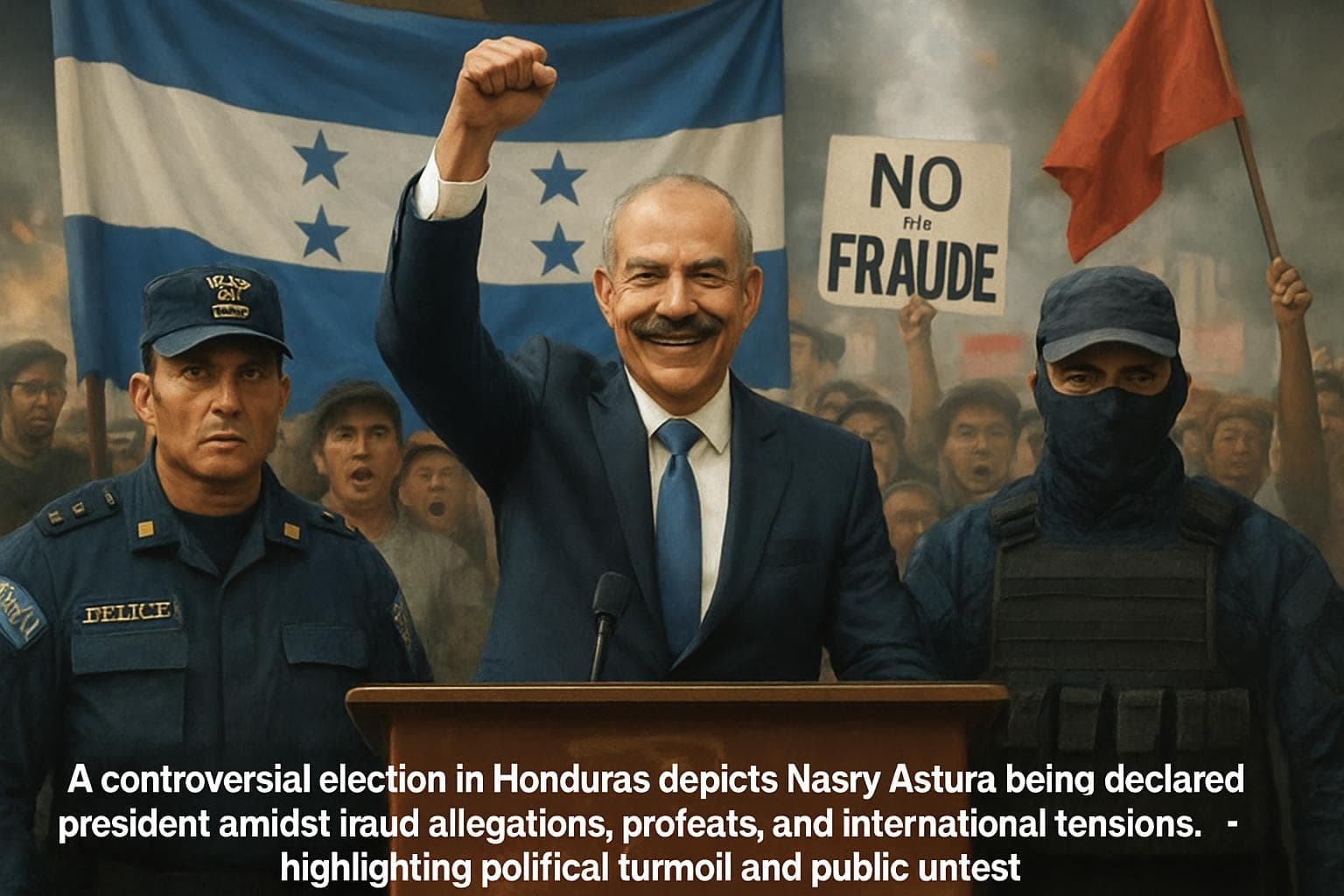
Nasry Asfura Declared President of Honduras Amidst Controversy and Allegations of Fraud
In This Article
HIGHLIGHTS
- Nasry Asfura, backed by Donald Trump, won the Honduran presidential election with 40.3% of the vote.
- Salvador Nasralla, who received 39.5%, has refused to concede, citing fraud and data manipulation.
- The election was marred by delays and technical issues, leading to protests and allegations of an "electoral coup."
- US President Trump threatened to withdraw financial support if Asfura did not win, raising concerns of interference.
- The National Electoral Council declared Asfura the winner before completing a full recount, sparking further controversy.
In a tightly contested and contentious election, Nasry Asfura has been declared the new president of Honduras, securing 40.3% of the vote. The announcement by the National Electoral Council (CNE) came after weeks of delays and allegations of fraud, with Asfura edging out his closest rival, Salvador Nasralla, who garnered 39.5%.
Election Delays and Allegations
The election, held on November 30, was plagued by technical issues that delayed the vote count, leading to widespread protests across the nation. The CNE attributed the delays to a private company responsible for tabulating the results, which reportedly conducted unscheduled maintenance. As a result, around 15% of the tally sheets required manual counting.
Fraud Claims and Political Tensions
Nasralla, representing the centre-right Liberal Party, has refused to accept the results, alleging fraud and manipulation of the vote count. He accused "corrupt people" of altering data from the original tally sheets and urged his supporters to remain calm. The president of the Honduran Congress, Luis Redondo, also rejected the results, calling them "completely illegal."
US Influence and International Reactions
The election has drawn international attention, particularly due to the involvement of US President Donald Trump, who openly endorsed Asfura. Trump warned of withdrawing financial support if Asfura's narrow lead was overturned, a move that has been criticized as interference. Additionally, Trump pardoned Juan Orlando Hernández, a member of Asfura's National Party, who was serving a 45-year sentence in the US.
Official Declaration and Future Implications
Despite the controversies, the CNE declared Asfura the constitutional president for the term beginning January 27, 2026. The Organization of American States, which observed the election, expressed concerns over the premature declaration before a complete recount. The electoral council's decision was made by two of its three councillors, with the third, aligned with outgoing President Xiomara Castro's party, refusing to recognize the result.
WHAT THIS MIGHT MEAN
The declaration of Nasry Asfura as president amidst allegations of fraud and US interference could lead to prolonged political instability in Honduras. Legal challenges to the election results are likely, with the possibility of court intervention. The involvement of the US, particularly Trump's endorsement and threats, may strain Honduras's international relations and impact future bilateral agreements. As the country navigates this contentious transition, the focus will be on maintaining peace and addressing the concerns of the Honduran populace.
Related Articles
Congress Subpoenas Attorney General Bondi in Epstein Investigation
Cuba Faces Widespread Blackout Amid Deepening Fuel Crisis

UK Faces Dilemmas Amid Iran Conflict and China Spying Allegations
Senate Blocks Resolution to Limit Trump's Military Actions in Iran
China Sets Lowest GDP Growth Target in Decades Amid Economic Challenges

Tech Giants Pledge to Cover AI Data Center Energy Costs Amid Rising Electricity Concerns
Nasry Asfura Declared President of Honduras Amidst Controversy and Allegations of Fraud
In This Article
 Alex Carter| Published
 HIGHLIGHTS
- Nasry Asfura, backed by Donald Trump, won the Honduran presidential election with 40.3% of the vote.
- Salvador Nasralla, who received 39.5%, has refused to concede, citing fraud and data manipulation.
- The election was marred by delays and technical issues, leading to protests and allegations of an "electoral coup."
- US President Trump threatened to withdraw financial support if Asfura did not win, raising concerns of interference.
- The National Electoral Council declared Asfura the winner before completing a full recount, sparking further controversy.
In a tightly contested and contentious election, Nasry Asfura has been declared the new president of Honduras, securing 40.3% of the vote. The announcement by the National Electoral Council (CNE) came after weeks of delays and allegations of fraud, with Asfura edging out his closest rival, Salvador Nasralla, who garnered 39.5%.
Election Delays and Allegations
The election, held on November 30, was plagued by technical issues that delayed the vote count, leading to widespread protests across the nation. The CNE attributed the delays to a private company responsible for tabulating the results, which reportedly conducted unscheduled maintenance. As a result, around 15% of the tally sheets required manual counting.
Fraud Claims and Political Tensions
Nasralla, representing the centre-right Liberal Party, has refused to accept the results, alleging fraud and manipulation of the vote count. He accused "corrupt people" of altering data from the original tally sheets and urged his supporters to remain calm. The president of the Honduran Congress, Luis Redondo, also rejected the results, calling them "completely illegal."
US Influence and International Reactions
The election has drawn international attention, particularly due to the involvement of US President Donald Trump, who openly endorsed Asfura. Trump warned of withdrawing financial support if Asfura's narrow lead was overturned, a move that has been criticized as interference. Additionally, Trump pardoned Juan Orlando Hernández, a member of Asfura's National Party, who was serving a 45-year sentence in the US.
Official Declaration and Future Implications
Despite the controversies, the CNE declared Asfura the constitutional president for the term beginning January 27, 2026. The Organization of American States, which observed the election, expressed concerns over the premature declaration before a complete recount. The electoral council's decision was made by two of its three councillors, with the third, aligned with outgoing President Xiomara Castro's party, refusing to recognize the result.
WHAT THIS MIGHT MEAN
The declaration of Nasry Asfura as president amidst allegations of fraud and US interference could lead to prolonged political instability in Honduras. Legal challenges to the election results are likely, with the possibility of court intervention. The involvement of the US, particularly Trump's endorsement and threats, may strain Honduras's international relations and impact future bilateral agreements. As the country navigates this contentious transition, the focus will be on maintaining peace and addressing the concerns of the Honduran populace.
Related Articles
Congress Subpoenas Attorney General Bondi in Epstein Investigation
Cuba Faces Widespread Blackout Amid Deepening Fuel Crisis
UK Faces Dilemmas Amid Iran Conflict and China Spying Allegations
Senate Blocks Resolution to Limit Trump's Military Actions in Iran
China Sets Lowest GDP Growth Target in Decades Amid Economic Challenges
Tech Giants Pledge to Cover AI Data Center Energy Costs Amid Rising Electricity Concerns