
National Guard Deployment in Washington DC Sparks Controversy
In This Article
HIGHLIGHTS
- President Trump deployed 800 National Guard troops to Washington DC, citing a need to control violent crime.
- Washington DC Mayor Muriel Bowser criticized the deployment as an "authoritarian push" and disputed claims of rising crime.
- The Trump administration plans to expand National Guard use, potentially creating a "Domestic Civil Disturbance Quick Reaction Force."
- Federal agents made 23 arrests in DC, with charges ranging from homicide to firearms offenses.
- The deployment has sparked debate over federal overreach and the autonomy of local governments.
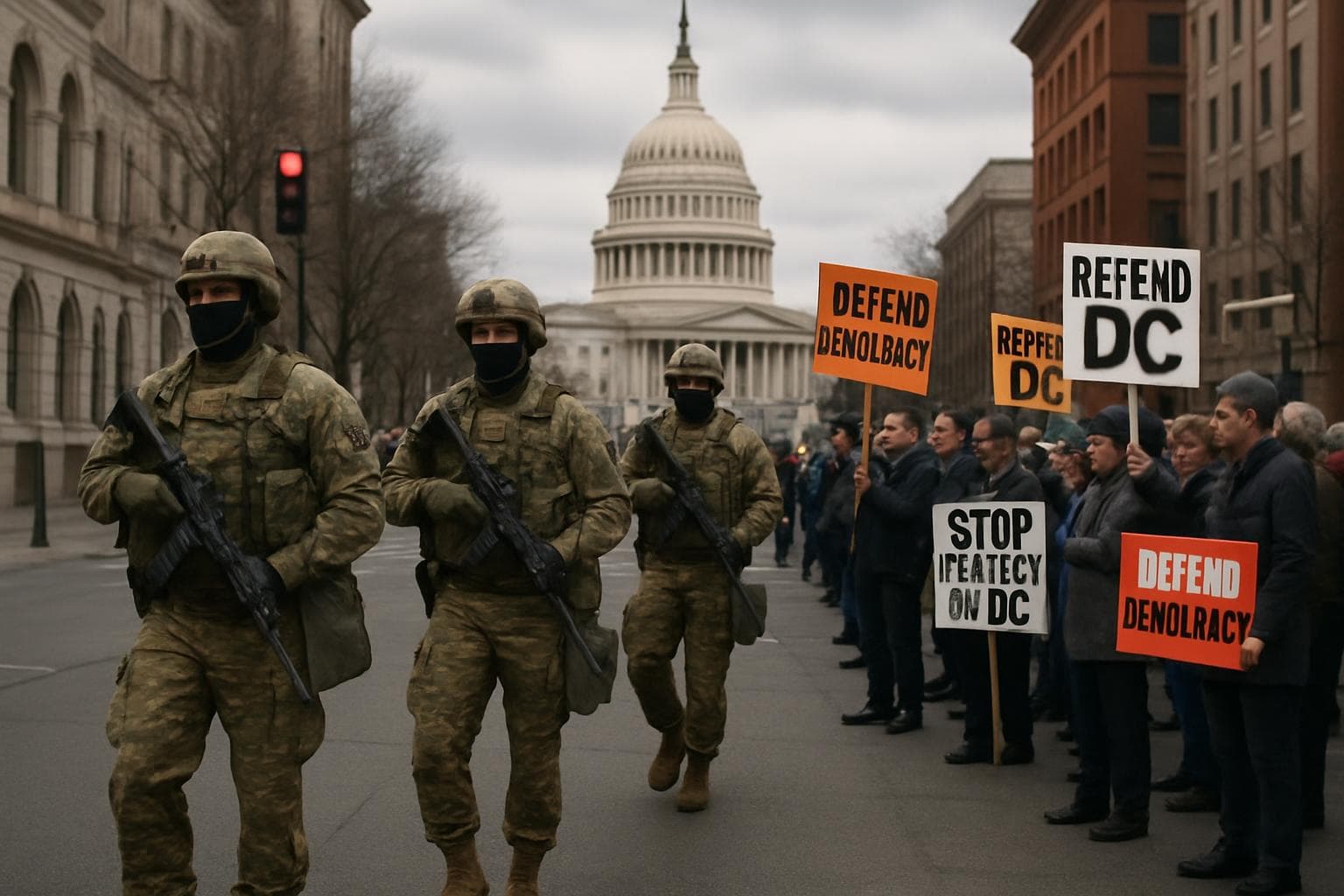
The deployment of National Guard troops in Washington DC has ignited a political firestorm, with President Donald Trump asserting it is necessary to combat violent crime, while local officials and critics decry it as an overreach of federal power. The move, which began on Tuesday evening, involves 800 National Guard troops and 500 federal law enforcement agents patrolling the streets of the US capital.
Federal Intervention and Local Response
President Trump, a Republican, justified the deployment by labeling Washington DC a "lawless" city, despite official statistics showing crime at a 30-year low. The decision has been met with resistance from Washington DC Mayor Muriel Bowser, a Democrat, who described the action as an "authoritarian push." Bowser emphasized the importance of maintaining the city's autonomy and criticized the federal intervention as unnecessary.
"We must protect our city and our home rule," Bowser stated during a town hall meeting, urging the community to stand against what she perceives as federal overreach.
Law Enforcement Surge and Arrests
The Trump administration's law enforcement surge resulted in 23 arrests on Monday night, with charges including homicide, firearms offenses, and drug dealing. White House Press Secretary Karoline Leavitt announced that this is just the beginning of a month-long crackdown on crime in the District. "We will relentlessly pursue and arrest every violent criminal," Leavitt declared.
FBI Director Kash Patel confirmed that federal agents were involved in approximately half of these arrests, highlighting the collaborative effort between federal and local law enforcement.
Expansion of National Guard Role
In a move that could further escalate tensions, the Pentagon is reportedly evaluating plans to establish a "Domestic Civil Disturbance Quick Reaction Force." This initiative would allow for rapid deployment of troops to cities experiencing unrest or protests. The proposal, still in its early stages, has drawn criticism for its potential to undermine civil liberties.
Hina Shamsi, director of the ACLU's National Security Project, warned that the plan represents a "breathtakingly dangerous power grab," emphasizing the importance of protecting the constitutional right to protest.
WHAT THIS MIGHT MEAN
The deployment of National Guard troops in Washington DC raises significant questions about the balance of power between federal and local authorities. If the Trump administration proceeds with plans to expand the National Guard's role, it could set a precedent for increased federal intervention in local matters, potentially leading to legal challenges. Experts caution that such actions may erode public trust and provoke further unrest. As the situation unfolds, the response from local governments and the public will be crucial in shaping the future of federal-local relations in the United States.
Related Articles
Spain's Sánchez Stands Firm Against Trump's Trade Threat Over Iran Stance
US and Israel Intensify Military Campaign as Iran's Capabilities Dwindle
Senate Blocks Resolution to Limit Trump's Military Actions in Iran
Iran Postpones Khamenei Funeral Amid Escalating US-Israeli Strikes

Tech Giants Pledge to Cover AI Data Center Energy Costs Amid Rising Electricity Concerns
Congress Subpoenas Attorney General Bondi in Epstein Investigation
National Guard Deployment in Washington DC Sparks Controversy
In This Article
 Ethan Brooks| Published
 HIGHLIGHTS
- President Trump deployed 800 National Guard troops to Washington DC, citing a need to control violent crime.
- Washington DC Mayor Muriel Bowser criticized the deployment as an "authoritarian push" and disputed claims of rising crime.
- The Trump administration plans to expand National Guard use, potentially creating a "Domestic Civil Disturbance Quick Reaction Force."
- Federal agents made 23 arrests in DC, with charges ranging from homicide to firearms offenses.
- The deployment has sparked debate over federal overreach and the autonomy of local governments.
The deployment of National Guard troops in Washington DC has ignited a political firestorm, with President Donald Trump asserting it is necessary to combat violent crime, while local officials and critics decry it as an overreach of federal power. The move, which began on Tuesday evening, involves 800 National Guard troops and 500 federal law enforcement agents patrolling the streets of the US capital.
Federal Intervention and Local Response
President Trump, a Republican, justified the deployment by labeling Washington DC a "lawless" city, despite official statistics showing crime at a 30-year low. The decision has been met with resistance from Washington DC Mayor Muriel Bowser, a Democrat, who described the action as an "authoritarian push." Bowser emphasized the importance of maintaining the city's autonomy and criticized the federal intervention as unnecessary.
"We must protect our city and our home rule," Bowser stated during a town hall meeting, urging the community to stand against what she perceives as federal overreach.
Law Enforcement Surge and Arrests
The Trump administration's law enforcement surge resulted in 23 arrests on Monday night, with charges including homicide, firearms offenses, and drug dealing. White House Press Secretary Karoline Leavitt announced that this is just the beginning of a month-long crackdown on crime in the District. "We will relentlessly pursue and arrest every violent criminal," Leavitt declared.
FBI Director Kash Patel confirmed that federal agents were involved in approximately half of these arrests, highlighting the collaborative effort between federal and local law enforcement.
Expansion of National Guard Role
In a move that could further escalate tensions, the Pentagon is reportedly evaluating plans to establish a "Domestic Civil Disturbance Quick Reaction Force." This initiative would allow for rapid deployment of troops to cities experiencing unrest or protests. The proposal, still in its early stages, has drawn criticism for its potential to undermine civil liberties.
Hina Shamsi, director of the ACLU's National Security Project, warned that the plan represents a "breathtakingly dangerous power grab," emphasizing the importance of protecting the constitutional right to protest.
WHAT THIS MIGHT MEAN
The deployment of National Guard troops in Washington DC raises significant questions about the balance of power between federal and local authorities. If the Trump administration proceeds with plans to expand the National Guard's role, it could set a precedent for increased federal intervention in local matters, potentially leading to legal challenges. Experts caution that such actions may erode public trust and provoke further unrest. As the situation unfolds, the response from local governments and the public will be crucial in shaping the future of federal-local relations in the United States.
Related Articles
Spain's Sánchez Stands Firm Against Trump's Trade Threat Over Iran Stance
US and Israel Intensify Military Campaign as Iran's Capabilities Dwindle
Senate Blocks Resolution to Limit Trump's Military Actions in Iran
Iran Postpones Khamenei Funeral Amid Escalating US-Israeli Strikes
Tech Giants Pledge to Cover AI Data Center Energy Costs Amid Rising Electricity Concerns
Congress Subpoenas Attorney General Bondi in Epstein Investigation