
Netanyahu's Political Gambit: Iran Conflict and Its Impact on Israeli Politics
In This Article
HIGHLIGHTS
- Israeli Prime Minister Benjamin Netanyahu's decision to resume attacks in Gaza, despite a ceasefire, has drawn criticism for prioritizing political survival over hostages' safety.
- Netanyahu's recent military success against Iran is seen as a potential boost for his political standing, though polls suggest limited gains.
- A significant portion of Israelis, 59%, favor ending the Gaza conflict in exchange for hostages, reflecting public fatigue with ongoing hostilities.
- Netanyahu's coalition government remains fragile, with deep societal divisions and skepticism about his motives.
- The Israeli political landscape remains polarized, with Netanyahu's supporters rallying behind him while critics question his opportunistic approach.
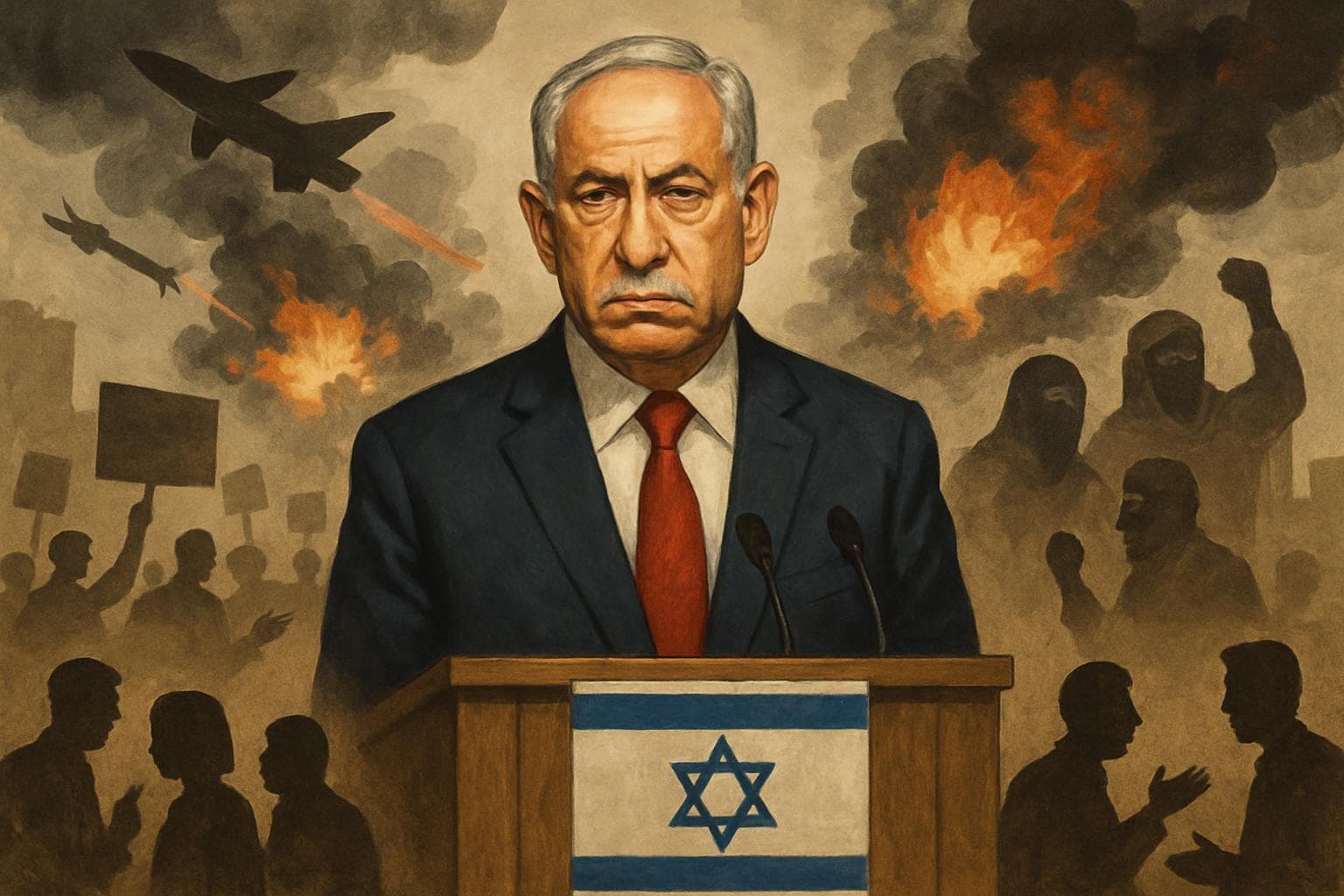
Israeli Prime Minister Benjamin Netanyahu's recent military campaign against Iran has sparked a complex political debate within Israel, as the nation grapples with the aftermath of the conflict and ongoing tensions in Gaza. Netanyahu, who has been at the helm of Israeli politics for over a decade, faces both criticism and cautious support as he navigates the turbulent waters of Middle Eastern geopolitics.
Resumption of Gaza Hostilities
In March, Netanyahu made the controversial decision to resume military operations in Gaza, effectively abandoning a ceasefire that had been brokered with the help of former U.S. President Donald Trump's envoy, Steve Witkoff. This ceasefire had facilitated the release of hostages held by Hamas in exchange for Palestinian prisoners. However, Netanyahu's insistence on continuing the fight against Hamas, with the aim of their complete destruction, has been perceived by many Israelis as prioritizing his political agenda over the safe return of hostages.
Iran Conflict: A Double-Edged Sword
The recent conflict with Iran, which Netanyahu has framed as a significant military victory, is seen by some as a strategic move to bolster his political standing. In a recent press conference, Netanyahu highlighted the destruction of Iran's nuclear capabilities as a "window of opportunity" for broader peace agreements in the region. Despite these claims, polling data from Ma'ariv newspaper suggests that Netanyahu's Likud Party may struggle to secure a majority in the Knesset, with only a modest increase in support following the conflict.
Public Opinion and Political Divisions
Public sentiment in Israel remains divided. A significant majority, 59%, support ending the Gaza conflict in exchange for hostages, indicating widespread war fatigue. Additionally, nearly half of Israelis believe Netanyahu's continuation of the war is driven by personal political considerations. Professor Tamar Hermann from the Israel Democracy Institute notes that while Netanyahu's supporters remain loyal, his critics continue to view his actions as opportunistic.
Coalition Challenges and Future Prospects
Netanyahu's coalition government, composed of right-wing and religious parties, faces ongoing challenges. The deep societal divisions and skepticism about Netanyahu's motives have not dissipated, even after the perceived victory over Iran. As Israel's longest-serving leader contemplates early elections, the question remains whether his recent military successes will translate into political gains or further polarize the electorate.
WHAT THIS MIGHT MEAN
Looking ahead, Netanyahu's political future hinges on his ability to navigate the complex dynamics of Israeli politics and public opinion. If he calls for early elections, he risks exposing the fragility of his coalition and the potential for a fragmented Knesset. The ongoing conflict in Gaza and the unresolved hostage situation could further erode public trust if not addressed promptly. Experts suggest that Netanyahu's legacy will be shaped by his capacity to balance military achievements with genuine efforts toward peace and reconciliation in the region.
Related Articles
Middle East Conflict Drives UK Energy Prices to New Highs

UK Faces Dilemmas Amid Iran Conflict and China Spying Allegations
US and Israel Intensify Military Campaign as Iran's Capabilities Dwindle
Senate Blocks Resolution to Limit Trump's Military Actions in Iran
Intensified US-Israel Strikes on Iran Spark Global Outcry

UK Reinforces Military Presence in Cyprus Amid Middle East Tensions
Netanyahu's Political Gambit: Iran Conflict and Its Impact on Israeli Politics
In This Article
 James Okoro| Published
 HIGHLIGHTS
- Israeli Prime Minister Benjamin Netanyahu's decision to resume attacks in Gaza, despite a ceasefire, has drawn criticism for prioritizing political survival over hostages' safety.
- Netanyahu's recent military success against Iran is seen as a potential boost for his political standing, though polls suggest limited gains.
- A significant portion of Israelis, 59%, favor ending the Gaza conflict in exchange for hostages, reflecting public fatigue with ongoing hostilities.
- Netanyahu's coalition government remains fragile, with deep societal divisions and skepticism about his motives.
- The Israeli political landscape remains polarized, with Netanyahu's supporters rallying behind him while critics question his opportunistic approach.
Israeli Prime Minister Benjamin Netanyahu's recent military campaign against Iran has sparked a complex political debate within Israel, as the nation grapples with the aftermath of the conflict and ongoing tensions in Gaza. Netanyahu, who has been at the helm of Israeli politics for over a decade, faces both criticism and cautious support as he navigates the turbulent waters of Middle Eastern geopolitics.
Resumption of Gaza Hostilities
In March, Netanyahu made the controversial decision to resume military operations in Gaza, effectively abandoning a ceasefire that had been brokered with the help of former U.S. President Donald Trump's envoy, Steve Witkoff. This ceasefire had facilitated the release of hostages held by Hamas in exchange for Palestinian prisoners. However, Netanyahu's insistence on continuing the fight against Hamas, with the aim of their complete destruction, has been perceived by many Israelis as prioritizing his political agenda over the safe return of hostages.
Iran Conflict: A Double-Edged Sword
The recent conflict with Iran, which Netanyahu has framed as a significant military victory, is seen by some as a strategic move to bolster his political standing. In a recent press conference, Netanyahu highlighted the destruction of Iran's nuclear capabilities as a "window of opportunity" for broader peace agreements in the region. Despite these claims, polling data from Ma'ariv newspaper suggests that Netanyahu's Likud Party may struggle to secure a majority in the Knesset, with only a modest increase in support following the conflict.
Public Opinion and Political Divisions
Public sentiment in Israel remains divided. A significant majority, 59%, support ending the Gaza conflict in exchange for hostages, indicating widespread war fatigue. Additionally, nearly half of Israelis believe Netanyahu's continuation of the war is driven by personal political considerations. Professor Tamar Hermann from the Israel Democracy Institute notes that while Netanyahu's supporters remain loyal, his critics continue to view his actions as opportunistic.
Coalition Challenges and Future Prospects
Netanyahu's coalition government, composed of right-wing and religious parties, faces ongoing challenges. The deep societal divisions and skepticism about Netanyahu's motives have not dissipated, even after the perceived victory over Iran. As Israel's longest-serving leader contemplates early elections, the question remains whether his recent military successes will translate into political gains or further polarize the electorate.
WHAT THIS MIGHT MEAN
Looking ahead, Netanyahu's political future hinges on his ability to navigate the complex dynamics of Israeli politics and public opinion. If he calls for early elections, he risks exposing the fragility of his coalition and the potential for a fragmented Knesset. The ongoing conflict in Gaza and the unresolved hostage situation could further erode public trust if not addressed promptly. Experts suggest that Netanyahu's legacy will be shaped by his capacity to balance military achievements with genuine efforts toward peace and reconciliation in the region.
Related Articles
Middle East Conflict Drives UK Energy Prices to New Highs
UK Faces Dilemmas Amid Iran Conflict and China Spying Allegations
US and Israel Intensify Military Campaign as Iran's Capabilities Dwindle
Senate Blocks Resolution to Limit Trump's Military Actions in Iran
Intensified US-Israel Strikes on Iran Spark Global Outcry
UK Reinforces Military Presence in Cyprus Amid Middle East Tensions