
Northern Ireland Bonfire Effigy of Refugees Sparks Outrage and Political Condemnation
In This Article
HIGHLIGHTS
- A controversial bonfire in Moygashel, Northern Ireland, featured an effigy of refugees, sparking widespread condemnation from political leaders.
- The effigy, placed on a bonfire set to be lit as part of loyalist celebrations, was labeled as "racist" and "incitement to hatred" by politicians.
- The Democratic Unionist Party (DUP) and other political figures emphasized that bonfires should be positive cultural celebrations, not platforms for hate.
- Amnesty International and local migrant organizations have called for the immediate removal of the effigy, citing it as a dehumanizing act.
- The incident follows recent anti-immigrant riots and highlights ongoing tensions around immigration in the region.
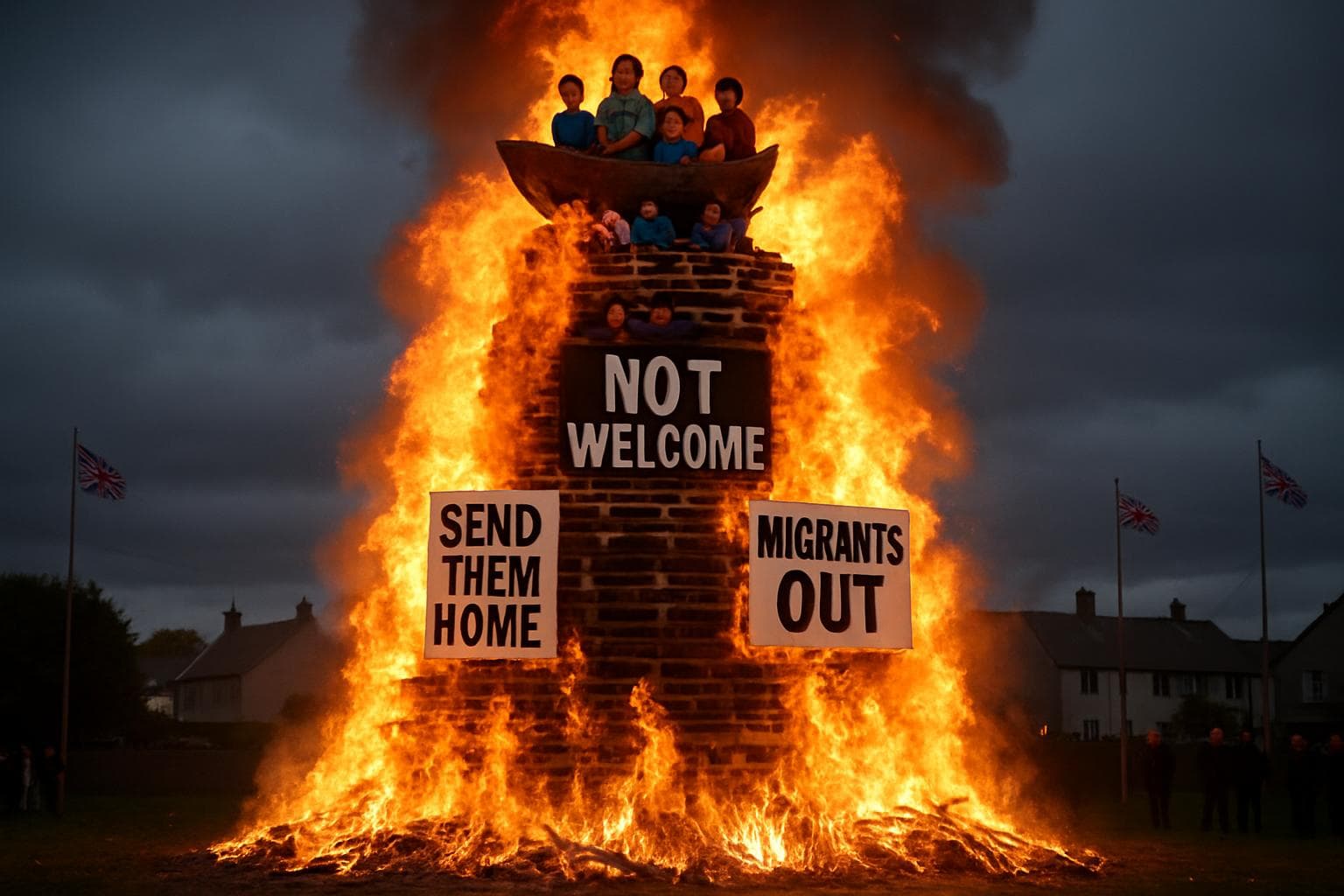
A bonfire in Moygashel, County Tyrone, featuring an effigy of refugees in a small boat, has ignited a storm of criticism from political leaders and human rights organizations. The effigy, set atop a towering stack of pallets, is scheduled to be burned as part of the annual loyalist celebrations commemorating the victory of King William III's Protestant forces in 1690.
Political Backlash
The effigy, accompanied by placards reading "Stop the boats" and "Veterans before refugees," has been condemned as a symbol of hate by politicians across Northern Ireland. Sinn Féin assembly member Colm Gildernew described the act as "vile and deplorable," urging the Police Service of Northern Ireland (PSNI) to intervene. He emphasized that immigrants are "friends, neighbors, and valued members" of the community, not enemies.
The Democratic Unionist Party (DUP) also criticized the effigy's inclusion, stating that bonfires should be "positive cultural celebrations" and not platforms for inciting hatred. UUP leader Mike Nesbitt echoed these sentiments, calling the display "sickening" and urging its immediate removal.
Community and Human Rights Reactions
Amnesty International's Patrick Corrigan condemned the effigy as a "vile, dehumanizing act" that mocks the suffering of those fleeing war and persecution. Local organizations, including the North West Migrants' Forum, expressed fear and outrage, with integration officer Gaelle Gormley describing the display as "outrageous" and "disgraceful."
Cultural Context and Historical Tensions
The Moygashel bonfire is part of a broader tradition of loyalist bonfires, which have historically included controversial elements such as burning the Irish tricolour and effigies of nationalist figures. This year's effigy comes amid heightened tensions following anti-immigrant riots in Ballymena and other towns, as well as renewed political focus on immigration issues in the UK.
WHAT THIS MIGHT MEAN
The Moygashel bonfire incident underscores the ongoing tensions surrounding immigration and cultural identity in Northern Ireland. As political leaders and human rights organizations call for the effigy's removal, the situation highlights the delicate balance between cultural traditions and the need to combat hate speech. If the effigy is not removed, it could further inflame community tensions and lead to increased scrutiny of loyalist celebrations. Moving forward, political and community leaders may need to engage in dialogue to address these issues and promote inclusivity and understanding.
Related Articles
Tragedy Strikes County Armagh: Three Dead in Multi-Vehicle Collision
UK Government to Reform Asylum Seeker Support and Employment Policies

UK Faces Dilemmas Amid Iran Conflict and China Spying Allegations
UK Reinforces Military Presence in Cyprus Amid Middle East Tensions

UK-Iran Tensions: Starmer Defends Cautious Approach Amid Trump Criticism
Persistent Safety Concerns in Nottingham Maternity Services Amidst Calls for Systemic Reform
Northern Ireland Bonfire Effigy of Refugees Sparks Outrage and Political Condemnation
In This Article
 Ethan Brooks| Published
 HIGHLIGHTS
- A controversial bonfire in Moygashel, Northern Ireland, featured an effigy of refugees, sparking widespread condemnation from political leaders.
- The effigy, placed on a bonfire set to be lit as part of loyalist celebrations, was labeled as "racist" and "incitement to hatred" by politicians.
- The Democratic Unionist Party (DUP) and other political figures emphasized that bonfires should be positive cultural celebrations, not platforms for hate.
- Amnesty International and local migrant organizations have called for the immediate removal of the effigy, citing it as a dehumanizing act.
- The incident follows recent anti-immigrant riots and highlights ongoing tensions around immigration in the region.
A bonfire in Moygashel, County Tyrone, featuring an effigy of refugees in a small boat, has ignited a storm of criticism from political leaders and human rights organizations. The effigy, set atop a towering stack of pallets, is scheduled to be burned as part of the annual loyalist celebrations commemorating the victory of King William III's Protestant forces in 1690.
Political Backlash
The effigy, accompanied by placards reading "Stop the boats" and "Veterans before refugees," has been condemned as a symbol of hate by politicians across Northern Ireland. Sinn Féin assembly member Colm Gildernew described the act as "vile and deplorable," urging the Police Service of Northern Ireland (PSNI) to intervene. He emphasized that immigrants are "friends, neighbors, and valued members" of the community, not enemies.
The Democratic Unionist Party (DUP) also criticized the effigy's inclusion, stating that bonfires should be "positive cultural celebrations" and not platforms for inciting hatred. UUP leader Mike Nesbitt echoed these sentiments, calling the display "sickening" and urging its immediate removal.
Community and Human Rights Reactions
Amnesty International's Patrick Corrigan condemned the effigy as a "vile, dehumanizing act" that mocks the suffering of those fleeing war and persecution. Local organizations, including the North West Migrants' Forum, expressed fear and outrage, with integration officer Gaelle Gormley describing the display as "outrageous" and "disgraceful."
Cultural Context and Historical Tensions
The Moygashel bonfire is part of a broader tradition of loyalist bonfires, which have historically included controversial elements such as burning the Irish tricolour and effigies of nationalist figures. This year's effigy comes amid heightened tensions following anti-immigrant riots in Ballymena and other towns, as well as renewed political focus on immigration issues in the UK.
WHAT THIS MIGHT MEAN
The Moygashel bonfire incident underscores the ongoing tensions surrounding immigration and cultural identity in Northern Ireland. As political leaders and human rights organizations call for the effigy's removal, the situation highlights the delicate balance between cultural traditions and the need to combat hate speech. If the effigy is not removed, it could further inflame community tensions and lead to increased scrutiny of loyalist celebrations. Moving forward, political and community leaders may need to engage in dialogue to address these issues and promote inclusivity and understanding.
Related Articles
Tragedy Strikes County Armagh: Three Dead in Multi-Vehicle Collision
UK Government to Reform Asylum Seeker Support and Employment Policies
UK Faces Dilemmas Amid Iran Conflict and China Spying Allegations
UK Reinforces Military Presence in Cyprus Amid Middle East Tensions
UK-Iran Tensions: Starmer Defends Cautious Approach Amid Trump Criticism
Persistent Safety Concerns in Nottingham Maternity Services Amidst Calls for Systemic Reform