
Nvidia's Stellar Earnings Quell AI Bubble Concerns, Boost Global Markets
In This Article
HIGHLIGHTS
- Nvidia's third-quarter revenue surged 62% to $57 billion, surpassing Wall Street expectations and easing AI bubble fears.
- The chipmaker's data-center sales rose 66% to over $51 billion, with fourth-quarter sales projected to reach $65 billion.
- CEO Jensen Huang emphasized Nvidia's role in AI's transformation, dismissing concerns of an AI bubble.
- Nvidia's strong performance led to a 4% rise in its shares, influencing global markets positively.
- Regulatory challenges persist, particularly regarding chip exports to China, as Nvidia seeks to expand its AI footprint.
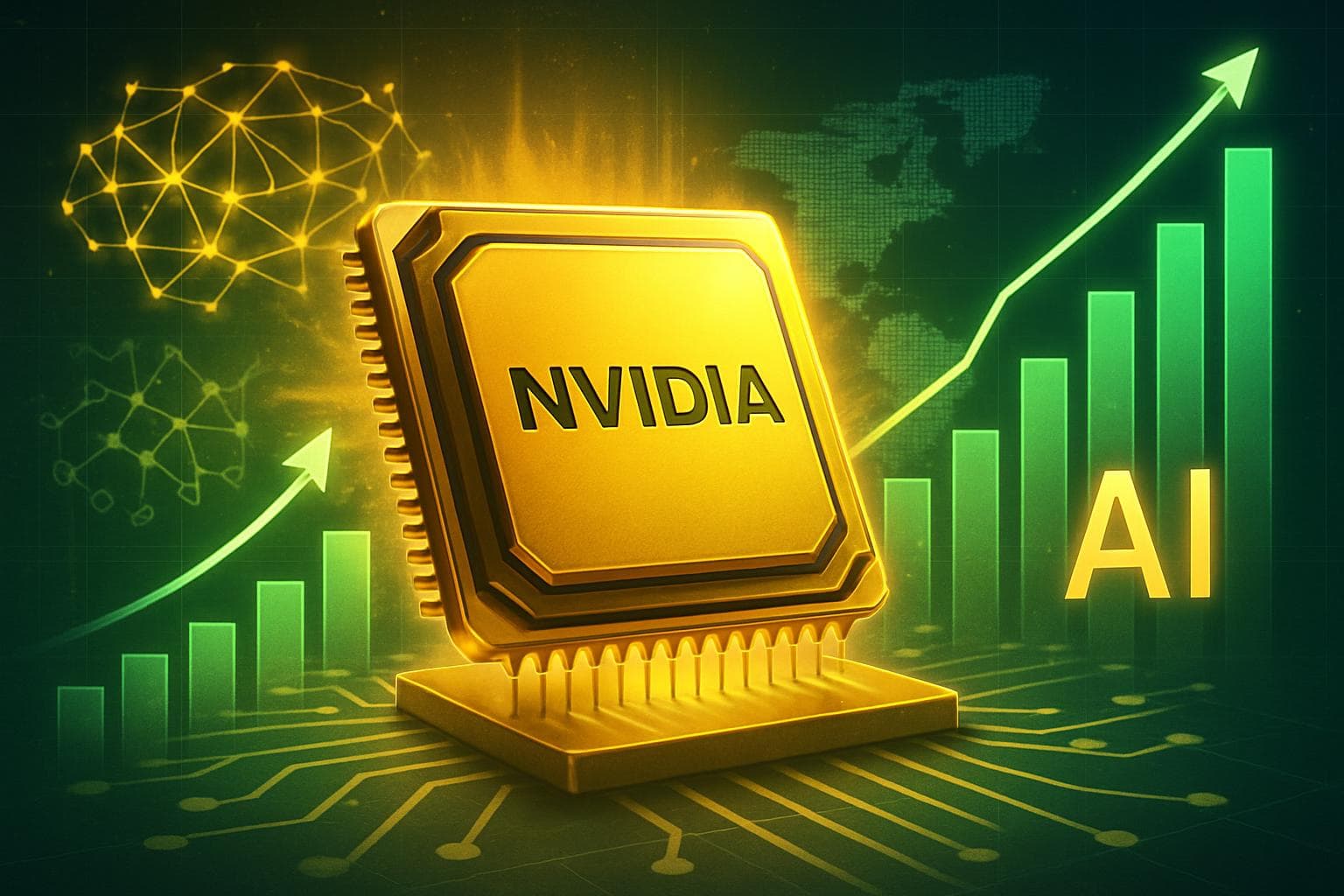
Nvidia, the world's most valuable publicly traded company, has once again exceeded Wall Street's expectations, reporting a 62% increase in third-quarter revenue to $57 billion. This impressive performance has temporarily alleviated investor concerns about a potential AI bubble, which had been causing market jitters.
Strong Financial Performance
The chipmaker's data-center division, a key driver of its growth, saw sales rise 66% to over $51 billion. Nvidia's fourth-quarter revenue is projected to reach $65 billion, surpassing analysts' predictions. This robust financial performance has led to a 4% increase in Nvidia's shares during after-hours trading, providing a much-needed boost to global markets.
Nvidia's Role in AI Transformation
CEO Jensen Huang addressed the AI bubble concerns head-on during an earnings call, asserting that Nvidia is integral to the ongoing transformation in artificial intelligence. "There's been a lot of talk about an AI bubble. From our vantage point, we see something very different," Huang stated. He highlighted Nvidia's unique position in the AI landscape, excelling at every phase from pre-training to inference.
Market Impact and Investor Sentiment
Nvidia's earnings report has had a ripple effect on global markets, with the FTSE 100 and other indices experiencing gains. Analysts like Adam Turnquist from LPL Financial noted that the question was not whether Nvidia would beat expectations, but by how much. The company's performance has reassured investors, who had been concerned about the high valuations in the AI sector.
Regulatory Challenges and Future Prospects
Despite its success, Nvidia faces regulatory hurdles, particularly regarding chip exports to China. CFO Colette Kress expressed disappointment over these limitations, emphasizing the need for continued engagement with both American and Chinese governments. Meanwhile, Nvidia's collaboration with Elon Musk's xAI on a massive data center in Saudi Arabia underscores its commitment to expanding its AI capabilities.
WHAT THIS MIGHT MEAN
Looking ahead, Nvidia's strong earnings could signal a sustained period of growth for the AI sector, potentially dispelling fears of an imminent bubble. However, regulatory challenges, especially concerning international trade, may impact the company's ability to capitalize on global demand. Experts suggest that Nvidia's continued innovation and strategic partnerships will be crucial in maintaining its leadership in the AI industry. As the company navigates these complexities, its performance will likely remain a bellwether for the broader tech market.
Related Articles

Goldman Sachs Top Lawyer Resigns Amid Epstein Ties
China Sets Lowest GDP Growth Target in Decades Amid Economic Challenges
Elon Musk Defends Tweets in Twitter Takeover Trial

UK Faces Dilemmas Amid Iran Conflict and China Spying Allegations

Labour MP's Husband Arrested in UK-China Espionage Probe

US Supreme Court Ruling Sparks Trade Uncertainty in Asia and Beyond
Nvidia's Stellar Earnings Quell AI Bubble Concerns, Boost Global Markets
In This Article
 Daniel Rivera| Published
 HIGHLIGHTS
- Nvidia's third-quarter revenue surged 62% to $57 billion, surpassing Wall Street expectations and easing AI bubble fears.
- The chipmaker's data-center sales rose 66% to over $51 billion, with fourth-quarter sales projected to reach $65 billion.
- CEO Jensen Huang emphasized Nvidia's role in AI's transformation, dismissing concerns of an AI bubble.
- Nvidia's strong performance led to a 4% rise in its shares, influencing global markets positively.
- Regulatory challenges persist, particularly regarding chip exports to China, as Nvidia seeks to expand its AI footprint.
Nvidia, the world's most valuable publicly traded company, has once again exceeded Wall Street's expectations, reporting a 62% increase in third-quarter revenue to $57 billion. This impressive performance has temporarily alleviated investor concerns about a potential AI bubble, which had been causing market jitters.
Strong Financial Performance
The chipmaker's data-center division, a key driver of its growth, saw sales rise 66% to over $51 billion. Nvidia's fourth-quarter revenue is projected to reach $65 billion, surpassing analysts' predictions. This robust financial performance has led to a 4% increase in Nvidia's shares during after-hours trading, providing a much-needed boost to global markets.
Nvidia's Role in AI Transformation
CEO Jensen Huang addressed the AI bubble concerns head-on during an earnings call, asserting that Nvidia is integral to the ongoing transformation in artificial intelligence. "There's been a lot of talk about an AI bubble. From our vantage point, we see something very different," Huang stated. He highlighted Nvidia's unique position in the AI landscape, excelling at every phase from pre-training to inference.
Market Impact and Investor Sentiment
Nvidia's earnings report has had a ripple effect on global markets, with the FTSE 100 and other indices experiencing gains. Analysts like Adam Turnquist from LPL Financial noted that the question was not whether Nvidia would beat expectations, but by how much. The company's performance has reassured investors, who had been concerned about the high valuations in the AI sector.
Regulatory Challenges and Future Prospects
Despite its success, Nvidia faces regulatory hurdles, particularly regarding chip exports to China. CFO Colette Kress expressed disappointment over these limitations, emphasizing the need for continued engagement with both American and Chinese governments. Meanwhile, Nvidia's collaboration with Elon Musk's xAI on a massive data center in Saudi Arabia underscores its commitment to expanding its AI capabilities.
WHAT THIS MIGHT MEAN
Looking ahead, Nvidia's strong earnings could signal a sustained period of growth for the AI sector, potentially dispelling fears of an imminent bubble. However, regulatory challenges, especially concerning international trade, may impact the company's ability to capitalize on global demand. Experts suggest that Nvidia's continued innovation and strategic partnerships will be crucial in maintaining its leadership in the AI industry. As the company navigates these complexities, its performance will likely remain a bellwether for the broader tech market.
Related Articles
Goldman Sachs Top Lawyer Resigns Amid Epstein Ties
China Sets Lowest GDP Growth Target in Decades Amid Economic Challenges
Elon Musk Defends Tweets in Twitter Takeover Trial
UK Faces Dilemmas Amid Iran Conflict and China Spying Allegations
Labour MP's Husband Arrested in UK-China Espionage Probe
US Supreme Court Ruling Sparks Trade Uncertainty in Asia and Beyond