
Nvidia's Record Revenue Amid AI Boom and Geopolitical Challenges
In This Article
HIGHLIGHTS
- Nvidia reported a 56% revenue surge to $46.7 billion, driven by strong AI chip demand.
- The company's shares fell 2.3% in after-hours trading amid concerns over an AI bubble and US-China trade tensions.
- Nvidia's data center revenue reached $41.1 billion, slightly below Wall Street expectations.
- The US government is reviewing licenses for Nvidia's H20 chip sales to China, amid geopolitical tensions.
- Nvidia's CEO emphasized the importance of the Chinese market, potentially worth $50 billion this year.
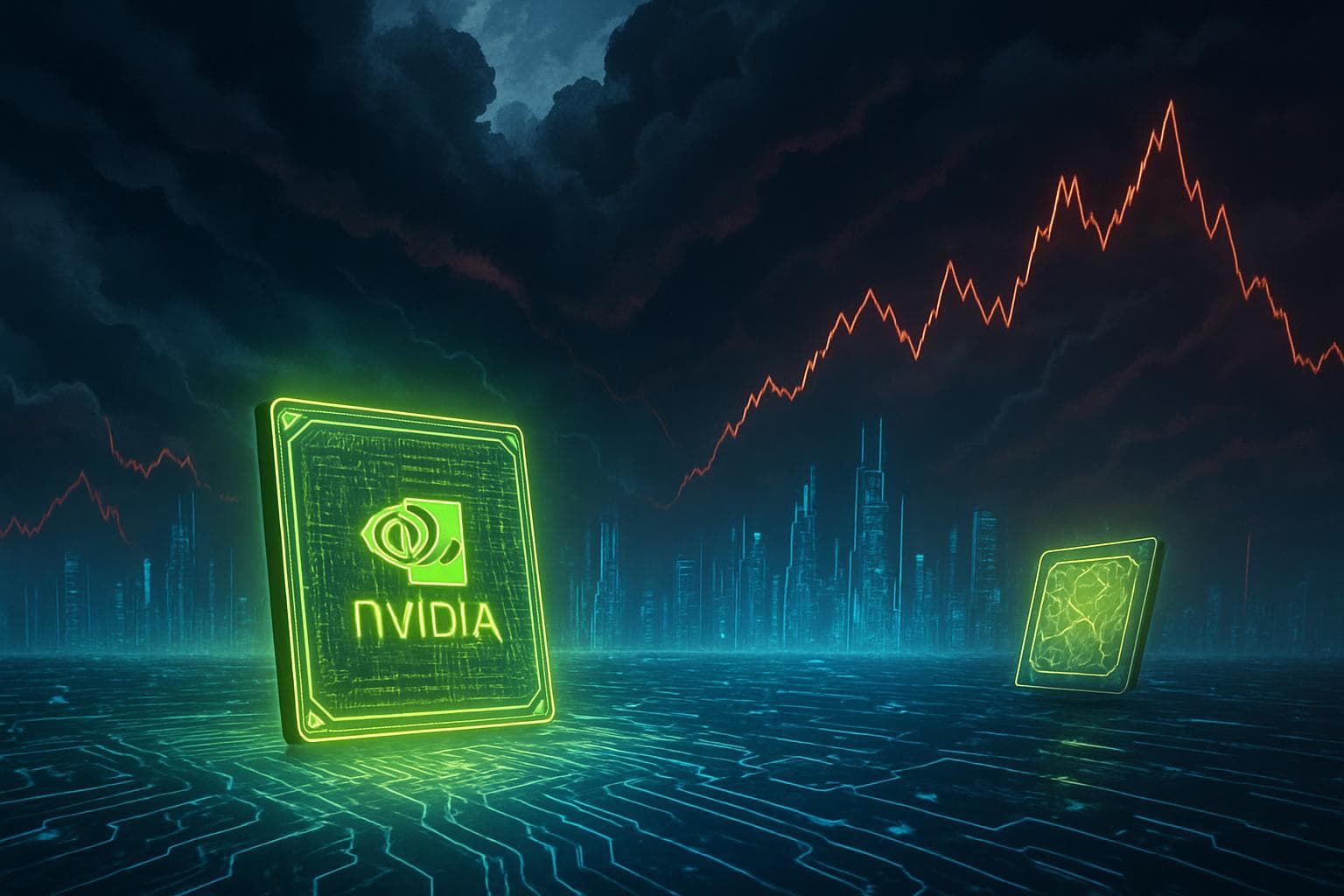
Nvidia, a leading designer of computer chips, has reported a significant revenue increase, driven by the burgeoning demand for artificial intelligence (AI) technology. Despite this growth, the company's shares experienced a decline in after-hours trading, reflecting investor concerns over a potential AI bubble and ongoing US-China trade tensions.
Record Revenue and AI Demand
For the second quarter of the year, Nvidia announced a 56% rise in revenue, reaching $46.7 billion. This surge was fueled by the increasing demand for AI chips from major tech firms such as Meta and OpenAI. Nvidia's CEO, Jensen Huang, highlighted the company's pivotal role in the AI infrastructure, stating, "The AI race is now on," with tech giants doubling their spending to $600 billion annually.
Stock Performance and Market Reactions
Despite surpassing Wall Street's earnings expectations, Nvidia's stock fell by 2.3% in after-hours trading. Analysts attribute this to concerns over an AI market bubble and the repercussions of trade tensions between the US and China. Nvidia's data center revenue, a key segment, reached $41.1 billion, slightly missing analysts' forecasts.
Geopolitical Tensions and H20 Chip Sales
Nvidia remains entangled in geopolitical issues, particularly concerning its H20 chip sales to China. The US government is currently reviewing licenses for these sales, following a previous ban due to security concerns. Nvidia's CFO, Colette Kress, indicated that the company could potentially ship between $2 billion and $5 billion worth of H20 chips to China if geopolitical tensions ease.
Strategic Importance of the Chinese Market
The Chinese market represents a significant opportunity for Nvidia, with CEO Jensen Huang emphasizing its potential value of $50 billion this year. Huang has been in discussions with the US administration about the importance of American companies accessing the Chinese market, which is the second-largest computing market globally and home to a substantial number of AI researchers.
WHAT THIS MIGHT MEAN
Looking ahead, Nvidia's financial performance will likely continue to be influenced by the evolving dynamics of the AI market and geopolitical tensions. If the US-China trade relations stabilize, Nvidia could capitalize on the vast Chinese market, boosting its revenue further. However, the specter of an AI bubble looms, with investors wary of overvaluation in the tech sector. Experts suggest that Nvidia's ability to navigate these challenges will be crucial in maintaining its market leadership and sustaining growth in the rapidly expanding AI industry.
Related Articles
China Sets Lowest GDP Growth Target in Decades Amid Economic Challenges
Trump's New Tariff Strategy Sparks Global Trade Uncertainty
Trump's Tariff Strategy Faces Supreme Court Setback, New Measures Announced
Trump's Tariff Strategy Faces Supreme Court Setback, Sparks New Trade Policy

Tech Giants Pledge to Cover AI Data Center Energy Costs Amid Rising Electricity Concerns

UK Faces Dilemmas Amid Iran Conflict and China Spying Allegations
Nvidia's Record Revenue Amid AI Boom and Geopolitical Challenges
In This Article
 Daniel Rivera| Published
 HIGHLIGHTS
- Nvidia reported a 56% revenue surge to $46.7 billion, driven by strong AI chip demand.
- The company's shares fell 2.3% in after-hours trading amid concerns over an AI bubble and US-China trade tensions.
- Nvidia's data center revenue reached $41.1 billion, slightly below Wall Street expectations.
- The US government is reviewing licenses for Nvidia's H20 chip sales to China, amid geopolitical tensions.
- Nvidia's CEO emphasized the importance of the Chinese market, potentially worth $50 billion this year.
Nvidia, a leading designer of computer chips, has reported a significant revenue increase, driven by the burgeoning demand for artificial intelligence (AI) technology. Despite this growth, the company's shares experienced a decline in after-hours trading, reflecting investor concerns over a potential AI bubble and ongoing US-China trade tensions.
Record Revenue and AI Demand
For the second quarter of the year, Nvidia announced a 56% rise in revenue, reaching $46.7 billion. This surge was fueled by the increasing demand for AI chips from major tech firms such as Meta and OpenAI. Nvidia's CEO, Jensen Huang, highlighted the company's pivotal role in the AI infrastructure, stating, "The AI race is now on," with tech giants doubling their spending to $600 billion annually.
Stock Performance and Market Reactions
Despite surpassing Wall Street's earnings expectations, Nvidia's stock fell by 2.3% in after-hours trading. Analysts attribute this to concerns over an AI market bubble and the repercussions of trade tensions between the US and China. Nvidia's data center revenue, a key segment, reached $41.1 billion, slightly missing analysts' forecasts.
Geopolitical Tensions and H20 Chip Sales
Nvidia remains entangled in geopolitical issues, particularly concerning its H20 chip sales to China. The US government is currently reviewing licenses for these sales, following a previous ban due to security concerns. Nvidia's CFO, Colette Kress, indicated that the company could potentially ship between $2 billion and $5 billion worth of H20 chips to China if geopolitical tensions ease.
Strategic Importance of the Chinese Market
The Chinese market represents a significant opportunity for Nvidia, with CEO Jensen Huang emphasizing its potential value of $50 billion this year. Huang has been in discussions with the US administration about the importance of American companies accessing the Chinese market, which is the second-largest computing market globally and home to a substantial number of AI researchers.
WHAT THIS MIGHT MEAN
Looking ahead, Nvidia's financial performance will likely continue to be influenced by the evolving dynamics of the AI market and geopolitical tensions. If the US-China trade relations stabilize, Nvidia could capitalize on the vast Chinese market, boosting its revenue further. However, the specter of an AI bubble looms, with investors wary of overvaluation in the tech sector. Experts suggest that Nvidia's ability to navigate these challenges will be crucial in maintaining its market leadership and sustaining growth in the rapidly expanding AI industry.
Related Articles
China Sets Lowest GDP Growth Target in Decades Amid Economic Challenges
Trump's New Tariff Strategy Sparks Global Trade Uncertainty
Trump's Tariff Strategy Faces Supreme Court Setback, New Measures Announced
Trump's Tariff Strategy Faces Supreme Court Setback, Sparks New Trade Policy
Tech Giants Pledge to Cover AI Data Center Energy Costs Amid Rising Electricity Concerns
UK Faces Dilemmas Amid Iran Conflict and China Spying Allegations