
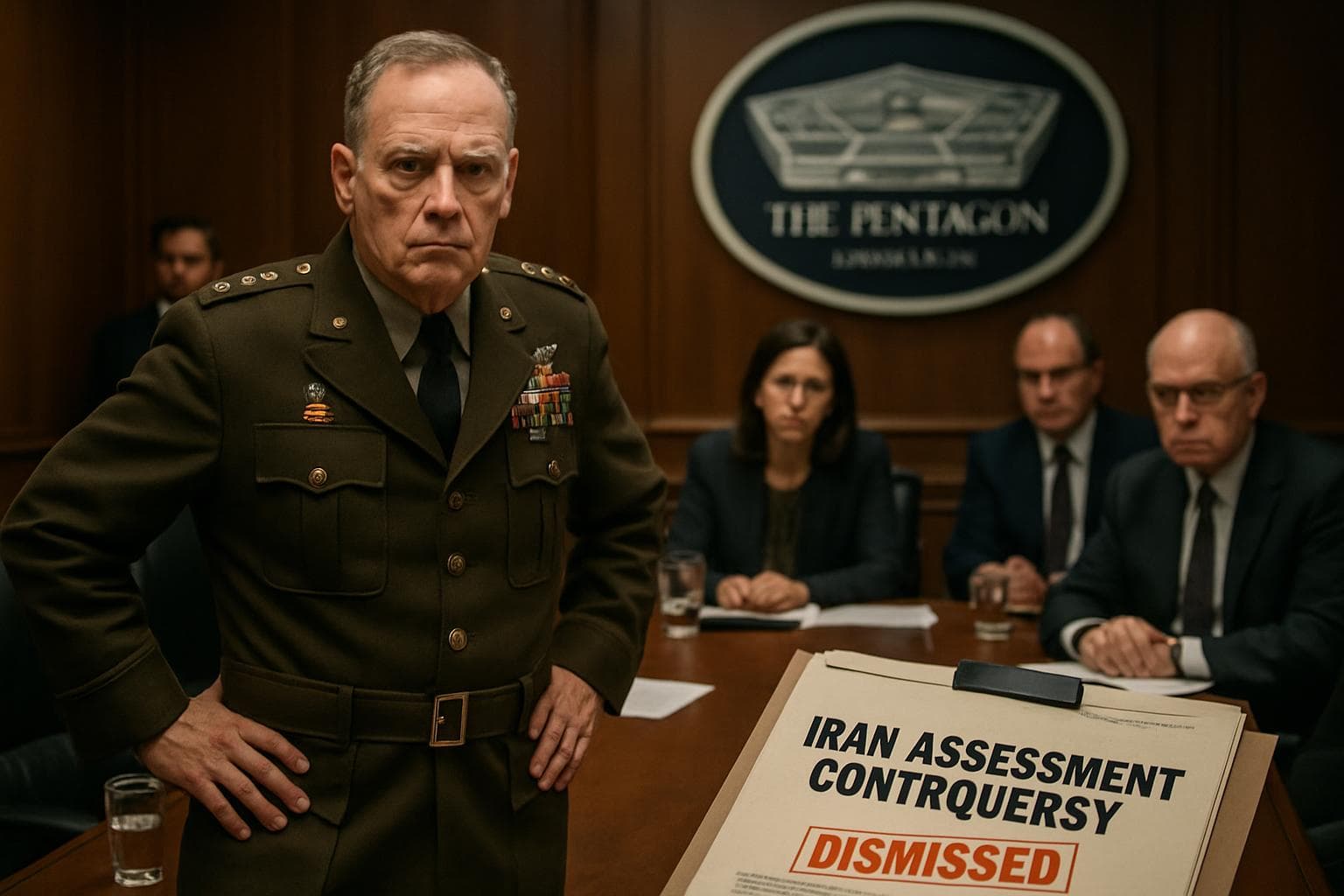
Pentagon Dismisses Intelligence Chief Amid Iran Assessment Controversy
In This Article
HIGHLIGHTS
- US Defense Secretary Pete Hegseth has dismissed Lt Gen Jeffrey Kruse, head of the Defense Intelligence Agency, following a controversial Iran nuclear assessment.
- The Pentagon has not provided specific reasons for the firings, which include other senior military officials, amid broader intelligence community changes.
- President Trump criticized the DIA's report, which contradicted his claims of the complete destruction of Iran's nuclear capabilities.
- The Trump administration has a history of removing officials whose analyses conflict with its narratives, impacting various government sectors.
- The shakeup reflects ongoing tensions between the administration and intelligence agencies over assessments and reporting.
In a significant shakeup within the US military intelligence community, Defense Secretary Pete Hegseth has removed Lt Gen Jeffrey Kruse from his position as head of the Defense Intelligence Agency (DIA). This decision follows a contentious assessment regarding the impact of US strikes on Iran's nuclear capabilities, which drew sharp criticism from President Donald Trump.
Controversial Assessment Sparks Firings
The dismissal of Kruse, reported by the Washington Post, is part of a broader pattern of firings within the Pentagon. The DIA's report, which suggested that US attacks had only temporarily set back Iran's nuclear program, was publicly rebuked by Trump, who claimed the strikes had "completely destroyed" the sites. The White House labeled the agency's findings as "flat out wrong," intensifying the administration's dissatisfaction with intelligence assessments that contradict its narrative.
Broader Military Leadership Changes
The Pentagon has not provided detailed explanations for the recent dismissals, which include other high-ranking officials such as the chief of US Naval Reserves and the commander of Naval Special Warfare Command. These changes come amid a series of personnel shifts within the intelligence community, reflecting ongoing tensions between the Trump administration and military leadership over intelligence reporting.
Historical Context of Administration's Actions
This is not the first instance of the Trump administration removing officials whose analyses diverge from its views. Earlier this year, Trump ordered the dismissal of the Commissioner of Labor Statistics following a report on slowing job growth. Additionally, the administration has curtailed the publication of reports on climate change and other sensitive topics, highlighting a pattern of sidelining dissenting voices.
Implications for Intelligence Community
The recent firings underscore a broader strategy by the Trump administration to align intelligence assessments with its policy objectives. As the Office of the Director of National Intelligence announces budget cuts and staffing reductions, the future of US intelligence operations remains uncertain.
WHAT THIS MIGHT MEAN
The removal of Lt Gen Jeffrey Kruse and other senior officials could lead to further instability within the US intelligence community. Experts warn that such actions may undermine the credibility of intelligence assessments, potentially impacting national security. As the Trump administration continues to prioritize loyalty over independent analysis, the effectiveness of military and intelligence operations could be compromised. Moving forward, the Pentagon's ability to provide unbiased intelligence will be crucial in maintaining strategic advantage and ensuring informed decision-making at the highest levels of government.
Related Articles

US and Israel Intensify Military Campaign as Iran's Capabilities Dwindle
Spain's Sánchez Stands Firm Against Trump's Trade Threat Over Iran Stance
Intensified US-Israel Strikes on Iran Spark Global Outcry
Senate Blocks Resolution to Limit Trump's Military Actions in Iran

Iran Postpones Khamenei Funeral Amid Escalating US-Israeli Strikes

Tech Giants Pledge to Cover AI Data Center Energy Costs Amid Rising Electricity Concerns
Pentagon Dismisses Intelligence Chief Amid Iran Assessment Controversy
In This Article
 Ethan Brooks| Published
 HIGHLIGHTS
- US Defense Secretary Pete Hegseth has dismissed Lt Gen Jeffrey Kruse, head of the Defense Intelligence Agency, following a controversial Iran nuclear assessment.
- The Pentagon has not provided specific reasons for the firings, which include other senior military officials, amid broader intelligence community changes.
- President Trump criticized the DIA's report, which contradicted his claims of the complete destruction of Iran's nuclear capabilities.
- The Trump administration has a history of removing officials whose analyses conflict with its narratives, impacting various government sectors.
- The shakeup reflects ongoing tensions between the administration and intelligence agencies over assessments and reporting.
In a significant shakeup within the US military intelligence community, Defense Secretary Pete Hegseth has removed Lt Gen Jeffrey Kruse from his position as head of the Defense Intelligence Agency (DIA). This decision follows a contentious assessment regarding the impact of US strikes on Iran's nuclear capabilities, which drew sharp criticism from President Donald Trump.
Controversial Assessment Sparks Firings
The dismissal of Kruse, reported by the Washington Post, is part of a broader pattern of firings within the Pentagon. The DIA's report, which suggested that US attacks had only temporarily set back Iran's nuclear program, was publicly rebuked by Trump, who claimed the strikes had "completely destroyed" the sites. The White House labeled the agency's findings as "flat out wrong," intensifying the administration's dissatisfaction with intelligence assessments that contradict its narrative.
Broader Military Leadership Changes
The Pentagon has not provided detailed explanations for the recent dismissals, which include other high-ranking officials such as the chief of US Naval Reserves and the commander of Naval Special Warfare Command. These changes come amid a series of personnel shifts within the intelligence community, reflecting ongoing tensions between the Trump administration and military leadership over intelligence reporting.
Historical Context of Administration's Actions
This is not the first instance of the Trump administration removing officials whose analyses diverge from its views. Earlier this year, Trump ordered the dismissal of the Commissioner of Labor Statistics following a report on slowing job growth. Additionally, the administration has curtailed the publication of reports on climate change and other sensitive topics, highlighting a pattern of sidelining dissenting voices.
Implications for Intelligence Community
The recent firings underscore a broader strategy by the Trump administration to align intelligence assessments with its policy objectives. As the Office of the Director of National Intelligence announces budget cuts and staffing reductions, the future of US intelligence operations remains uncertain.
WHAT THIS MIGHT MEAN
The removal of Lt Gen Jeffrey Kruse and other senior officials could lead to further instability within the US intelligence community. Experts warn that such actions may undermine the credibility of intelligence assessments, potentially impacting national security. As the Trump administration continues to prioritize loyalty over independent analysis, the effectiveness of military and intelligence operations could be compromised. Moving forward, the Pentagon's ability to provide unbiased intelligence will be crucial in maintaining strategic advantage and ensuring informed decision-making at the highest levels of government.
Related Articles
US and Israel Intensify Military Campaign as Iran's Capabilities Dwindle
Spain's Sánchez Stands Firm Against Trump's Trade Threat Over Iran Stance
Intensified US-Israel Strikes on Iran Spark Global Outcry
Senate Blocks Resolution to Limit Trump's Military Actions in Iran
Iran Postpones Khamenei Funeral Amid Escalating US-Israeli Strikes
Tech Giants Pledge to Cover AI Data Center Energy Costs Amid Rising Electricity Concerns