
Prevent Scheme Under Scrutiny for Missed Opportunities in High-Profile Murder Cases
In This Article
HIGHLIGHTS
- The Prevent counter-terrorism scheme failed to intervene in the cases of Axel Rudakubana and Ali Harbi Ali, leading to tragic outcomes.
- Rudakubana, obsessed with violence, was referred to Prevent three times but was not deemed a terrorist threat due to lack of ideological motive.
- Ali Harbi Ali, who murdered MP Sir David Amess, was inadequately monitored by Prevent, with mentoring sessions not fully conducted.
- Lord David Anderson's review highlights systemic failings within Prevent, urging a broader focus on individuals fascinated by extreme violence.
- The families of the victims are calling for a full public inquiry to understand the lapses and prevent future tragedies.
A recent review has cast a critical spotlight on the UK's Prevent counter-terrorism scheme, revealing significant missed opportunities in preventing two high-profile murder cases. The review, led by Lord David Anderson KC, highlights systemic failings in the cases of Axel Rudakubana, the Southport killer, and Ali Harbi Ali, the murderer of MP Sir David Amess.
Failures in Monitoring and Intervention
Prevent, designed to identify and divert potential terrorists, failed to act effectively in both cases. Axel Rudakubana, who is serving a life sentence for the brutal murder of three young girls in Southport, had been referred to Prevent three times between 2019 and 2021. Despite his obsession with violence and concerning behavior, including bringing a knife to school and researching school massacres, his case was repeatedly closed due to the absence of a clear ideological motive.
Similarly, Ali Harbi Ali, who assassinated Sir David Amess in October 2021, was inadequately monitored. Referred to Prevent in 2014, Ali's mentoring program was poorly executed, with only one of the seven planned sessions taking place. This lack of follow-through allowed Ali to slip through the cracks, ultimately leading to the tragic attack.
Calls for Reform and Accountability
Lord Anderson's review underscores the need for Prevent to broaden its scope beyond traditional ideological threats to include individuals with a fascination for extreme violence. He commended the teachers who raised concerns about Rudakubana but criticized the system for failing to act. "It's a failure of the system," Anderson stated, emphasizing the need for Prevent to learn from these cases.
The families of the victims are demanding a comprehensive public inquiry to understand the lapses and ensure accountability. A spokesperson for the Amess family expressed their grief and frustration, stating, "They have every right to have it properly explained why the man who killed him was allowed to slip through the state's safeguarding net."
WHAT THIS MIGHT MEAN
The revelations from Lord Anderson's review could lead to significant reforms within the Prevent scheme. By expanding its focus to include individuals with violent obsessions, the program may better identify and intervene in potential threats. However, implementing these changes will require substantial training and resource allocation.
Politically, the demand for a public inquiry could gain momentum, especially with the backing of the victims' families. Such an inquiry might provide deeper insights into the systemic issues within Prevent and potentially lead to broader legislative changes in counter-terrorism strategies.
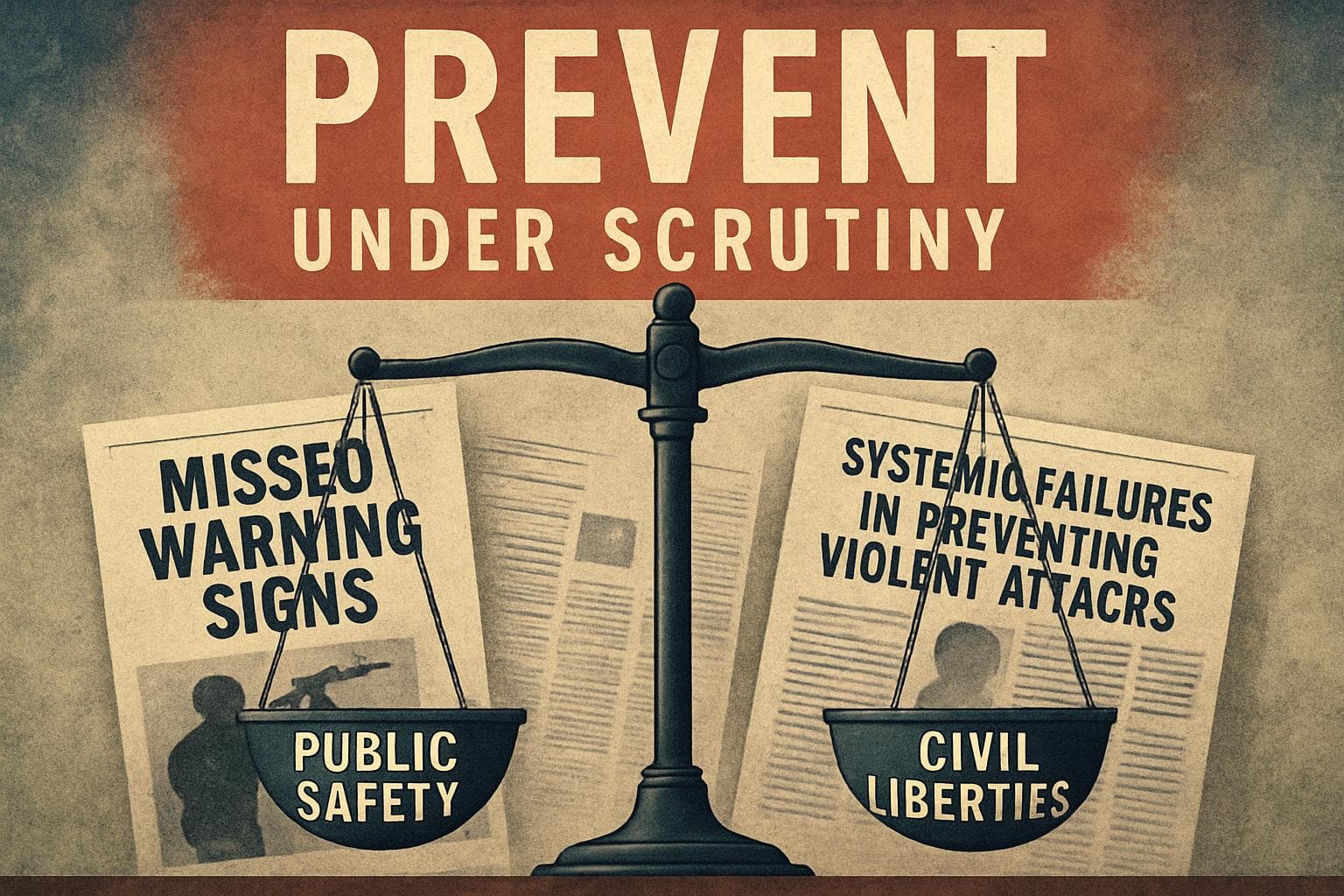
Experts suggest that a more integrated approach, involving social media monitoring and community engagement, could enhance Prevent's effectiveness. As the government considers these recommendations, the challenge will be balancing civil liberties with the need for public safety.
Images from the Web

Related Articles

UK Government to Reform Asylum Seeker Support and Employment Policies

UK Faces Dilemmas Amid Iran Conflict and China Spying Allegations

UK Reinforces Military Presence in Cyprus Amid Middle East Tensions

UK-Iran Tensions: Starmer Defends Cautious Approach Amid Trump Criticism

Persistent Safety Concerns in Nottingham Maternity Services Amidst Calls for Systemic Reform

Diplomatic Tensions Rise as Trump Criticizes Starmer's Iran Policy
Prevent Scheme Under Scrutiny for Missed Opportunities in High-Profile Murder Cases
In This Article
 Ethan Brooks| Published
 HIGHLIGHTS
- The Prevent counter-terrorism scheme failed to intervene in the cases of Axel Rudakubana and Ali Harbi Ali, leading to tragic outcomes.
- Rudakubana, obsessed with violence, was referred to Prevent three times but was not deemed a terrorist threat due to lack of ideological motive.
- Ali Harbi Ali, who murdered MP Sir David Amess, was inadequately monitored by Prevent, with mentoring sessions not fully conducted.
- Lord David Anderson's review highlights systemic failings within Prevent, urging a broader focus on individuals fascinated by extreme violence.
- The families of the victims are calling for a full public inquiry to understand the lapses and prevent future tragedies.
A recent review has cast a critical spotlight on the UK's Prevent counter-terrorism scheme, revealing significant missed opportunities in preventing two high-profile murder cases. The review, led by Lord David Anderson KC, highlights systemic failings in the cases of Axel Rudakubana, the Southport killer, and Ali Harbi Ali, the murderer of MP Sir David Amess.
Failures in Monitoring and Intervention
Prevent, designed to identify and divert potential terrorists, failed to act effectively in both cases. Axel Rudakubana, who is serving a life sentence for the brutal murder of three young girls in Southport, had been referred to Prevent three times between 2019 and 2021. Despite his obsession with violence and concerning behavior, including bringing a knife to school and researching school massacres, his case was repeatedly closed due to the absence of a clear ideological motive.
Similarly, Ali Harbi Ali, who assassinated Sir David Amess in October 2021, was inadequately monitored. Referred to Prevent in 2014, Ali's mentoring program was poorly executed, with only one of the seven planned sessions taking place. This lack of follow-through allowed Ali to slip through the cracks, ultimately leading to the tragic attack.
Calls for Reform and Accountability
Lord Anderson's review underscores the need for Prevent to broaden its scope beyond traditional ideological threats to include individuals with a fascination for extreme violence. He commended the teachers who raised concerns about Rudakubana but criticized the system for failing to act. "It's a failure of the system," Anderson stated, emphasizing the need for Prevent to learn from these cases.
The families of the victims are demanding a comprehensive public inquiry to understand the lapses and ensure accountability. A spokesperson for the Amess family expressed their grief and frustration, stating, "They have every right to have it properly explained why the man who killed him was allowed to slip through the state's safeguarding net."
WHAT THIS MIGHT MEAN
The revelations from Lord Anderson's review could lead to significant reforms within the Prevent scheme. By expanding its focus to include individuals with violent obsessions, the program may better identify and intervene in potential threats. However, implementing these changes will require substantial training and resource allocation.
Politically, the demand for a public inquiry could gain momentum, especially with the backing of the victims' families. Such an inquiry might provide deeper insights into the systemic issues within Prevent and potentially lead to broader legislative changes in counter-terrorism strategies.
Experts suggest that a more integrated approach, involving social media monitoring and community engagement, could enhance Prevent's effectiveness. As the government considers these recommendations, the challenge will be balancing civil liberties with the need for public safety.
Images from the Web
Related Articles
UK Government to Reform Asylum Seeker Support and Employment Policies
UK Faces Dilemmas Amid Iran Conflict and China Spying Allegations
UK Reinforces Military Presence in Cyprus Amid Middle East Tensions
UK-Iran Tensions: Starmer Defends Cautious Approach Amid Trump Criticism
Persistent Safety Concerns in Nottingham Maternity Services Amidst Calls for Systemic Reform
Diplomatic Tensions Rise as Trump Criticizes Starmer's Iran Policy