
Pro-Ukraine Hackers Disrupt Aeroflot Flights in Major Cyber-Attack
In This Article
HIGHLIGHTS
- Aeroflot, Russia's national airline, cancelled over 50 flights due to a cyber-attack claimed by pro-Ukraine hackers Silent Crow and Cyber Partisans.
- The attack targeted Aeroflot's IT systems, causing significant disruption and delays, with the Kremlin expressing concern over the incident.
- Silent Crow threatened to release personal data of Aeroflot passengers, linking the attack to the ongoing conflict between Russia and Ukraine.
- A criminal investigation has been launched by Russian authorities following confirmation of the hack by the prosecutor's office.
- Experts suggest the attack was politically motivated, aiming to disrupt rather than financially exploit Aeroflot's operations.
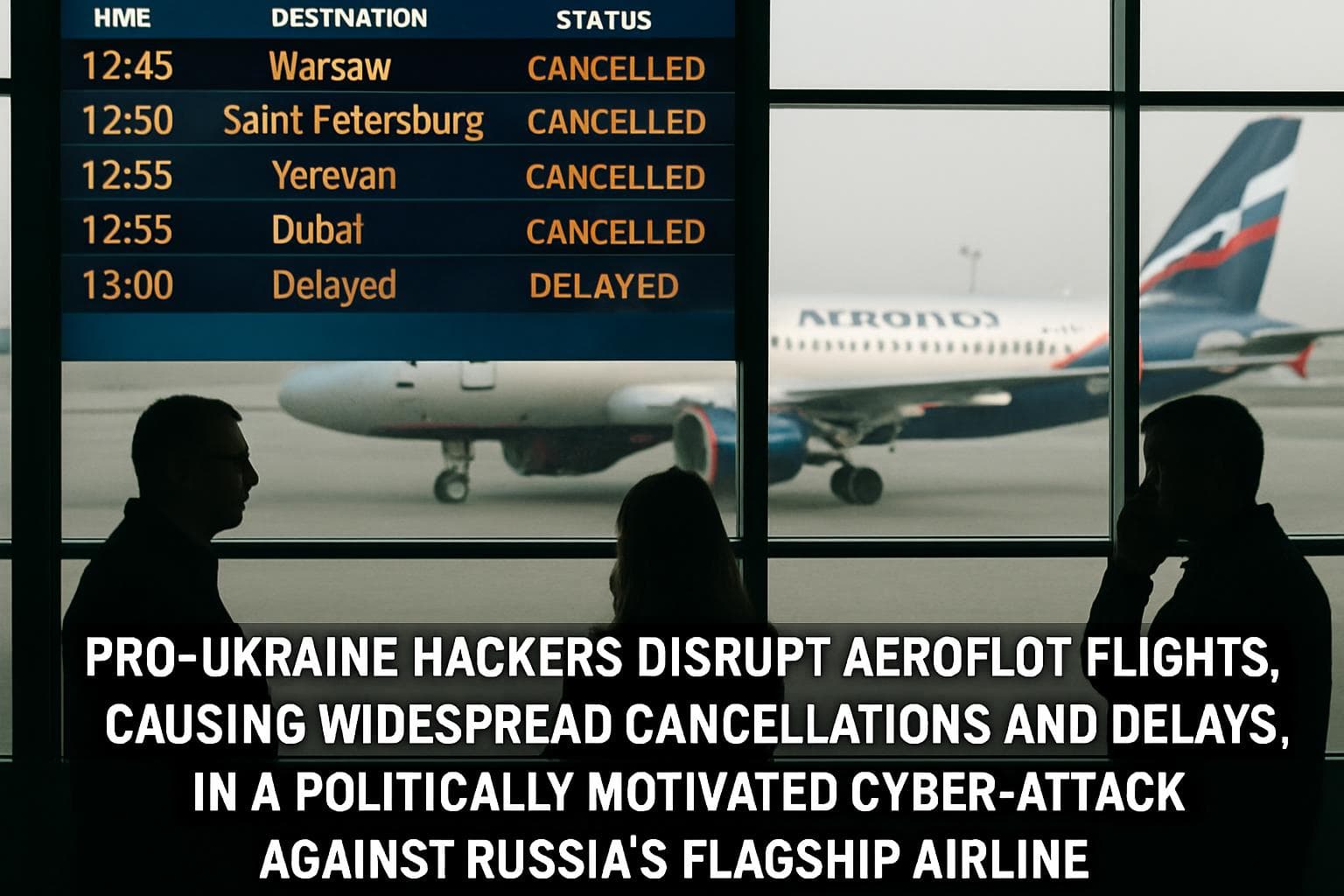
Russia's flagship airline, Aeroflot, faced significant operational disruptions after a cyber-attack led to the cancellation of over 50 flights. The attack, claimed by the pro-Ukraine hacker group Silent Crow in collaboration with Belarusian group Cyber Partisans, targeted the airline's IT systems, causing widespread delays and cancellations. This incident marks a rare and impactful cyber-attack on a major Russian company, affecting both domestic and international routes to Belarus and Armenia.
Cyber-Attack Details
Silent Crow, known for its politically motivated cyber activities, announced the attack on Telegram, asserting that their operation had "completely destroyed" Aeroflot's IT infrastructure. They further threatened to release the personal data of all Russians who have flown with the airline, emphasizing their support for Ukraine and Belarus in the ongoing conflict. The Belarusian group Cyber Partisans, which has a history of targeting Russian and Belarusian entities, collaborated in this operation, highlighting their commitment to opposing dictatorial regimes.
Official Response and Investigation
The Kremlin has expressed concern over the attack, with spokesperson Dmitry Peskov acknowledging the ongoing threat posed by hackers to large service providers. The Russian prosecutor's office confirmed the hack and has initiated a criminal investigation to determine the full extent and implications of the breach. Meanwhile, Aeroflot is working to mitigate the impact by transferring affected passengers to other carriers.
Expert Insights
Cybersecurity experts, including Rafe Pilling from Sophos, suggest that the attack was driven by political motives rather than financial gain. Unlike typical ransomware attacks, this operation appears to be a form of protest aimed at disrupting Aeroflot's services. The involvement of Cyber Partisans, a group with a longer history in the hacking scene, underscores the strategic nature of this cyber offensive.
WHAT THIS MIGHT MEAN
The Aeroflot cyber-attack underscores the growing role of hacktivism in geopolitical conflicts, particularly in the context of the Russia-Ukraine war. As cyber warfare becomes an increasingly prominent front, companies and governments may need to bolster their cybersecurity measures to protect against politically motivated attacks. The ongoing investigation by Russian authorities could lead to heightened tensions and further retaliatory actions in cyberspace. Additionally, the incident may prompt other nations and organizations to reassess their cybersecurity strategies in light of the evolving threat landscape.
Related Articles

Russian LNG Tanker Sinks in Mediterranean Amid Accusations of Ukrainian Drone Attack

Russia-Ukraine Conflict: Four Years of Unyielding Struggle and Human Resilience

Kenyan Nationals Recruited for Russia-Ukraine War Amid Allegations of Human Trafficking

Geneva Talks See 'Meaningful Progress' Amid Tensions Over Ukraine-Russia Conflict

UK and Allies Accuse Russia of Killing Navalny with Dart Frog Toxin

Unlawful Ban on Palestine Action and Other UK Political Developments
Pro-Ukraine Hackers Disrupt Aeroflot Flights in Major Cyber-Attack
In This Article
 Ethan Brooks| Published
 HIGHLIGHTS
- Aeroflot, Russia's national airline, cancelled over 50 flights due to a cyber-attack claimed by pro-Ukraine hackers Silent Crow and Cyber Partisans.
- The attack targeted Aeroflot's IT systems, causing significant disruption and delays, with the Kremlin expressing concern over the incident.
- Silent Crow threatened to release personal data of Aeroflot passengers, linking the attack to the ongoing conflict between Russia and Ukraine.
- A criminal investigation has been launched by Russian authorities following confirmation of the hack by the prosecutor's office.
- Experts suggest the attack was politically motivated, aiming to disrupt rather than financially exploit Aeroflot's operations.
Russia's flagship airline, Aeroflot, faced significant operational disruptions after a cyber-attack led to the cancellation of over 50 flights. The attack, claimed by the pro-Ukraine hacker group Silent Crow in collaboration with Belarusian group Cyber Partisans, targeted the airline's IT systems, causing widespread delays and cancellations. This incident marks a rare and impactful cyber-attack on a major Russian company, affecting both domestic and international routes to Belarus and Armenia.
Cyber-Attack Details
Silent Crow, known for its politically motivated cyber activities, announced the attack on Telegram, asserting that their operation had "completely destroyed" Aeroflot's IT infrastructure. They further threatened to release the personal data of all Russians who have flown with the airline, emphasizing their support for Ukraine and Belarus in the ongoing conflict. The Belarusian group Cyber Partisans, which has a history of targeting Russian and Belarusian entities, collaborated in this operation, highlighting their commitment to opposing dictatorial regimes.
Official Response and Investigation
The Kremlin has expressed concern over the attack, with spokesperson Dmitry Peskov acknowledging the ongoing threat posed by hackers to large service providers. The Russian prosecutor's office confirmed the hack and has initiated a criminal investigation to determine the full extent and implications of the breach. Meanwhile, Aeroflot is working to mitigate the impact by transferring affected passengers to other carriers.
Expert Insights
Cybersecurity experts, including Rafe Pilling from Sophos, suggest that the attack was driven by political motives rather than financial gain. Unlike typical ransomware attacks, this operation appears to be a form of protest aimed at disrupting Aeroflot's services. The involvement of Cyber Partisans, a group with a longer history in the hacking scene, underscores the strategic nature of this cyber offensive.
WHAT THIS MIGHT MEAN
The Aeroflot cyber-attack underscores the growing role of hacktivism in geopolitical conflicts, particularly in the context of the Russia-Ukraine war. As cyber warfare becomes an increasingly prominent front, companies and governments may need to bolster their cybersecurity measures to protect against politically motivated attacks. The ongoing investigation by Russian authorities could lead to heightened tensions and further retaliatory actions in cyberspace. Additionally, the incident may prompt other nations and organizations to reassess their cybersecurity strategies in light of the evolving threat landscape.
Related Articles
Russian LNG Tanker Sinks in Mediterranean Amid Accusations of Ukrainian Drone Attack
Russia-Ukraine Conflict: Four Years of Unyielding Struggle and Human Resilience
Kenyan Nationals Recruited for Russia-Ukraine War Amid Allegations of Human Trafficking
Geneva Talks See 'Meaningful Progress' Amid Tensions Over Ukraine-Russia Conflict
UK and Allies Accuse Russia of Killing Navalny with Dart Frog Toxin
Unlawful Ban on Palestine Action and Other UK Political Developments