
Russia's Messaging App Crackdown: WhatsApp and Telegram in the Crosshairs
In This Article
HIGHLIGHTS
- Russia has attempted to block WhatsApp, pushing users towards the state-owned app Max, amid a broader crackdown on messaging apps.
- WhatsApp, owned by Meta, has over 100 million users in Russia, while Telegram, also targeted, is used by more than 60 million Russians daily.
- The Kremlin's efforts align with its goal of a "sovereign internet," limiting foreign influence and increasing state control over digital communications.
- Telegram's founder, Pavel Durov, criticized the restrictions, emphasizing the platform's commitment to freedom of speech and privacy.
- Russian soldiers and pro-war bloggers have voiced concerns that restricting Telegram could hinder military communications and operations.
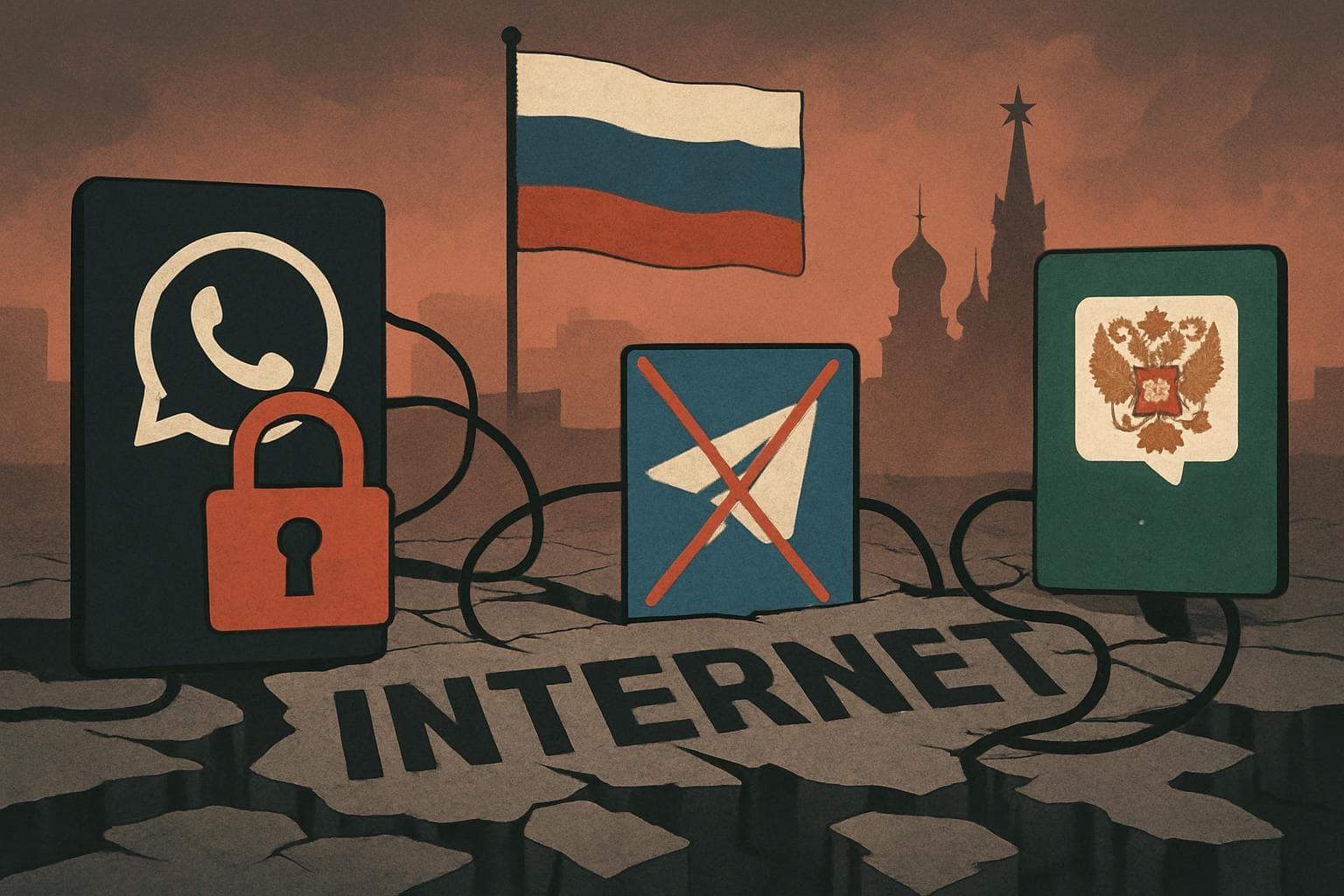
Russia has intensified its efforts to control digital communications by attempting to block WhatsApp and imposing restrictions on Telegram. This move is part of a broader strategy to promote the state-sponsored app Max and achieve a "sovereign internet" free from Western influence.
WhatsApp Blocked, Telegram Targeted
Meta-owned WhatsApp, with over 100 million users in Russia, has been targeted by the Kremlin, which aims to shift users to Max, a state-developed app. The Russian communications regulator, Roskomnadzor, has repeatedly warned WhatsApp to comply with local data storage laws. Andrei Svintsov, a Russian official, justified the harsh measures, citing Meta's designation as an extremist organization.
Telegram, another popular messaging app with over 60 million daily users in Russia, has also faced restrictions. Users reported slower traffic and delays in downloading content, prompting criticism from various sectors, including frontline troops and pro-war bloggers. Telegram's founder, Pavel Durov, condemned the restrictions, stating, "Restricting citizens' freedom is never the right answer."
The Push for a Sovereign Internet
The Kremlin's actions are part of a larger initiative to create a "sovereign internet," a digital space insulated from foreign technology and influence. The state-backed app Max, modeled after China's WeChat, is central to this strategy. Since 2025, Max has been mandated to be pre-installed on all new devices sold in Russia, with public sector employees required to use it.
Despite the government's push, the crackdown on Telegram has sparked rare public dissent. Russian soldiers and pro-war bloggers have expressed concerns that limiting Telegram could disrupt military communications. "Telegram remains almost the only means of communication in active combat units," noted the pro-Kremlin channel Dva Mayora.
Legal and Political Implications
Kremlin spokesperson Dmitry Peskov indicated that dialogue with Meta could lead to a resolution, but emphasized compliance with Russian legislation as a prerequisite. The ongoing restrictions reflect Russia's broader efforts to control digital narratives and limit foreign platforms' influence.
WHAT THIS MIGHT MEAN
The Russian government's crackdown on messaging apps like WhatsApp and Telegram could have significant implications for digital freedom and communication within the country. If the restrictions persist, users may increasingly turn to virtual private networks (VPNs) to bypass state controls, as seen in other countries with similar policies.
The push for a "sovereign internet" may further isolate Russia from global digital ecosystems, potentially stifling innovation and limiting access to diverse information sources. Experts suggest that continued pressure on foreign tech companies could lead to a fragmented internet landscape, with Russia developing its own digital infrastructure independent of Western technology.
As the situation unfolds, the international community will likely monitor Russia's actions closely, considering potential impacts on global internet governance and digital rights.
Related Articles
Geneva Peace Talks Between Russia and Ukraine End Without Breakthrough
Russia-Ukraine Conflict: Four Years of Unyielding Struggle and Human Resilience
Geneva Talks See 'Meaningful Progress' Amid Tensions Over Ukraine-Russia Conflict
Geneva Peace Talks: Russia and Ukraine Seek Resolution Amid Ongoing Conflict
UK to Double Troop Presence in Norway Amid Rising Arctic Tensions
Russian LNG Tanker Sinks in Mediterranean Amid Accusations of Ukrainian Drone Attack
Russia's Messaging App Crackdown: WhatsApp and Telegram in the Crosshairs
In This Article
 Ethan Brooks| Published
 HIGHLIGHTS
- Russia has attempted to block WhatsApp, pushing users towards the state-owned app Max, amid a broader crackdown on messaging apps.
- WhatsApp, owned by Meta, has over 100 million users in Russia, while Telegram, also targeted, is used by more than 60 million Russians daily.
- The Kremlin's efforts align with its goal of a "sovereign internet," limiting foreign influence and increasing state control over digital communications.
- Telegram's founder, Pavel Durov, criticized the restrictions, emphasizing the platform's commitment to freedom of speech and privacy.
- Russian soldiers and pro-war bloggers have voiced concerns that restricting Telegram could hinder military communications and operations.
Russia has intensified its efforts to control digital communications by attempting to block WhatsApp and imposing restrictions on Telegram. This move is part of a broader strategy to promote the state-sponsored app Max and achieve a "sovereign internet" free from Western influence.
WhatsApp Blocked, Telegram Targeted
Meta-owned WhatsApp, with over 100 million users in Russia, has been targeted by the Kremlin, which aims to shift users to Max, a state-developed app. The Russian communications regulator, Roskomnadzor, has repeatedly warned WhatsApp to comply with local data storage laws. Andrei Svintsov, a Russian official, justified the harsh measures, citing Meta's designation as an extremist organization.
Telegram, another popular messaging app with over 60 million daily users in Russia, has also faced restrictions. Users reported slower traffic and delays in downloading content, prompting criticism from various sectors, including frontline troops and pro-war bloggers. Telegram's founder, Pavel Durov, condemned the restrictions, stating, "Restricting citizens' freedom is never the right answer."
The Push for a Sovereign Internet
The Kremlin's actions are part of a larger initiative to create a "sovereign internet," a digital space insulated from foreign technology and influence. The state-backed app Max, modeled after China's WeChat, is central to this strategy. Since 2025, Max has been mandated to be pre-installed on all new devices sold in Russia, with public sector employees required to use it.
Despite the government's push, the crackdown on Telegram has sparked rare public dissent. Russian soldiers and pro-war bloggers have expressed concerns that limiting Telegram could disrupt military communications. "Telegram remains almost the only means of communication in active combat units," noted the pro-Kremlin channel Dva Mayora.
Legal and Political Implications
Kremlin spokesperson Dmitry Peskov indicated that dialogue with Meta could lead to a resolution, but emphasized compliance with Russian legislation as a prerequisite. The ongoing restrictions reflect Russia's broader efforts to control digital narratives and limit foreign platforms' influence.
WHAT THIS MIGHT MEAN
The Russian government's crackdown on messaging apps like WhatsApp and Telegram could have significant implications for digital freedom and communication within the country. If the restrictions persist, users may increasingly turn to virtual private networks (VPNs) to bypass state controls, as seen in other countries with similar policies.
The push for a "sovereign internet" may further isolate Russia from global digital ecosystems, potentially stifling innovation and limiting access to diverse information sources. Experts suggest that continued pressure on foreign tech companies could lead to a fragmented internet landscape, with Russia developing its own digital infrastructure independent of Western technology.
As the situation unfolds, the international community will likely monitor Russia's actions closely, considering potential impacts on global internet governance and digital rights.
Related Articles
Geneva Peace Talks Between Russia and Ukraine End Without Breakthrough
Russia-Ukraine Conflict: Four Years of Unyielding Struggle and Human Resilience
Geneva Talks See 'Meaningful Progress' Amid Tensions Over Ukraine-Russia Conflict
Geneva Peace Talks: Russia and Ukraine Seek Resolution Amid Ongoing Conflict
UK to Double Troop Presence in Norway Amid Rising Arctic Tensions
Russian LNG Tanker Sinks in Mediterranean Amid Accusations of Ukrainian Drone Attack