
Rachel Reeves's Budget: A Balancing Act of Tax Increases and Social Support
In This Article
HIGHLIGHTS
- Rachel Reeves's Budget introduces higher taxes, impacting higher-income earners more significantly while aiming to alleviate the cost of living for lower-income households.
- The scrapping of the two-child benefit cap is expected to reduce child poverty by 450,000, increasing affected families' incomes by £5,310 annually.
- Businesses in Surrey express mixed reactions, with concerns over increased taxes on landlords and the impact of a higher minimum wage on care providers.
- The Budget's long-term economic impact is debated, with calls for more substantial investment in social and environmental infrastructure.
- Pensioners are more likely to benefit from the Budget measures compared to working-age households, with 56% of pensioner households expected to gain.
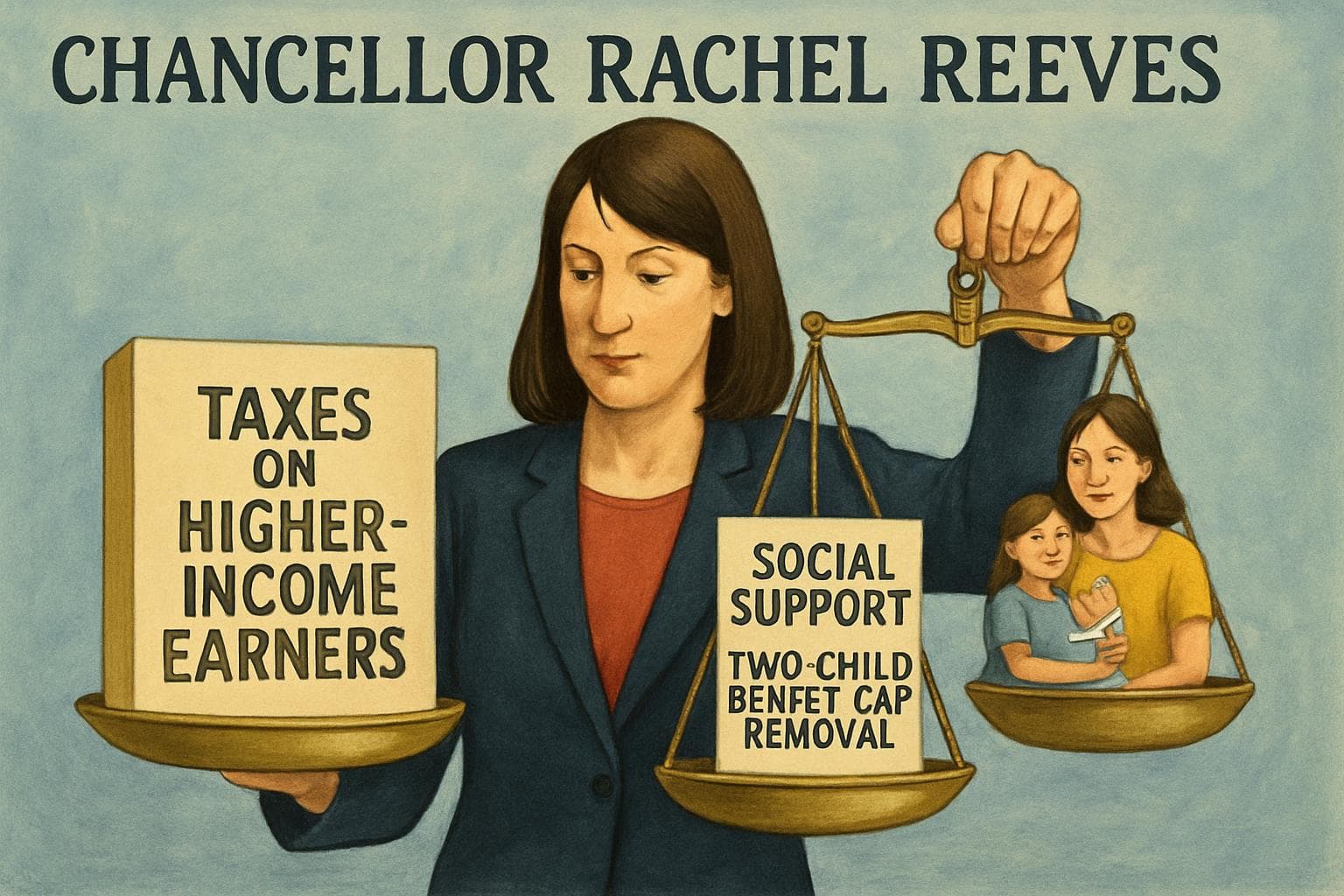
In a move that has sparked diverse reactions across the UK, Chancellor Rachel Reeves's latest Budget aims to balance increased taxation with measures to ease the cost of living for many families. While the Budget introduces higher taxes, particularly affecting higher-income earners, it also seeks to alleviate financial pressures on lower-income households.
Tax Increases and Social Measures
The Budget's most notable feature is the scrapping of the two-child benefit cap, a decision projected to reduce child poverty by 450,000 by the end of the Parliament. This change is expected to raise the average income of affected families by £5,310 annually. However, the Budget also includes measures such as freezing income tax thresholds until 2031 and introducing a tax on electric and hybrid vehicles from 2028, which have drawn mixed reactions.
Impact on Businesses and Households
Businesses in Surrey have voiced varied opinions on the Budget. While some small businesses may benefit from reduced business rates, landlords face increased taxes on rental income, exacerbating existing challenges in the housing market. Care providers express concerns over the rise in minimum wage, fearing it may strain recruitment and retention efforts in an already competitive market.
Long-term Economic Implications
Critics argue that the Budget lacks long-term vision, with calls for more substantial investment in social and environmental infrastructure. The Green New Deal Group suggests that redirecting savings into a massive programme of social and green jobs could drive economic revival. Meanwhile, pensioners are more likely to benefit from the Budget measures compared to working-age households, with 56% of pensioner households expected to gain.
WHAT THIS MIGHT MEAN
Looking ahead, the Budget's impact on the UK economy will depend on its execution and public reception. The increased tax burden on higher-income earners may face resistance, potentially influencing future political dynamics. The scrapping of the two-child benefit cap could significantly reduce child poverty, but its success will hinge on effective implementation.
Economists and policymakers will closely monitor the Budget's effects on businesses and households, particularly in sectors like social care and housing. The call for greater investment in social and environmental infrastructure may gain traction, influencing future fiscal policies. As the UK navigates these changes, the balance between immediate financial relief and long-term economic growth remains a critical focus.
Related Articles

Trump's New Tariff Strategy Sparks Global Trade Uncertainty
US Supreme Court Ruling on Tariffs Sparks Uncertainty for UK and Global Trade
Middle East Conflict Drives UK Energy Prices to New Highs

Police Federation Chief Arrested Amid Fraud Investigation

Canada and Australia Forge Strategic Partnership Amid Global Uncertainty

UK Government to Reform Asylum Seeker Support and Employment Policies
Rachel Reeves's Budget: A Balancing Act of Tax Increases and Social Support
In This Article
 Daniel Rivera| Published
 HIGHLIGHTS
- Rachel Reeves's Budget introduces higher taxes, impacting higher-income earners more significantly while aiming to alleviate the cost of living for lower-income households.
- The scrapping of the two-child benefit cap is expected to reduce child poverty by 450,000, increasing affected families' incomes by £5,310 annually.
- Businesses in Surrey express mixed reactions, with concerns over increased taxes on landlords and the impact of a higher minimum wage on care providers.
- The Budget's long-term economic impact is debated, with calls for more substantial investment in social and environmental infrastructure.
- Pensioners are more likely to benefit from the Budget measures compared to working-age households, with 56% of pensioner households expected to gain.
In a move that has sparked diverse reactions across the UK, Chancellor Rachel Reeves's latest Budget aims to balance increased taxation with measures to ease the cost of living for many families. While the Budget introduces higher taxes, particularly affecting higher-income earners, it also seeks to alleviate financial pressures on lower-income households.
Tax Increases and Social Measures
The Budget's most notable feature is the scrapping of the two-child benefit cap, a decision projected to reduce child poverty by 450,000 by the end of the Parliament. This change is expected to raise the average income of affected families by £5,310 annually. However, the Budget also includes measures such as freezing income tax thresholds until 2031 and introducing a tax on electric and hybrid vehicles from 2028, which have drawn mixed reactions.
Impact on Businesses and Households
Businesses in Surrey have voiced varied opinions on the Budget. While some small businesses may benefit from reduced business rates, landlords face increased taxes on rental income, exacerbating existing challenges in the housing market. Care providers express concerns over the rise in minimum wage, fearing it may strain recruitment and retention efforts in an already competitive market.
Long-term Economic Implications
Critics argue that the Budget lacks long-term vision, with calls for more substantial investment in social and environmental infrastructure. The Green New Deal Group suggests that redirecting savings into a massive programme of social and green jobs could drive economic revival. Meanwhile, pensioners are more likely to benefit from the Budget measures compared to working-age households, with 56% of pensioner households expected to gain.
WHAT THIS MIGHT MEAN
Looking ahead, the Budget's impact on the UK economy will depend on its execution and public reception. The increased tax burden on higher-income earners may face resistance, potentially influencing future political dynamics. The scrapping of the two-child benefit cap could significantly reduce child poverty, but its success will hinge on effective implementation.
Economists and policymakers will closely monitor the Budget's effects on businesses and households, particularly in sectors like social care and housing. The call for greater investment in social and environmental infrastructure may gain traction, influencing future fiscal policies. As the UK navigates these changes, the balance between immediate financial relief and long-term economic growth remains a critical focus.
Related Articles
Trump's New Tariff Strategy Sparks Global Trade Uncertainty
US Supreme Court Ruling on Tariffs Sparks Uncertainty for UK and Global Trade
Middle East Conflict Drives UK Energy Prices to New Highs
Police Federation Chief Arrested Amid Fraud Investigation
Canada and Australia Forge Strategic Partnership Amid Global Uncertainty
UK Government to Reform Asylum Seeker Support and Employment Policies