
Resident Doctors in England Conclude Strike Amidst NHS Flu Crisis
In This Article
HIGHLIGHTS
- Resident doctors in England ended a five-day strike over pay disputes, with 65% participation, amid a severe flu season.
- The British Medical Association (BMA) seeks pay restoration to 2008 levels, citing a 20% decrease in real terms due to inflation.
- Health Secretary Wes Streeting expressed willingness to resume talks, aiming to prevent further industrial action in 2026.
- The BMA and Streeting are adopting a more conciliatory tone, with the BMA urging a "can-do spirit" in future negotiations.
- The NHS remains under pressure from flu cases, with over 3,000 patients hospitalized, highlighting the urgency of resolving the dispute.
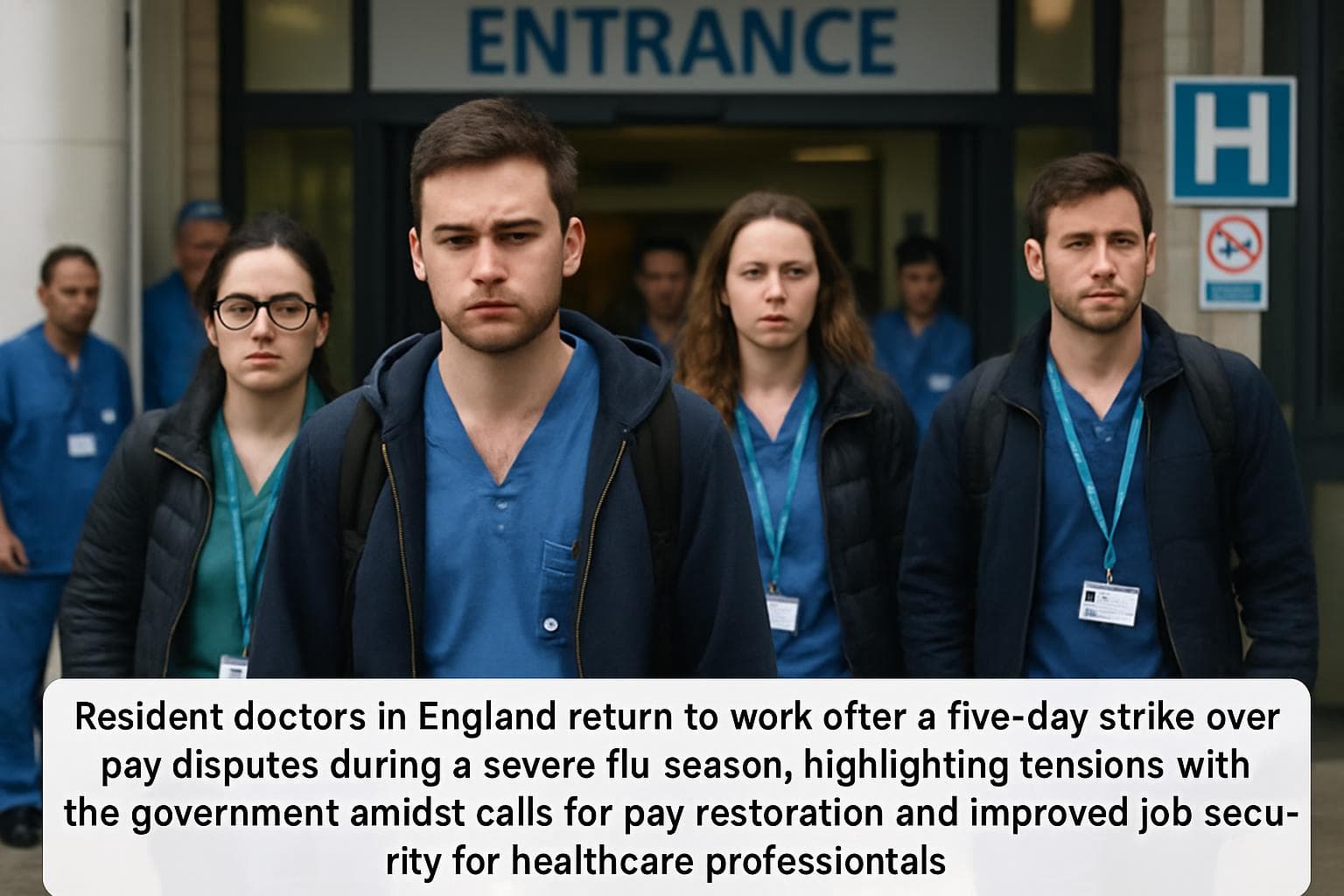
Resident doctors in England have returned to work following a five-day strike over ongoing pay disputes, which coincided with a severe flu season affecting the National Health Service (NHS). The strike, which saw 65% participation from British Medical Association (BMA) members, highlighted the ongoing tensions between healthcare professionals and the government over pay and job security.
Background and Demands
The BMA has been vocal about the need for "pay restoration" to 2008 levels, arguing that resident doctors' pay has decreased by 20% in real terms due to inflation. Despite receiving an average pay rise of 5.4% this year, the BMA contends that it is insufficient. Dr. Jack Fletcher, chair of the resident doctors committee, emphasized the need for a "proper fix" to the jobs crisis and a credible path towards restoring the profession's lost value.
Government's Stance
Health Secretary Wes Streeting has expressed a desire to resolve the dispute, stating, "I do want to end this dispute." He acknowledged the need for more training places to address the crisis of qualified doctors unable to find jobs. However, he also noted that the BMA's demand for an additional 26% pay increase is unaffordable. Streeting remains open to discussions, aiming to prevent further industrial action in 2026.
Impact on the NHS
The strike occurred during a record flu season, with over 3,000 patients hospitalized in England. Prime Minister Sir Keir Starmer criticized the timing of the walkout as "dangerous and utterly irresponsible." Despite the challenges, the BMA worked with NHS leaders to ensure patient safety during the strike.
Future Negotiations
As the strike concluded, both the BMA and the government signaled a willingness to engage in constructive talks. Dr. Fletcher expressed optimism, stating, "We are going into the new year with a renewed can-do spirit." The BMA hopes for less confrontation and more collaboration in future negotiations.
WHAT THIS MIGHT MEAN
The resolution of the pay dispute between resident doctors and the government remains uncertain. If negotiations fail to yield a satisfactory outcome, further strikes could exacerbate the NHS's challenges, particularly during peak flu seasons. Experts suggest that a multi-year approach to pay restoration and job creation could stabilize the healthcare workforce and improve morale. As discussions resume in the new year, the government's ability to balance fiscal constraints with the demands of healthcare professionals will be crucial in preventing further industrial action and ensuring the NHS can effectively manage public health crises.
Related Articles
Prince William Calls for Action on UK Male Suicide Rates

Saharan Dust to Illuminate UK Skies with Vivid Sunrises and Sunsets

Government Announces £4 Billion Overhaul of SEND Support in England

UK Government Announces Major Overhaul of SEND System with £3.4 Billion Investment

Government Unveils Ambitious Plan to Halve Attainment Gap in England's Schools

UK Government's SEND Reforms: A Critical Turning Point for Special Education
Resident Doctors in England Conclude Strike Amidst NHS Flu Crisis
In This Article
 Maya Singh| Published
 HIGHLIGHTS
- Resident doctors in England ended a five-day strike over pay disputes, with 65% participation, amid a severe flu season.
- The British Medical Association (BMA) seeks pay restoration to 2008 levels, citing a 20% decrease in real terms due to inflation.
- Health Secretary Wes Streeting expressed willingness to resume talks, aiming to prevent further industrial action in 2026.
- The BMA and Streeting are adopting a more conciliatory tone, with the BMA urging a "can-do spirit" in future negotiations.
- The NHS remains under pressure from flu cases, with over 3,000 patients hospitalized, highlighting the urgency of resolving the dispute.
Resident doctors in England have returned to work following a five-day strike over ongoing pay disputes, which coincided with a severe flu season affecting the National Health Service (NHS). The strike, which saw 65% participation from British Medical Association (BMA) members, highlighted the ongoing tensions between healthcare professionals and the government over pay and job security.
Background and Demands
The BMA has been vocal about the need for "pay restoration" to 2008 levels, arguing that resident doctors' pay has decreased by 20% in real terms due to inflation. Despite receiving an average pay rise of 5.4% this year, the BMA contends that it is insufficient. Dr. Jack Fletcher, chair of the resident doctors committee, emphasized the need for a "proper fix" to the jobs crisis and a credible path towards restoring the profession's lost value.
Government's Stance
Health Secretary Wes Streeting has expressed a desire to resolve the dispute, stating, "I do want to end this dispute." He acknowledged the need for more training places to address the crisis of qualified doctors unable to find jobs. However, he also noted that the BMA's demand for an additional 26% pay increase is unaffordable. Streeting remains open to discussions, aiming to prevent further industrial action in 2026.
Impact on the NHS
The strike occurred during a record flu season, with over 3,000 patients hospitalized in England. Prime Minister Sir Keir Starmer criticized the timing of the walkout as "dangerous and utterly irresponsible." Despite the challenges, the BMA worked with NHS leaders to ensure patient safety during the strike.
Future Negotiations
As the strike concluded, both the BMA and the government signaled a willingness to engage in constructive talks. Dr. Fletcher expressed optimism, stating, "We are going into the new year with a renewed can-do spirit." The BMA hopes for less confrontation and more collaboration in future negotiations.
WHAT THIS MIGHT MEAN
The resolution of the pay dispute between resident doctors and the government remains uncertain. If negotiations fail to yield a satisfactory outcome, further strikes could exacerbate the NHS's challenges, particularly during peak flu seasons. Experts suggest that a multi-year approach to pay restoration and job creation could stabilize the healthcare workforce and improve morale. As discussions resume in the new year, the government's ability to balance fiscal constraints with the demands of healthcare professionals will be crucial in preventing further industrial action and ensuring the NHS can effectively manage public health crises.
Related Articles
Prince William Calls for Action on UK Male Suicide Rates
Saharan Dust to Illuminate UK Skies with Vivid Sunrises and Sunsets
Government Announces £4 Billion Overhaul of SEND Support in England
UK Government Announces Major Overhaul of SEND System with £3.4 Billion Investment
Government Unveils Ambitious Plan to Halve Attainment Gap in England's Schools
UK Government's SEND Reforms: A Critical Turning Point for Special Education