
RFK Jr. Halts $500 Million in mRNA Vaccine Research Amid Safety Concerns
In This Article
HIGHLIGHTS
- The US Department of Health and Human Services (HHS) plans to cancel $500 million in funding for mRNA vaccine projects, affecting 22 contracts.
- Health Secretary Robert F. Kennedy Jr. cites safety concerns over mRNA technology, despite its role in combating the Covid-19 pandemic.
- The decision impacts major pharmaceutical companies like Pfizer and Moderna, with some late-stage projects preserved.
- Experts criticize the move, noting mRNA vaccines' safety and effectiveness in preventing severe infections.
- Kennedy's tenure has seen significant shifts in US health policy, including changes to vaccine advisory panels.
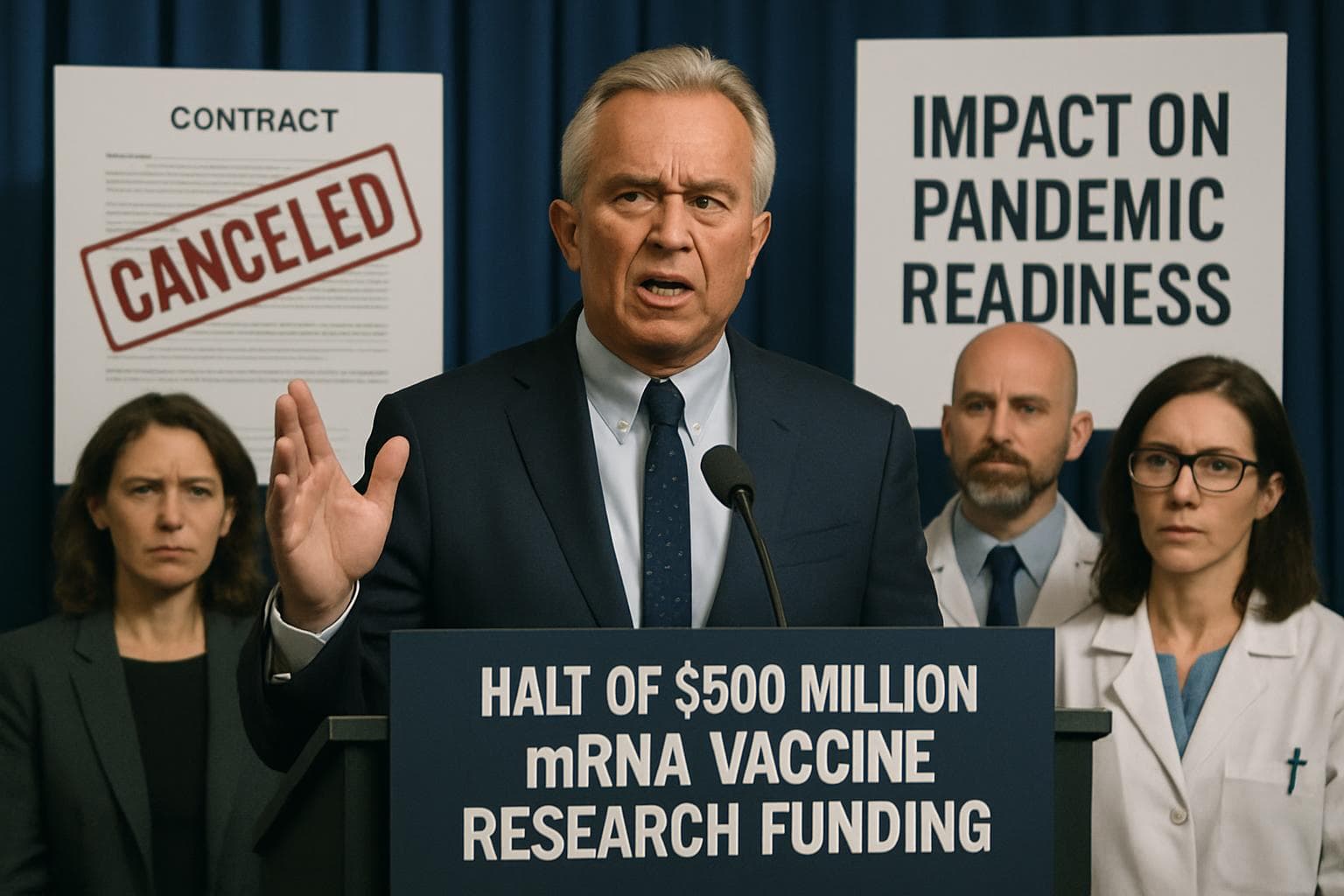
The US Department of Health and Human Services (HHS) has announced the cancellation of $500 million in funding for mRNA vaccine research, a decision that will affect 22 projects led by major pharmaceutical companies, including Pfizer and Moderna. This move, spearheaded by Health Secretary Robert F. Kennedy Jr., has sparked controversy due to the critical role mRNA vaccines played in addressing the Covid-19 pandemic.
Funding Cancellation and Its Impact
The HHS decision involves terminating federal contracts for mRNA-based vaccines, questioning the safety of a technology credited with saving millions of lives during the pandemic. The Biomedical Advanced Research and Development Authority (BARDA), a unit within HHS, has been instrumental in supporting vaccine development to counter public health threats. However, Kennedy, a known vaccine skeptic, argues that mRNA technology poses more risks than benefits for respiratory viruses like Covid-19 and the flu.
Expert Criticism and Safety Concerns
Health experts have expressed concern over Kennedy's decision, emphasizing the safety and efficacy of mRNA vaccines. Dr. Paul Offit, director of the Vaccine Education Center at Children's Hospital of Philadelphia, stated that mRNA vaccines are "remarkably safe" and crucial in preventing severe infections. Critics argue that the cancellation could hinder the US's ability to respond to future pandemics, as mRNA vaccines have a shorter development cycle compared to traditional vaccines.
Changes in Health Policy
Since taking office, Kennedy has implemented significant changes in US health policy, including the dismissal of a vaccine advisory panel and the initiation of a study on the debunked link between vaccines and autism. His actions reflect a broader shift in the nation's approach to vaccine development and regulation, with a focus on platforms deemed to have stronger safety records.
WHAT THIS MIGHT MEAN
The cancellation of mRNA vaccine funding could have far-reaching implications for public health policy and future pandemic preparedness. Experts warn that without the rapid development capabilities of mRNA technology, the US may face challenges in responding to emerging health threats. Politically, Kennedy's actions may further polarize the debate on vaccine safety and efficacy, potentially influencing public trust in vaccination programs. As the situation unfolds, the scientific community and policymakers will need to navigate these changes carefully to ensure continued protection against infectious diseases.
Related Articles
Covid-19 Inquiry Exposes Care Home Struggles and Calls for Reform

Coca-Cola Faces Ingredient Debate Amid Trump's Cane Sugar Claims
CDC Layoffs and Misinformation Spark Public Health Crisis Amidst Atlanta Shooting
RFK Jr Accused of Fueling Violence Against CDC Amidst Vaccine Misinformation Allegations
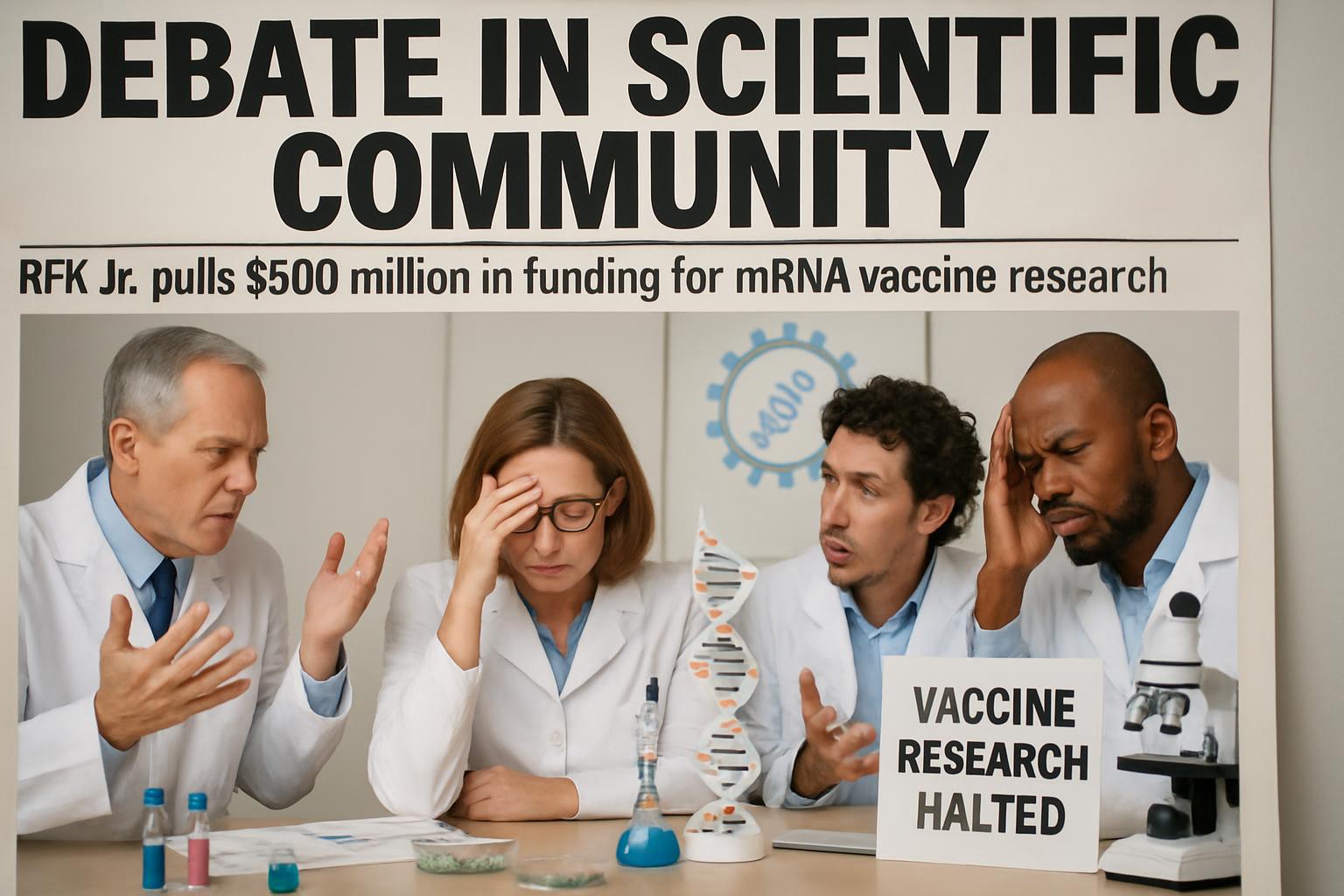
RFK Jr's Funding Cut for mRNA Vaccines Sparks Scientific Outcry
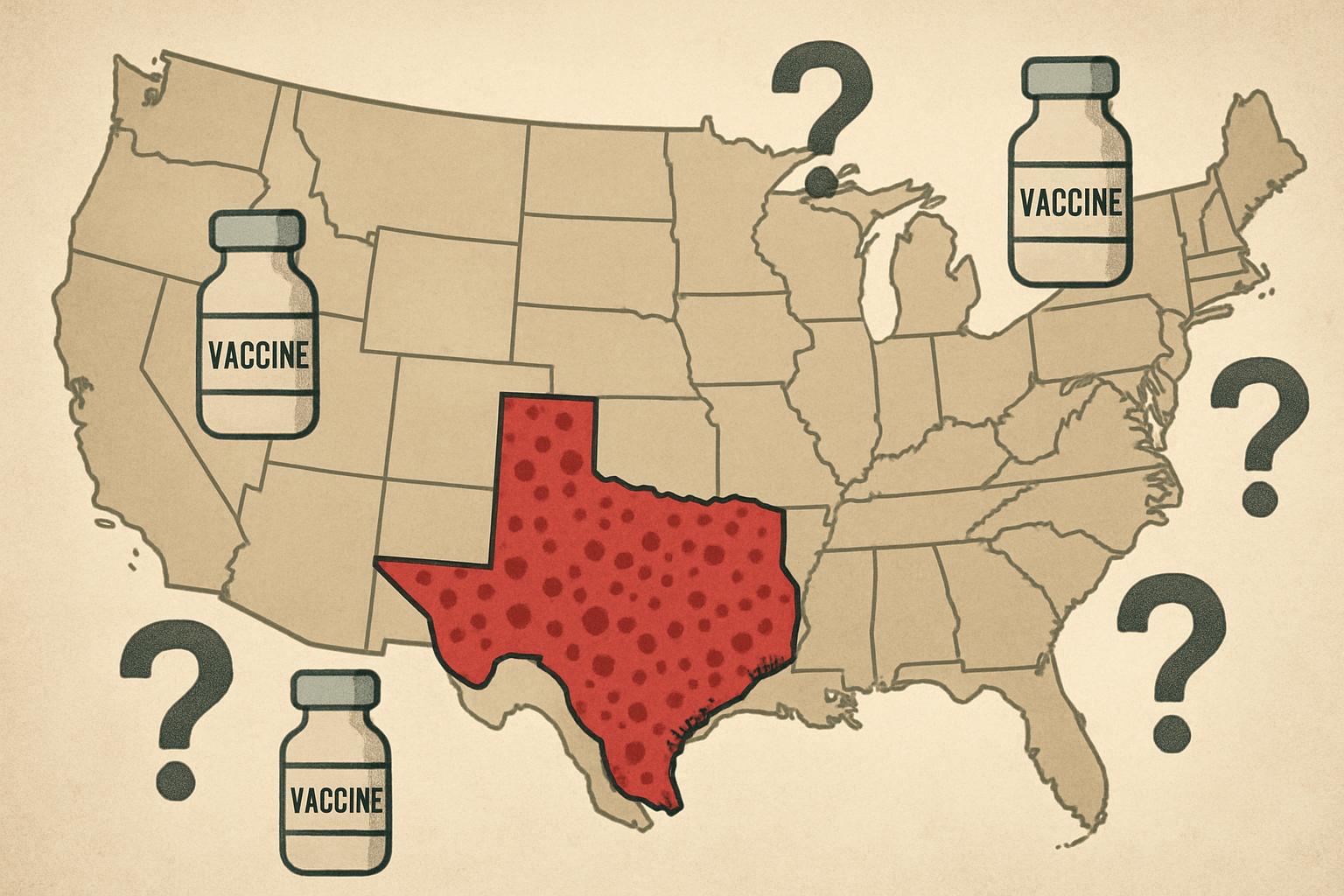
US Faces Worst Measles Outbreak in Over Three Decades Amid Vaccine Hesitancy
RFK Jr. Halts $500 Million in mRNA Vaccine Research Amid Safety Concerns
In This Article
 Maya Singh| Published
 HIGHLIGHTS
- The US Department of Health and Human Services (HHS) plans to cancel $500 million in funding for mRNA vaccine projects, affecting 22 contracts.
- Health Secretary Robert F. Kennedy Jr. cites safety concerns over mRNA technology, despite its role in combating the Covid-19 pandemic.
- The decision impacts major pharmaceutical companies like Pfizer and Moderna, with some late-stage projects preserved.
- Experts criticize the move, noting mRNA vaccines' safety and effectiveness in preventing severe infections.
- Kennedy's tenure has seen significant shifts in US health policy, including changes to vaccine advisory panels.
The US Department of Health and Human Services (HHS) has announced the cancellation of $500 million in funding for mRNA vaccine research, a decision that will affect 22 projects led by major pharmaceutical companies, including Pfizer and Moderna. This move, spearheaded by Health Secretary Robert F. Kennedy Jr., has sparked controversy due to the critical role mRNA vaccines played in addressing the Covid-19 pandemic.
Funding Cancellation and Its Impact
The HHS decision involves terminating federal contracts for mRNA-based vaccines, questioning the safety of a technology credited with saving millions of lives during the pandemic. The Biomedical Advanced Research and Development Authority (BARDA), a unit within HHS, has been instrumental in supporting vaccine development to counter public health threats. However, Kennedy, a known vaccine skeptic, argues that mRNA technology poses more risks than benefits for respiratory viruses like Covid-19 and the flu.
Expert Criticism and Safety Concerns
Health experts have expressed concern over Kennedy's decision, emphasizing the safety and efficacy of mRNA vaccines. Dr. Paul Offit, director of the Vaccine Education Center at Children's Hospital of Philadelphia, stated that mRNA vaccines are "remarkably safe" and crucial in preventing severe infections. Critics argue that the cancellation could hinder the US's ability to respond to future pandemics, as mRNA vaccines have a shorter development cycle compared to traditional vaccines.
Changes in Health Policy
Since taking office, Kennedy has implemented significant changes in US health policy, including the dismissal of a vaccine advisory panel and the initiation of a study on the debunked link between vaccines and autism. His actions reflect a broader shift in the nation's approach to vaccine development and regulation, with a focus on platforms deemed to have stronger safety records.
WHAT THIS MIGHT MEAN
The cancellation of mRNA vaccine funding could have far-reaching implications for public health policy and future pandemic preparedness. Experts warn that without the rapid development capabilities of mRNA technology, the US may face challenges in responding to emerging health threats. Politically, Kennedy's actions may further polarize the debate on vaccine safety and efficacy, potentially influencing public trust in vaccination programs. As the situation unfolds, the scientific community and policymakers will need to navigate these changes carefully to ensure continued protection against infectious diseases.
Related Articles
Covid-19 Inquiry Exposes Care Home Struggles and Calls for Reform
Coca-Cola Faces Ingredient Debate Amid Trump's Cane Sugar Claims
CDC Layoffs and Misinformation Spark Public Health Crisis Amidst Atlanta Shooting
RFK Jr Accused of Fueling Violence Against CDC Amidst Vaccine Misinformation Allegations
RFK Jr's Funding Cut for mRNA Vaccines Sparks Scientific Outcry
US Faces Worst Measles Outbreak in Over Three Decades Amid Vaccine Hesitancy