
Rising Food Prices Push UK Households Towards Simpler Meals and Budget Brands
In This Article
HIGHLIGHTS
- UK households may see a £275 increase in annual grocery bills due to a 5.2% rise in food prices.
- Consumers are turning to supermarket own-brand products and simpler meals to manage costs.
- Inflation in the UK rose to 3.6% in June, driven by rising food and fuel prices.
- Retailers face pressure from higher wage costs and potential business rate changes, impacting food prices.
- Around 20% of UK households are struggling with grocery bills, with limited options to reduce costs further.
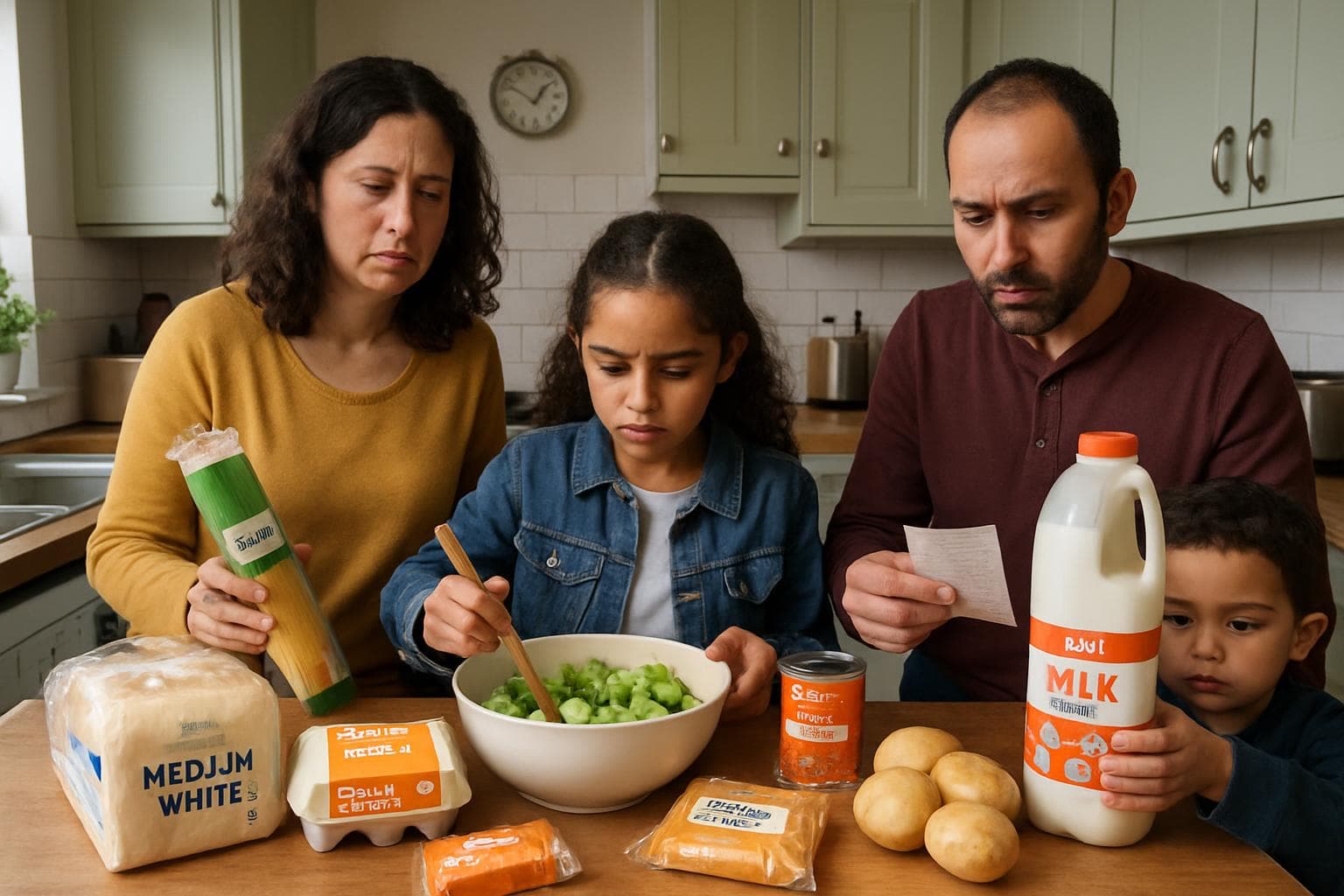
UK households are bracing for a potential £275 increase in annual grocery bills as food prices continue to climb. According to research by Worldpanel by Numerator, food prices have surged by 5.2% over the past month compared to last year, marking the highest increase since early 2023. This rise is prompting consumers to adjust their shopping habits, with many opting for supermarket own-brand products and simpler meals to mitigate the impact on their budgets.
Inflation and Consumer Concerns
The Office for National Statistics reported a 3.6% rise in the UK's consumer prices index in June, driven by escalating food and fuel costs. This marks the third consecutive month of food price inflation, with notable increases in the prices of cakes, meat, milk, eggs, and cheddar cheese. Fraser McKevitt, head of retail and consumer insight at Worldpanel, noted that nearly two-thirds of households are "very concerned" about grocery costs, leading to a shift towards more affordable own-label products, which are growing in sales faster than branded goods.
Retailers Under Pressure
Retailers are also feeling the squeeze from rising wage costs and potential changes to business rates. Simon Roberts, CEO of Sainsbury's, expressed concerns that these factors could lead to a withdrawal from high streets, impacting growth and investment. Helen Dickinson, chief executive of the British Retail Consortium, highlighted that while retailers strive to shield customers from these pressures, the increasing costs are inevitably feeding through to prices.
Impact on Household Spending
The financial strain is particularly acute for around 20% of UK households who are already struggling with grocery bills. With limited options to further cut costs, many are resorting to simpler meals, with nearly 70% of dinner plates now featuring fewer than six components. This shift in consumer behavior underscores the broader impact of the cost of living crisis on household spending habits.
WHAT THIS MIGHT MEAN
If food prices continue to rise, UK households may face further financial strain, potentially leading to increased demand for budget-friendly options and further shifts in consumer spending habits. Retailers might need to innovate and offer more competitive pricing to retain customers. On a broader scale, sustained inflation could prompt government intervention to address the cost of living crisis, potentially through policy measures aimed at stabilizing prices or providing support to vulnerable households.
Related Articles

UK Government Eases Deer Culling to Protect Woodlands and Farmland

Canada and Australia Forge Strategic Partnership Amid Global Uncertainty

UK Government to Reform Asylum Seeker Support and Employment Policies
Middle East Conflict Drives UK Energy Prices to New Highs

UK Faces Dilemmas Amid Iran Conflict and China Spying Allegations

UK Reinforces Military Presence in Cyprus Amid Middle East Tensions
Rising Food Prices Push UK Households Towards Simpler Meals and Budget Brands
In This Article
 Aya Nakamura| Published
 HIGHLIGHTS
- UK households may see a £275 increase in annual grocery bills due to a 5.2% rise in food prices.
- Consumers are turning to supermarket own-brand products and simpler meals to manage costs.
- Inflation in the UK rose to 3.6% in June, driven by rising food and fuel prices.
- Retailers face pressure from higher wage costs and potential business rate changes, impacting food prices.
- Around 20% of UK households are struggling with grocery bills, with limited options to reduce costs further.
UK households are bracing for a potential £275 increase in annual grocery bills as food prices continue to climb. According to research by Worldpanel by Numerator, food prices have surged by 5.2% over the past month compared to last year, marking the highest increase since early 2023. This rise is prompting consumers to adjust their shopping habits, with many opting for supermarket own-brand products and simpler meals to mitigate the impact on their budgets.
Inflation and Consumer Concerns
The Office for National Statistics reported a 3.6% rise in the UK's consumer prices index in June, driven by escalating food and fuel costs. This marks the third consecutive month of food price inflation, with notable increases in the prices of cakes, meat, milk, eggs, and cheddar cheese. Fraser McKevitt, head of retail and consumer insight at Worldpanel, noted that nearly two-thirds of households are "very concerned" about grocery costs, leading to a shift towards more affordable own-label products, which are growing in sales faster than branded goods.
Retailers Under Pressure
Retailers are also feeling the squeeze from rising wage costs and potential changes to business rates. Simon Roberts, CEO of Sainsbury's, expressed concerns that these factors could lead to a withdrawal from high streets, impacting growth and investment. Helen Dickinson, chief executive of the British Retail Consortium, highlighted that while retailers strive to shield customers from these pressures, the increasing costs are inevitably feeding through to prices.
Impact on Household Spending
The financial strain is particularly acute for around 20% of UK households who are already struggling with grocery bills. With limited options to further cut costs, many are resorting to simpler meals, with nearly 70% of dinner plates now featuring fewer than six components. This shift in consumer behavior underscores the broader impact of the cost of living crisis on household spending habits.
WHAT THIS MIGHT MEAN
If food prices continue to rise, UK households may face further financial strain, potentially leading to increased demand for budget-friendly options and further shifts in consumer spending habits. Retailers might need to innovate and offer more competitive pricing to retain customers. On a broader scale, sustained inflation could prompt government intervention to address the cost of living crisis, potentially through policy measures aimed at stabilizing prices or providing support to vulnerable households.
Related Articles
UK Government Eases Deer Culling to Protect Woodlands and Farmland
Canada and Australia Forge Strategic Partnership Amid Global Uncertainty
UK Government to Reform Asylum Seeker Support and Employment Policies
Middle East Conflict Drives UK Energy Prices to New Highs
UK Faces Dilemmas Amid Iran Conflict and China Spying Allegations
UK Reinforces Military Presence in Cyprus Amid Middle East Tensions