
Russia's Intensified Airstrikes on Ukraine Prompt Calls for Stronger Defenses and Sanctions
In This Article
HIGHLIGHTS
- Russia launched a massive aerial attack on Ukraine, targeting cities like Pavlohrad and Odesa, resulting in multiple casualties and significant infrastructure damage.
- Ukrainian President Zelensky emphasized the need for enhanced air defenses, highlighting the role of interceptor drones and international support.
- The EU and UK have imposed new sanctions on Russia, including a price cap on Russian oil, aiming to curb Moscow's financial resources for the war.
- Russia's defense ministry claimed to have downed numerous Ukrainian drones, affecting regions near the Russian border, including Rostov and Moscow.
- Discussions on Ukraine's potential EU membership continue, with German Chancellor Merz suggesting it is unlikely before 2034.
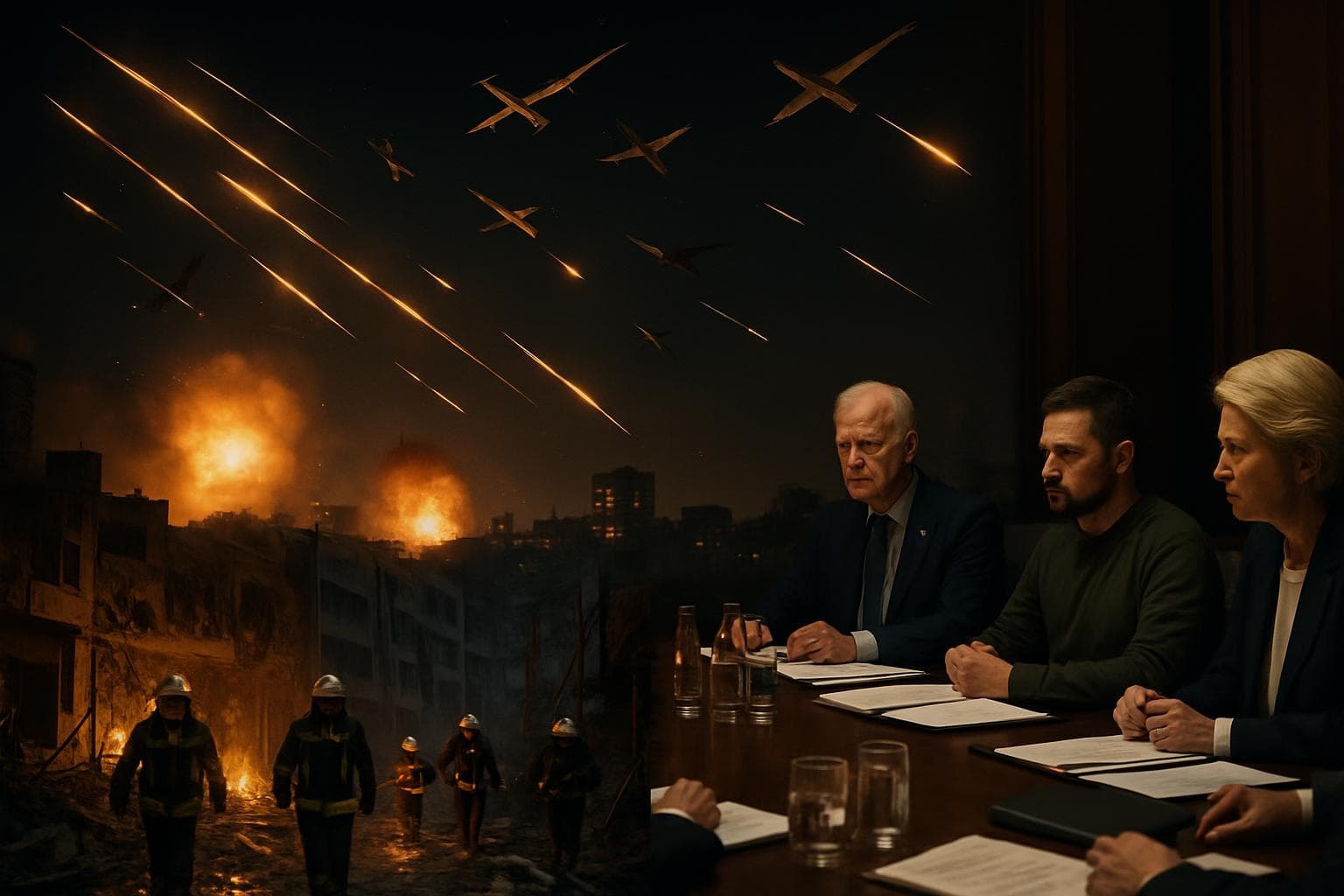
In a significant escalation of hostilities, Russia launched a widespread aerial assault on Ukraine, targeting key cities such as Pavlohrad and Odesa. The attacks, which occurred overnight, resulted in the deaths of at least three individuals and left several others injured. Ukrainian President Volodymyr Zelensky reported that ten regions were affected, with more than 340 drones and 35 missiles deployed by Russian forces. Despite Ukraine's military intercepting the majority of these threats, over 30 managed to breach defenses, causing substantial damage.
Pavlohrad and Odesa Under Siege
The eastern city of Pavlohrad experienced its most severe attack to date, with explosions rocking the city throughout the night. Regional head Serhiy Lysak described the situation as "hellish," noting that industrial sites, a fire department, and residential buildings were among the targets. In Odesa, a drone strike set a nine-story apartment building ablaze, resulting in the death of a woman who was rescued from the fire. Mayor Gennadiy Trukhanov confirmed that at least 20 drones had converged on the city, causing extensive damage to civilian infrastructure.
International Response and Sanctions
In response to the ongoing conflict, the European Union and the United Kingdom have introduced a new package of sanctions against Russia. These measures include a dynamic price cap on Russian crude oil, intended to further restrict Moscow's financial capabilities. EU foreign policy chief emphasized the importance of increasing pressure on Russia to halt its aggression. Meanwhile, the UK has joined the EU in these efforts, with Chancellor Rachel Reeves stating that the sanctions aim to diminish the Kremlin's war chest.
Russian Military Claims and Ukrainian Defense Needs
Russia's defense ministry reported the downing of over 70 Ukrainian drones, impacting regions such as Rostov and Moscow. The attacks led to temporary power outages and disrupted rail traffic. In light of these developments, President Zelensky reiterated the urgent need for bolstered air defenses, including the acquisition of more interceptor drones and support from international allies.
Future of Ukraine's EU Membership
Amid the ongoing conflict, discussions about Ukraine's potential membership in the European Union continue. German Chancellor Friedrich Merz expressed skepticism about Ukraine joining the EU before 2034, citing the need to prioritize ending the war and focusing on reconstruction efforts.
WHAT THIS MIGHT MEAN
The recent escalation in Russian airstrikes on Ukraine underscores the urgency for enhanced air defense systems and international support. As Ukraine continues to face significant threats, the role of interceptor drones and allied assistance will be crucial in mitigating further damage. The new sanctions imposed by the EU and UK aim to weaken Russia's financial resources, potentially influencing Moscow's military strategy. However, the effectiveness of these measures remains to be seen. Additionally, the prospect of Ukraine joining the EU is likely to remain a complex and long-term issue, contingent on the resolution of the conflict and subsequent reconstruction efforts.
Related Articles
Russian LNG Tanker Sinks in Mediterranean Amid Accusations of Ukrainian Drone Attack
Russia-Ukraine Conflict: Four Years of Unyielding Struggle and Human Resilience
Middle East Conflict Drives UK Energy Prices to New Highs
Trump Raises Import Tariffs to 15% After Supreme Court Setback
Kenyan Nationals Recruited for Russia-Ukraine War Amid Allegations of Human Trafficking

Breakthrough Drug Offers Hope for Children with Severe Epilepsy
Russia's Intensified Airstrikes on Ukraine Prompt Calls for Stronger Defenses and Sanctions
In This Article
 James Okoro| Published
 HIGHLIGHTS
- Russia launched a massive aerial attack on Ukraine, targeting cities like Pavlohrad and Odesa, resulting in multiple casualties and significant infrastructure damage.
- Ukrainian President Zelensky emphasized the need for enhanced air defenses, highlighting the role of interceptor drones and international support.
- The EU and UK have imposed new sanctions on Russia, including a price cap on Russian oil, aiming to curb Moscow's financial resources for the war.
- Russia's defense ministry claimed to have downed numerous Ukrainian drones, affecting regions near the Russian border, including Rostov and Moscow.
- Discussions on Ukraine's potential EU membership continue, with German Chancellor Merz suggesting it is unlikely before 2034.
In a significant escalation of hostilities, Russia launched a widespread aerial assault on Ukraine, targeting key cities such as Pavlohrad and Odesa. The attacks, which occurred overnight, resulted in the deaths of at least three individuals and left several others injured. Ukrainian President Volodymyr Zelensky reported that ten regions were affected, with more than 340 drones and 35 missiles deployed by Russian forces. Despite Ukraine's military intercepting the majority of these threats, over 30 managed to breach defenses, causing substantial damage.
Pavlohrad and Odesa Under Siege
The eastern city of Pavlohrad experienced its most severe attack to date, with explosions rocking the city throughout the night. Regional head Serhiy Lysak described the situation as "hellish," noting that industrial sites, a fire department, and residential buildings were among the targets. In Odesa, a drone strike set a nine-story apartment building ablaze, resulting in the death of a woman who was rescued from the fire. Mayor Gennadiy Trukhanov confirmed that at least 20 drones had converged on the city, causing extensive damage to civilian infrastructure.
International Response and Sanctions
In response to the ongoing conflict, the European Union and the United Kingdom have introduced a new package of sanctions against Russia. These measures include a dynamic price cap on Russian crude oil, intended to further restrict Moscow's financial capabilities. EU foreign policy chief emphasized the importance of increasing pressure on Russia to halt its aggression. Meanwhile, the UK has joined the EU in these efforts, with Chancellor Rachel Reeves stating that the sanctions aim to diminish the Kremlin's war chest.
Russian Military Claims and Ukrainian Defense Needs
Russia's defense ministry reported the downing of over 70 Ukrainian drones, impacting regions such as Rostov and Moscow. The attacks led to temporary power outages and disrupted rail traffic. In light of these developments, President Zelensky reiterated the urgent need for bolstered air defenses, including the acquisition of more interceptor drones and support from international allies.
Future of Ukraine's EU Membership
Amid the ongoing conflict, discussions about Ukraine's potential membership in the European Union continue. German Chancellor Friedrich Merz expressed skepticism about Ukraine joining the EU before 2034, citing the need to prioritize ending the war and focusing on reconstruction efforts.
WHAT THIS MIGHT MEAN
The recent escalation in Russian airstrikes on Ukraine underscores the urgency for enhanced air defense systems and international support. As Ukraine continues to face significant threats, the role of interceptor drones and allied assistance will be crucial in mitigating further damage. The new sanctions imposed by the EU and UK aim to weaken Russia's financial resources, potentially influencing Moscow's military strategy. However, the effectiveness of these measures remains to be seen. Additionally, the prospect of Ukraine joining the EU is likely to remain a complex and long-term issue, contingent on the resolution of the conflict and subsequent reconstruction efforts.
Related Articles
Russian LNG Tanker Sinks in Mediterranean Amid Accusations of Ukrainian Drone Attack
Russia-Ukraine Conflict: Four Years of Unyielding Struggle and Human Resilience
Middle East Conflict Drives UK Energy Prices to New Highs
Trump Raises Import Tariffs to 15% After Supreme Court Setback
Kenyan Nationals Recruited for Russia-Ukraine War Amid Allegations of Human Trafficking
Breakthrough Drug Offers Hope for Children with Severe Epilepsy