
Hopeful Signs for Scotland's Endangered Capercaillie as Conservation Efforts Show Promise
In This Article
HIGHLIGHTS
- The population of male capercaillies at RSPB Abernethy has increased by 50% from 2020 to 2025, with 30 males recorded.
- Conservation efforts include habitat restoration and predator management to support the endangered capercaillie.
- The Scottish government has initiated an emergency plan to boost capercaillie numbers in the Cairngorms National Park.
- Techniques such as remote-controlled mowing and cattle grazing have improved conditions for capercaillie survival.
- Despite positive trends, the capercaillie remains critically endangered, with only 532 birds estimated to survive in Scotland.
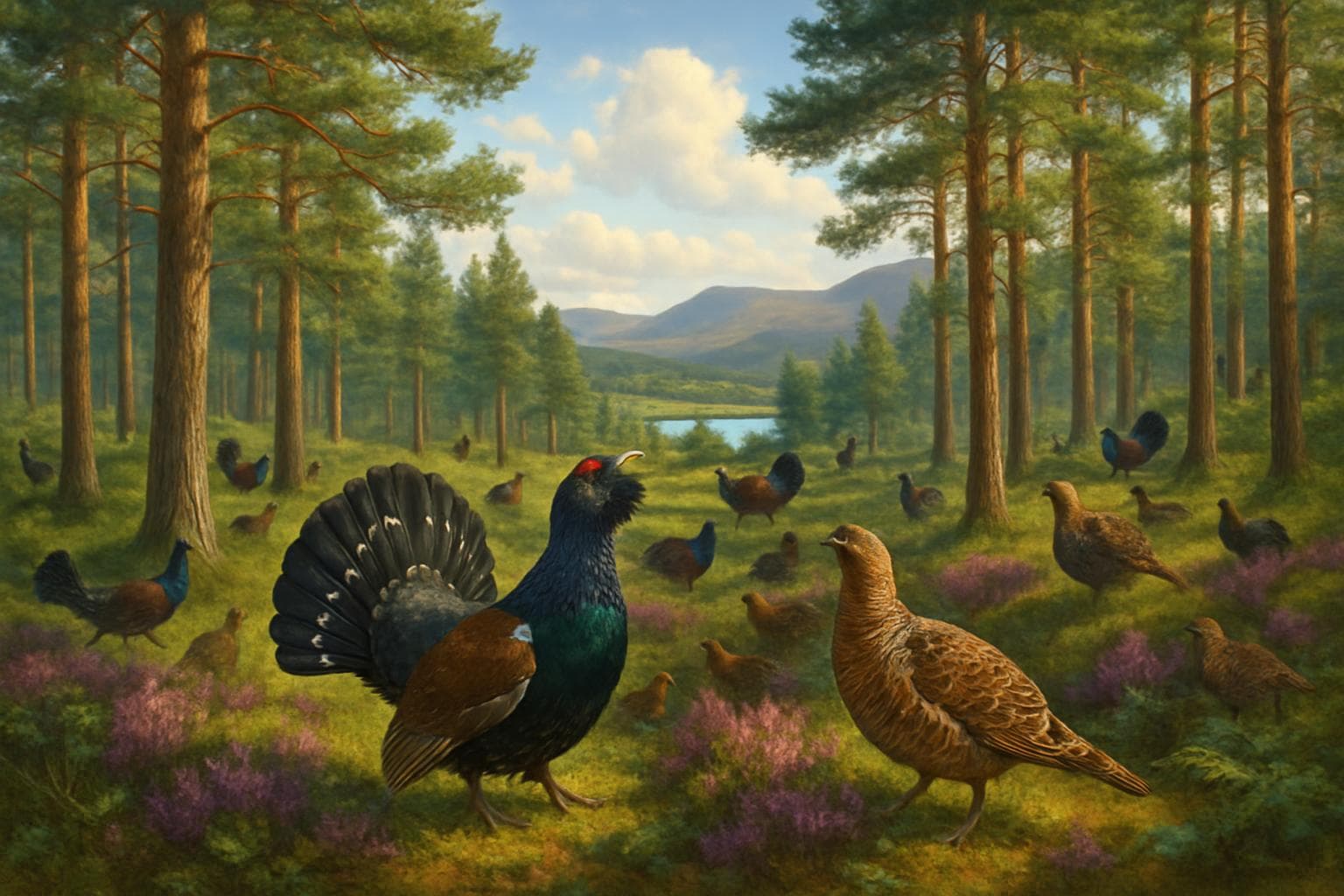
In a promising development for one of Britain's most endangered birds, the capercaillie, conservationists have reported a significant increase in the population of breeding males at RSPB Abernethy in the Scottish Highlands. According to RSPB Scotland, the number of lekking males has risen by 50% since 2020, reaching 30 in 2025. This increase offers a glimmer of hope for the "horse of the forest," whose numbers have dwindled to a critical low of 532 individuals across Scotland.
Conservation Strategies and Challenges
The capercaillie, a large woodland grouse native to the Caledonian pine forests, has faced numerous threats, including habitat loss, predation, and human disturbance. To combat these challenges, the Scottish government has launched an emergency plan aimed at increasing capercaillie numbers in the Cairngorms National Park. Key strategies include expanding habitat areas, minimizing human interference, and redirecting predators to alternative food sources.
At RSPB Abernethy, innovative conservation techniques have been employed to enhance habitat quality. The use of a remote-controlled mower to manage heather growth has allowed blaeberries, a crucial food source for the capercaillie, to thrive. Additionally, virtual fence collars on cattle have facilitated targeted grazing, creating open areas that provide warmth for chicks after rain.
The Road Ahead for Capercaillie Recovery
Despite these positive developments, the capercaillie remains critically endangered, with conservationists warning that the species could face extinction within the next 30 years if current trends continue. Richard Mason, conservation manager at RSPB Abernethy, emphasized the importance of continued efforts, stating, "While we are hopeful that these techniques can support their recovery, there is still a lot of work to be done across all capercaillie sites in Scotland."
The capercaillie's plight underscores the broader challenges of biodiversity conservation in Scotland. As conservationists work to restore native pinewood forests and protect this iconic species, the success of these efforts could serve as a model for preserving other endangered wildlife in the region.
WHAT THIS MIGHT MEAN
Looking ahead, the success of the capercaillie conservation efforts in the Scottish Highlands could have significant implications for biodiversity preservation across the UK. If the current strategies prove effective, they may be adapted to support other endangered species facing similar threats. However, the capercaillie's recovery is not guaranteed, and ongoing challenges such as climate change and genetic diversity must be addressed to ensure long-term survival. Continued collaboration between government agencies, conservation organizations, and local communities will be crucial in safeguarding the future of this remarkable bird.
Related Articles
UK Government Eases Deer Culling to Protect Woodlands and Farmland

Saharan Dust to Illuminate UK Skies with Vivid Sunrises and Sunsets

Canada and Australia Forge Strategic Partnership Amid Global Uncertainty

UK Government to Reform Asylum Seeker Support and Employment Policies

Middle East Conflict Drives UK Energy Prices to New Highs

UK Faces Dilemmas Amid Iran Conflict and China Spying Allegations
Hopeful Signs for Scotland's Endangered Capercaillie as Conservation Efforts Show Promise
In This Article
 Leila Hassan| Published
 HIGHLIGHTS
- The population of male capercaillies at RSPB Abernethy has increased by 50% from 2020 to 2025, with 30 males recorded.
- Conservation efforts include habitat restoration and predator management to support the endangered capercaillie.
- The Scottish government has initiated an emergency plan to boost capercaillie numbers in the Cairngorms National Park.
- Techniques such as remote-controlled mowing and cattle grazing have improved conditions for capercaillie survival.
- Despite positive trends, the capercaillie remains critically endangered, with only 532 birds estimated to survive in Scotland.
In a promising development for one of Britain's most endangered birds, the capercaillie, conservationists have reported a significant increase in the population of breeding males at RSPB Abernethy in the Scottish Highlands. According to RSPB Scotland, the number of lekking males has risen by 50% since 2020, reaching 30 in 2025. This increase offers a glimmer of hope for the "horse of the forest," whose numbers have dwindled to a critical low of 532 individuals across Scotland.
Conservation Strategies and Challenges
The capercaillie, a large woodland grouse native to the Caledonian pine forests, has faced numerous threats, including habitat loss, predation, and human disturbance. To combat these challenges, the Scottish government has launched an emergency plan aimed at increasing capercaillie numbers in the Cairngorms National Park. Key strategies include expanding habitat areas, minimizing human interference, and redirecting predators to alternative food sources.
At RSPB Abernethy, innovative conservation techniques have been employed to enhance habitat quality. The use of a remote-controlled mower to manage heather growth has allowed blaeberries, a crucial food source for the capercaillie, to thrive. Additionally, virtual fence collars on cattle have facilitated targeted grazing, creating open areas that provide warmth for chicks after rain.
The Road Ahead for Capercaillie Recovery
Despite these positive developments, the capercaillie remains critically endangered, with conservationists warning that the species could face extinction within the next 30 years if current trends continue. Richard Mason, conservation manager at RSPB Abernethy, emphasized the importance of continued efforts, stating, "While we are hopeful that these techniques can support their recovery, there is still a lot of work to be done across all capercaillie sites in Scotland."
The capercaillie's plight underscores the broader challenges of biodiversity conservation in Scotland. As conservationists work to restore native pinewood forests and protect this iconic species, the success of these efforts could serve as a model for preserving other endangered wildlife in the region.
WHAT THIS MIGHT MEAN
Looking ahead, the success of the capercaillie conservation efforts in the Scottish Highlands could have significant implications for biodiversity preservation across the UK. If the current strategies prove effective, they may be adapted to support other endangered species facing similar threats. However, the capercaillie's recovery is not guaranteed, and ongoing challenges such as climate change and genetic diversity must be addressed to ensure long-term survival. Continued collaboration between government agencies, conservation organizations, and local communities will be crucial in safeguarding the future of this remarkable bird.
Related Articles
UK Government Eases Deer Culling to Protect Woodlands and Farmland
Saharan Dust to Illuminate UK Skies with Vivid Sunrises and Sunsets
Canada and Australia Forge Strategic Partnership Amid Global Uncertainty
UK Government to Reform Asylum Seeker Support and Employment Policies
Middle East Conflict Drives UK Energy Prices to New Highs
UK Faces Dilemmas Amid Iran Conflict and China Spying Allegations