
Scottish Government Faces Legal Deadline Over Biological Sex Ruling
In This Article
HIGHLIGHTS
- The Scottish government has been given a 14-day deadline by the Sex Matters group to comply with a UK Supreme Court ruling on biological sex.
- The ruling states that the legal definition of a woman in the Equality Act 2010 does not include transgender women with gender recognition certificates.
- The Equality and Human Rights Commission (EHRC) is consulting on a revised code of practice following the ruling, which has sparked concerns about transgender rights.
- Women's rights campaigners demand immediate action to provide single-sex facilities, warning against unlawful practices during the EHRC consultation.
- The Scottish government acknowledges the Supreme Court decision and is reviewing policies and guidance to ensure compliance.
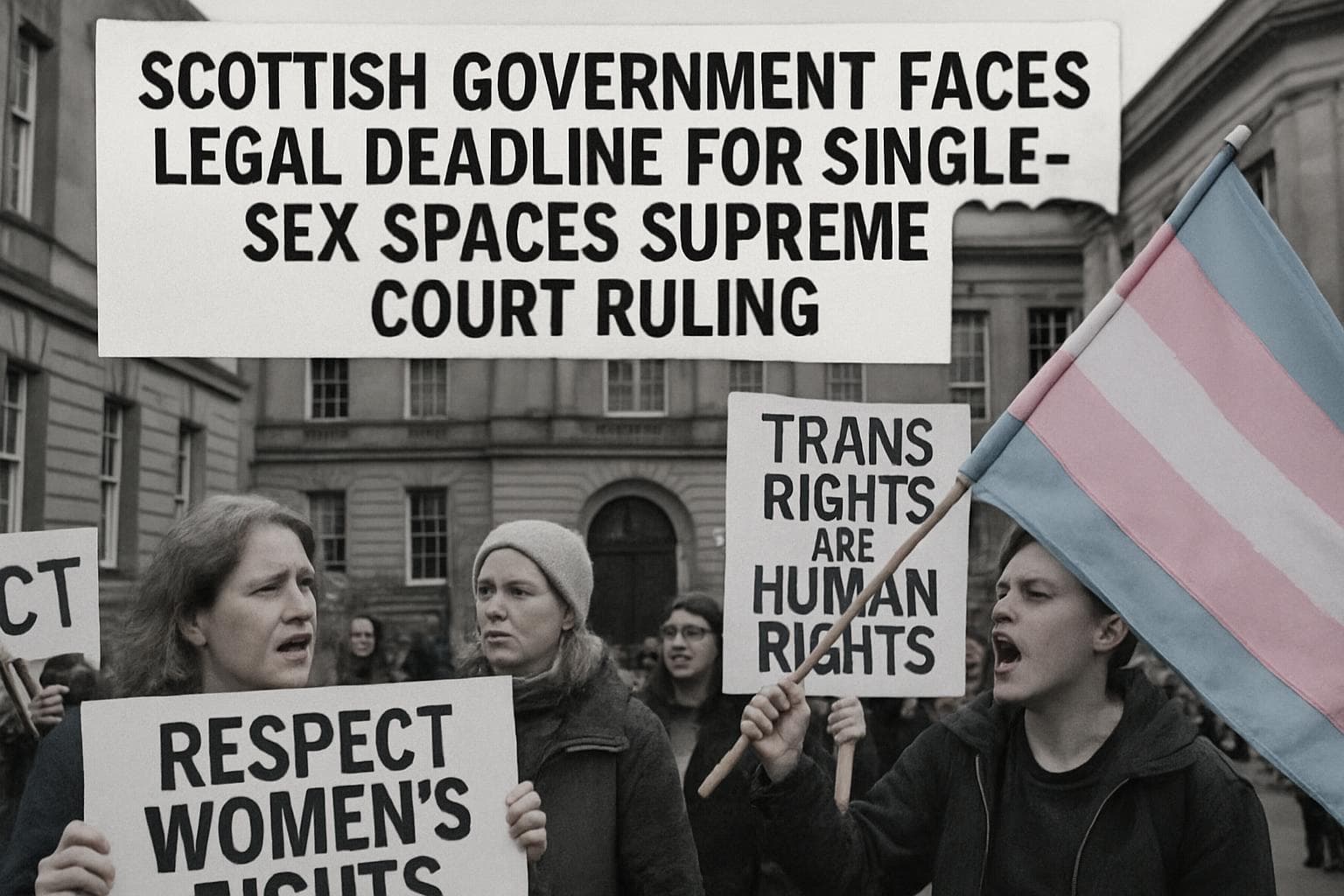
The Scottish government is under pressure to implement a UK Supreme Court ruling on biological sex, with the advocacy group Sex Matters threatening legal action if compliance is not achieved within 14 days. This ultimatum follows the landmark April ruling that clarified the legal definition of a woman under the Equality Act 2010, excluding transgender women with gender recognition certificates.
Supreme Court Ruling and Its Implications
The Supreme Court's decision has significant implications for public bodies and service providers across Scotland. It mandates that single-sex spaces, such as toilets and changing rooms, be provided based on biological sex. The ruling has been met with mixed reactions, with gender-critical groups like For Women Scotland expressing frustration over delays in policy implementation, while LGBT+ rights advocates worry about potential erosion of transgender rights.
Government and EHRC Response
The Scottish government has stated its acceptance of the Supreme Court's judgment and is currently reviewing relevant policies and guidance. Social Justice Secretary Shirley-Anne Sommerville emphasized ongoing efforts to align with the law. Meanwhile, the Equality and Human Rights Commission (EHRC) is consulting on a revised code of practice, having issued interim guidance that some argue effectively excludes transgender individuals from certain public spaces.
Campaigners Demand Immediate Action
Women's rights campaigners, led by Sex Matters, are urging the Scottish government to act swiftly. They demand that all public bodies provide single-sex facilities and suspend any guidance allowing transgender individuals access to these spaces. Maya Forstater, chief executive of Sex Matters, criticized the government for "dragging its feet" and called for leadership to protect women and girls from potentially degrading situations.
Public and Political Reactions
The ruling has sparked a broader debate on transgender rights and privacy. Prominent figures, including author JK Rowling, have voiced support for maintaining pressure on policymakers, with Rowling establishing a private fund to support legal actions. The Good Law Project is also challenging the EHRC's interim advice in court, arguing it unfairly restricts transgender individuals' access to public facilities.
WHAT THIS MIGHT MEAN
The Scottish government's response to the Supreme Court ruling will likely shape the future of gender rights and public policy in the UK. If the government fails to meet the 14-day deadline, it could face legal challenges that may further delay policy implementation. The ongoing consultation by the EHRC will be crucial in determining how the ruling is applied in practice, potentially setting a precedent for other regions. As public debate intensifies, the balance between protecting women's rights and ensuring transgender individuals' dignity and access to public spaces remains a contentious issue.
Related Articles
High Court Dismisses Legal Challenge Over Transgender Access to Hampstead Ponds
NHS Tribunal Ruling Sparks Debate Over Transgender Rights and Single-Sex Spaces

Supreme Court Ruling Expands Compensation for Children Injured at Birth
High Court Upholds Guidance on Single-Sex Spaces Amidst Transgender Rights Debate
Oatly Loses UK Supreme Court Battle Over 'Milk' Trademark
Scottish Government Defends Transgender Prisoner Policy Amid Legal Challenge
Scottish Government Faces Legal Deadline Over Biological Sex Ruling
In This Article
 Ethan Brooks| Published
 HIGHLIGHTS
- The Scottish government has been given a 14-day deadline by the Sex Matters group to comply with a UK Supreme Court ruling on biological sex.
- The ruling states that the legal definition of a woman in the Equality Act 2010 does not include transgender women with gender recognition certificates.
- The Equality and Human Rights Commission (EHRC) is consulting on a revised code of practice following the ruling, which has sparked concerns about transgender rights.
- Women's rights campaigners demand immediate action to provide single-sex facilities, warning against unlawful practices during the EHRC consultation.
- The Scottish government acknowledges the Supreme Court decision and is reviewing policies and guidance to ensure compliance.
The Scottish government is under pressure to implement a UK Supreme Court ruling on biological sex, with the advocacy group Sex Matters threatening legal action if compliance is not achieved within 14 days. This ultimatum follows the landmark April ruling that clarified the legal definition of a woman under the Equality Act 2010, excluding transgender women with gender recognition certificates.
Supreme Court Ruling and Its Implications
The Supreme Court's decision has significant implications for public bodies and service providers across Scotland. It mandates that single-sex spaces, such as toilets and changing rooms, be provided based on biological sex. The ruling has been met with mixed reactions, with gender-critical groups like For Women Scotland expressing frustration over delays in policy implementation, while LGBT+ rights advocates worry about potential erosion of transgender rights.
Government and EHRC Response
The Scottish government has stated its acceptance of the Supreme Court's judgment and is currently reviewing relevant policies and guidance. Social Justice Secretary Shirley-Anne Sommerville emphasized ongoing efforts to align with the law. Meanwhile, the Equality and Human Rights Commission (EHRC) is consulting on a revised code of practice, having issued interim guidance that some argue effectively excludes transgender individuals from certain public spaces.
Campaigners Demand Immediate Action
Women's rights campaigners, led by Sex Matters, are urging the Scottish government to act swiftly. They demand that all public bodies provide single-sex facilities and suspend any guidance allowing transgender individuals access to these spaces. Maya Forstater, chief executive of Sex Matters, criticized the government for "dragging its feet" and called for leadership to protect women and girls from potentially degrading situations.
Public and Political Reactions
The ruling has sparked a broader debate on transgender rights and privacy. Prominent figures, including author JK Rowling, have voiced support for maintaining pressure on policymakers, with Rowling establishing a private fund to support legal actions. The Good Law Project is also challenging the EHRC's interim advice in court, arguing it unfairly restricts transgender individuals' access to public facilities.
WHAT THIS MIGHT MEAN
The Scottish government's response to the Supreme Court ruling will likely shape the future of gender rights and public policy in the UK. If the government fails to meet the 14-day deadline, it could face legal challenges that may further delay policy implementation. The ongoing consultation by the EHRC will be crucial in determining how the ruling is applied in practice, potentially setting a precedent for other regions. As public debate intensifies, the balance between protecting women's rights and ensuring transgender individuals' dignity and access to public spaces remains a contentious issue.
Related Articles
High Court Dismisses Legal Challenge Over Transgender Access to Hampstead Ponds
NHS Tribunal Ruling Sparks Debate Over Transgender Rights and Single-Sex Spaces
Supreme Court Ruling Expands Compensation for Children Injured at Birth
High Court Upholds Guidance on Single-Sex Spaces Amidst Transgender Rights Debate
Oatly Loses UK Supreme Court Battle Over 'Milk' Trademark
Scottish Government Defends Transgender Prisoner Policy Amid Legal Challenge