
South Africa Hosts G20 Amid US Boycott and Diplomatic Tensions
In This Article
HIGHLIGHTS
- South Africa hosts the G20 summit, aiming to address issues like climate change financing and economic development for developing nations.
- The US, under the Trump administration, decided not to participate in the summit, citing unfounded claims of racial discrimination in South Africa.
- Tensions between the US and South Africa have escalated, with diplomatic exchanges becoming increasingly strained.
- South Africa remains determined to pursue its G20 objectives despite the absence of US participation.
- Analysts suggest the US boycott could damage its global standing, with some viewing its actions as misguided.
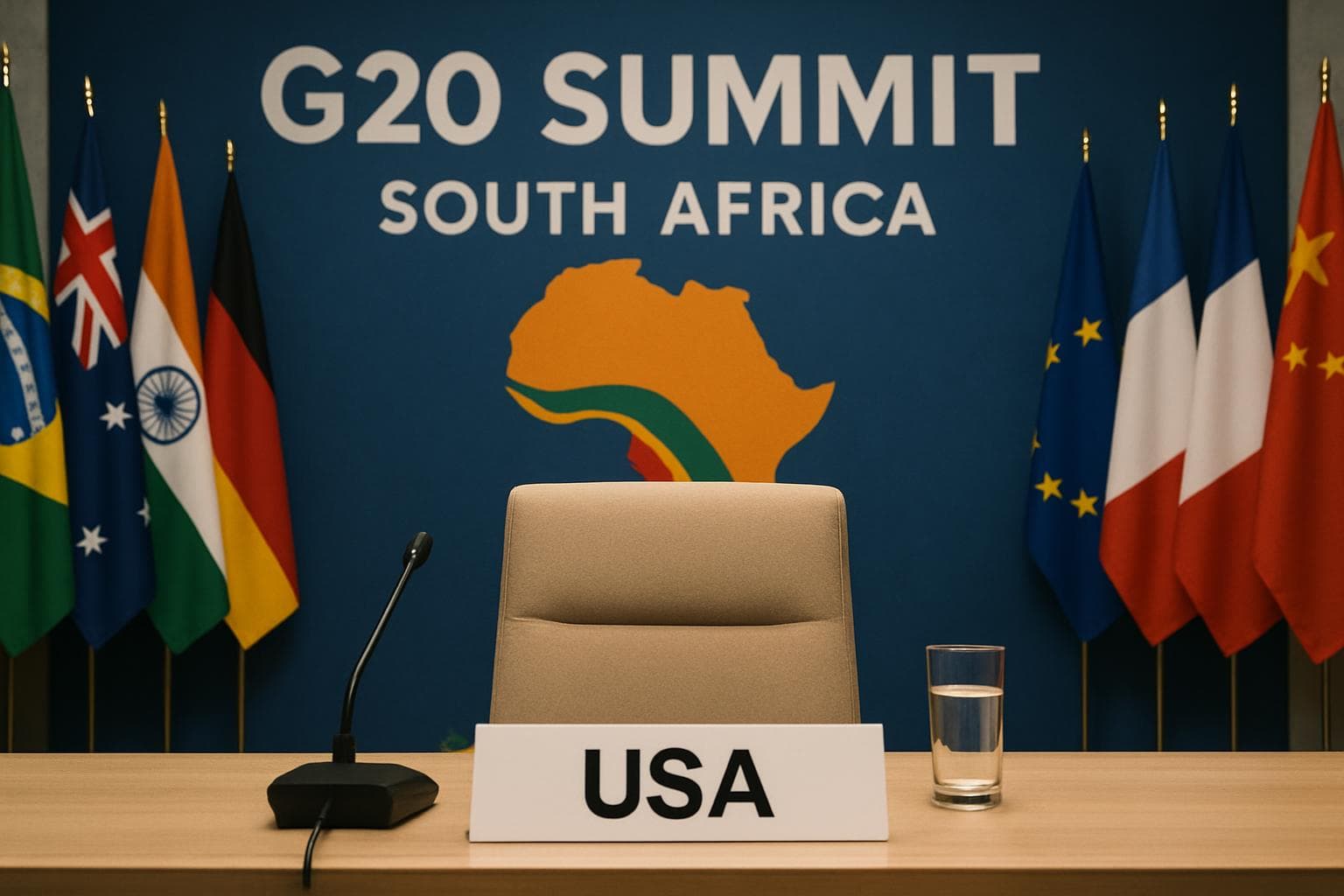
South Africa's historic role as the first African nation to host the G20 summit has been overshadowed by a diplomatic rift with the United States. The Trump administration's decision to boycott the summit, citing discredited claims of racial discrimination against white Afrikaners, has sparked controversy and strained relations between the two countries.
Diplomatic Strains and Economic Goals
As South Africa assumed the G20 presidency, it aimed to champion issues critical to developing nations, such as securing climate change financing and advocating for more favorable borrowing terms. However, the US's absence has dominated discussions, with President Donald Trump refusing to attend due to allegations of racial discrimination, which South Africa vehemently denies. The US had initially planned to send Vice-President JD Vance but later announced that no official representatives would participate in discussions, opting instead to send a small team of diplomats for the handover ceremony.
South Africa's Defiant Stance
Despite the diplomatic snub, South Africa remains resolute in pursuing its G20 objectives. President Cyril Ramaphosa emphasized the importance of respecting national sovereignty and rejected any form of bullying from other nations. Finance Minister Enoch Godongwana asserted that South Africa's participation in future G20 meetings is non-negotiable, stating, "We are members of the G20, we're not an invited country."
Global Reactions and Future Implications
The US's decision to boycott the summit has drawn criticism from analysts and political observers. Marisa Lourenço, a political risk consultant, noted that the US's actions could harm its global standing, as it appears increasingly unreasonable in its dealings with South Africa. The G20, established in 1999, serves as a crucial platform for addressing global economic challenges, and South Africa's leadership role is seen as vital for advancing the interests of developing nations.
WHAT THIS MIGHT MEAN
Looking ahead, the diplomatic tensions between the US and South Africa could have lasting implications for international relations. If the US continues its current stance, it risks alienating not only South Africa but also other nations that view its actions as misguided. As South Africa prepares to hand over the G20 presidency to the US next year, the dynamics of this transition will be closely watched. Experts suggest that the absence of US participation may allow for more consensus-driven discussions at the summit, potentially benefiting the global community. However, the long-term impact on US-South Africa relations remains uncertain, with both countries needing to navigate these challenges carefully to avoid further diplomatic fallout.
Related Articles

Tech Giants Pledge to Cover AI Data Center Energy Costs Amid Rising Electricity Concerns
Cuba Faces Widespread Blackout Amid Deepening Fuel Crisis

UK Faces Dilemmas Amid Iran Conflict and China Spying Allegations
China Sets Lowest GDP Growth Target in Decades Amid Economic Challenges
Congress Subpoenas Attorney General Bondi in Epstein Investigation

Google Faces Legal Battle Over AI Chatbot's Alleged Role in Tragic Death
South Africa Hosts G20 Amid US Boycott and Diplomatic Tensions
In This Article
 James Okoro| Published
 HIGHLIGHTS
- South Africa hosts the G20 summit, aiming to address issues like climate change financing and economic development for developing nations.
- The US, under the Trump administration, decided not to participate in the summit, citing unfounded claims of racial discrimination in South Africa.
- Tensions between the US and South Africa have escalated, with diplomatic exchanges becoming increasingly strained.
- South Africa remains determined to pursue its G20 objectives despite the absence of US participation.
- Analysts suggest the US boycott could damage its global standing, with some viewing its actions as misguided.
South Africa's historic role as the first African nation to host the G20 summit has been overshadowed by a diplomatic rift with the United States. The Trump administration's decision to boycott the summit, citing discredited claims of racial discrimination against white Afrikaners, has sparked controversy and strained relations between the two countries.
Diplomatic Strains and Economic Goals
As South Africa assumed the G20 presidency, it aimed to champion issues critical to developing nations, such as securing climate change financing and advocating for more favorable borrowing terms. However, the US's absence has dominated discussions, with President Donald Trump refusing to attend due to allegations of racial discrimination, which South Africa vehemently denies. The US had initially planned to send Vice-President JD Vance but later announced that no official representatives would participate in discussions, opting instead to send a small team of diplomats for the handover ceremony.
South Africa's Defiant Stance
Despite the diplomatic snub, South Africa remains resolute in pursuing its G20 objectives. President Cyril Ramaphosa emphasized the importance of respecting national sovereignty and rejected any form of bullying from other nations. Finance Minister Enoch Godongwana asserted that South Africa's participation in future G20 meetings is non-negotiable, stating, "We are members of the G20, we're not an invited country."
Global Reactions and Future Implications
The US's decision to boycott the summit has drawn criticism from analysts and political observers. Marisa Lourenço, a political risk consultant, noted that the US's actions could harm its global standing, as it appears increasingly unreasonable in its dealings with South Africa. The G20, established in 1999, serves as a crucial platform for addressing global economic challenges, and South Africa's leadership role is seen as vital for advancing the interests of developing nations.
WHAT THIS MIGHT MEAN
Looking ahead, the diplomatic tensions between the US and South Africa could have lasting implications for international relations. If the US continues its current stance, it risks alienating not only South Africa but also other nations that view its actions as misguided. As South Africa prepares to hand over the G20 presidency to the US next year, the dynamics of this transition will be closely watched. Experts suggest that the absence of US participation may allow for more consensus-driven discussions at the summit, potentially benefiting the global community. However, the long-term impact on US-South Africa relations remains uncertain, with both countries needing to navigate these challenges carefully to avoid further diplomatic fallout.
Related Articles
Tech Giants Pledge to Cover AI Data Center Energy Costs Amid Rising Electricity Concerns
Cuba Faces Widespread Blackout Amid Deepening Fuel Crisis
UK Faces Dilemmas Amid Iran Conflict and China Spying Allegations
China Sets Lowest GDP Growth Target in Decades Amid Economic Challenges
Congress Subpoenas Attorney General Bondi in Epstein Investigation
Google Faces Legal Battle Over AI Chatbot's Alleged Role in Tragic Death