
South Korea's Diplomatic Dance with Trump: A Meeting of Charm and Strategy
In This Article
HIGHLIGHTS
- South Korean President Lee Jae Myung met with US President Donald Trump to discuss North Korea and other bilateral issues.
- Trump expressed interest in meeting North Korean leader Kim Jong-un again, aiming to revive nuclear diplomacy.
- Lee's charm offensive helped avoid tensions over South Korea's military alliance with the US and trade issues.
- Trump hinted at the possibility of the US taking over land hosting a military base in South Korea.
- North Korea's missile tests and military support for Russia remain contentious issues in US-North Korea relations.
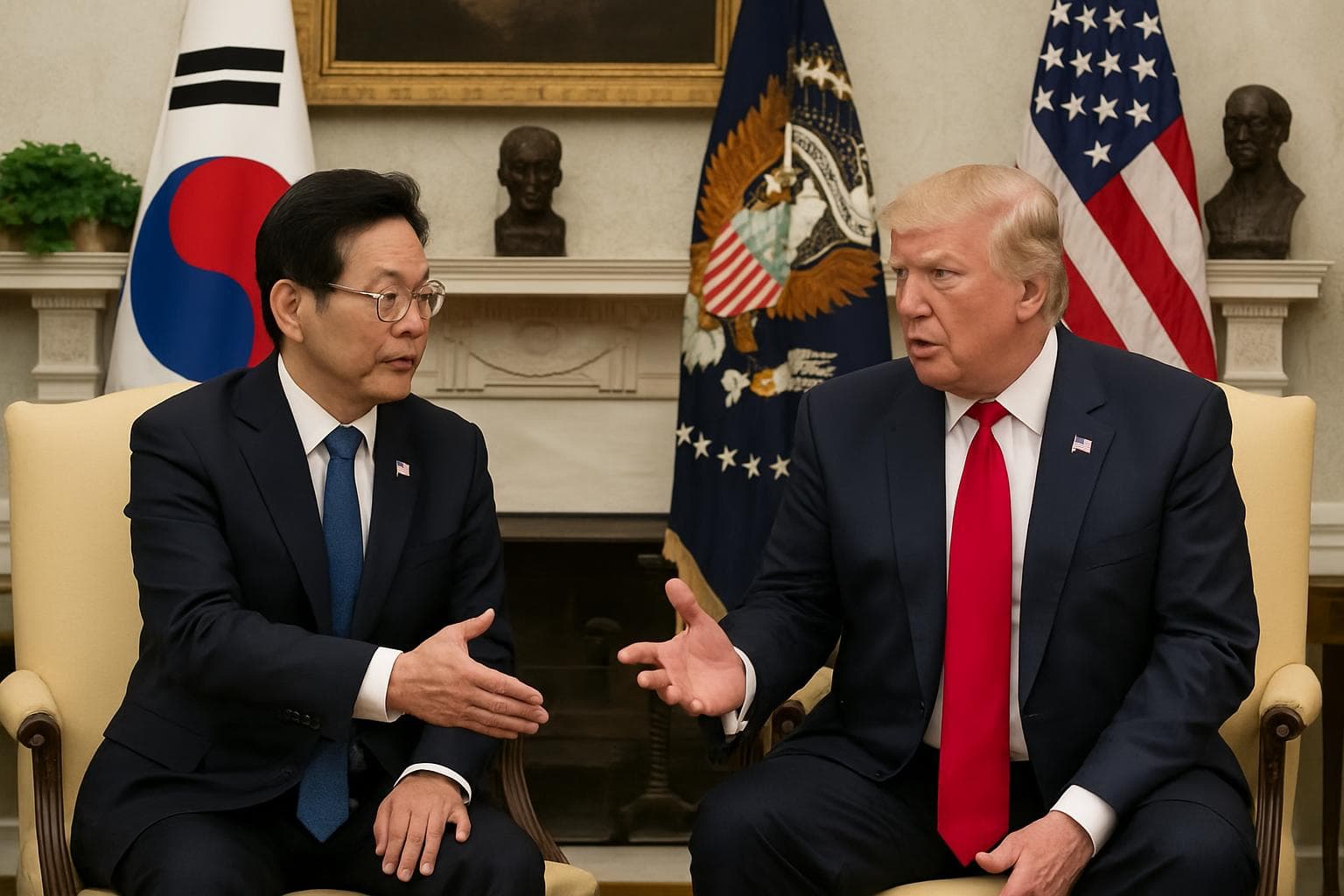
In a high-stakes diplomatic encounter, South Korean President Lee Jae Myung met with US President Donald Trump at the White House to address pressing issues surrounding North Korea and bilateral relations. The meeting, which took place amidst a backdrop of political tensions and strategic maneuvering, highlighted both leaders' efforts to navigate complex geopolitical landscapes.
Navigating Diplomatic Waters
President Lee, aware of Trump's historical skepticism towards South Korea, employed a charm offensive to ease potential tensions. Trump's previous criticisms of South Korea's defense spending and trade surplus with the US loomed over the meeting. However, Lee's strategy of flattery and focus on shared goals, such as the denuclearisation of the Korean peninsula, helped avert any public disagreements.
Reviving Nuclear Diplomacy
A significant point of discussion was Trump's desire to meet North Korean leader Kim Jong-un once more. Trump, who has met Kim three times during his presidency, expressed hope for a future meeting to rekindle stalled nuclear talks. "I look forward to meeting with Kim Jong-un in the appropriate future," Trump stated, underscoring his belief in his peacemaking abilities.
Military and Trade Concerns
The meeting also touched on the sensitive issue of US military presence in South Korea. Trump raised the prospect of the US taking ownership of land hosting a military base, a move that could have significant implications for South Korea-US relations. Additionally, the ongoing investigations into South Korea's former president, Yoon Suk Yeol, added a layer of complexity to the discussions.
North Korea's Strategic Moves
Despite Trump's optimism, North Korea's recent actions, including missile tests and military support for Russia, remain a source of concern. Analysts suggest that Kim Jong-un's regime is leveraging its military capabilities to gain strategic advantages, complicating efforts for peaceful denuclearisation.
WHAT THIS MIGHT MEAN
The meeting between Lee and Trump could pave the way for renewed diplomatic efforts with North Korea, though challenges remain. If Trump successfully arranges a meeting with Kim Jong-un, it could mark a significant step towards easing tensions on the Korean peninsula. However, North Korea's continued military activities and its alliance with Russia may hinder progress.
The potential US acquisition of land for military purposes in South Korea could also strain bilateral relations, requiring careful negotiation to maintain the alliance. As both leaders navigate these complex issues, the outcomes of their diplomatic engagements will be closely watched by the international community.
Related Articles
Spain's Sánchez Stands Firm Against Trump's Trade Threat Over Iran Stance
Senate Blocks Resolution to Limit Trump's Military Actions in Iran

Iran Postpones Khamenei Funeral Amid Escalating US-Israeli Strikes

Tech Giants Pledge to Cover AI Data Center Energy Costs Amid Rising Electricity Concerns

Congress Subpoenas Attorney General Bondi in Epstein Investigation

Cuba Faces Widespread Blackout Amid Deepening Fuel Crisis
South Korea's Diplomatic Dance with Trump: A Meeting of Charm and Strategy
In This Article
 Ethan Brooks| Published
 HIGHLIGHTS
- South Korean President Lee Jae Myung met with US President Donald Trump to discuss North Korea and other bilateral issues.
- Trump expressed interest in meeting North Korean leader Kim Jong-un again, aiming to revive nuclear diplomacy.
- Lee's charm offensive helped avoid tensions over South Korea's military alliance with the US and trade issues.
- Trump hinted at the possibility of the US taking over land hosting a military base in South Korea.
- North Korea's missile tests and military support for Russia remain contentious issues in US-North Korea relations.
In a high-stakes diplomatic encounter, South Korean President Lee Jae Myung met with US President Donald Trump at the White House to address pressing issues surrounding North Korea and bilateral relations. The meeting, which took place amidst a backdrop of political tensions and strategic maneuvering, highlighted both leaders' efforts to navigate complex geopolitical landscapes.
Navigating Diplomatic Waters
President Lee, aware of Trump's historical skepticism towards South Korea, employed a charm offensive to ease potential tensions. Trump's previous criticisms of South Korea's defense spending and trade surplus with the US loomed over the meeting. However, Lee's strategy of flattery and focus on shared goals, such as the denuclearisation of the Korean peninsula, helped avert any public disagreements.
Reviving Nuclear Diplomacy
A significant point of discussion was Trump's desire to meet North Korean leader Kim Jong-un once more. Trump, who has met Kim three times during his presidency, expressed hope for a future meeting to rekindle stalled nuclear talks. "I look forward to meeting with Kim Jong-un in the appropriate future," Trump stated, underscoring his belief in his peacemaking abilities.
Military and Trade Concerns
The meeting also touched on the sensitive issue of US military presence in South Korea. Trump raised the prospect of the US taking ownership of land hosting a military base, a move that could have significant implications for South Korea-US relations. Additionally, the ongoing investigations into South Korea's former president, Yoon Suk Yeol, added a layer of complexity to the discussions.
North Korea's Strategic Moves
Despite Trump's optimism, North Korea's recent actions, including missile tests and military support for Russia, remain a source of concern. Analysts suggest that Kim Jong-un's regime is leveraging its military capabilities to gain strategic advantages, complicating efforts for peaceful denuclearisation.
WHAT THIS MIGHT MEAN
The meeting between Lee and Trump could pave the way for renewed diplomatic efforts with North Korea, though challenges remain. If Trump successfully arranges a meeting with Kim Jong-un, it could mark a significant step towards easing tensions on the Korean peninsula. However, North Korea's continued military activities and its alliance with Russia may hinder progress.
The potential US acquisition of land for military purposes in South Korea could also strain bilateral relations, requiring careful negotiation to maintain the alliance. As both leaders navigate these complex issues, the outcomes of their diplomatic engagements will be closely watched by the international community.
Related Articles
Spain's Sánchez Stands Firm Against Trump's Trade Threat Over Iran Stance
Senate Blocks Resolution to Limit Trump's Military Actions in Iran
Iran Postpones Khamenei Funeral Amid Escalating US-Israeli Strikes
Tech Giants Pledge to Cover AI Data Center Energy Costs Amid Rising Electricity Concerns
Congress Subpoenas Attorney General Bondi in Epstein Investigation
Cuba Faces Widespread Blackout Amid Deepening Fuel Crisis