
South Korea's Military Faces Shrinking Numbers Amid Low Birthrate Crisis
In This Article
HIGHLIGHTS
- South Korea's military has decreased by 20% to 450,000 troops over the past six years due to the world's lowest birthrate of 0.75 babies per woman.
- The country's defense ministry highlights a 50,000 troop shortfall, with a significant gap in non-commissioned officer ranks.
- South Korea's defense budget for 2025 is set at over 60 trillion won ($43bn), surpassing North Korea's GDP.
- Compulsory military service remains a contentious issue, with debates on gender equality and the impact on young men's careers.
- Experts warn that South Korea's population could halve in 60 years if the current demographic trends persist.
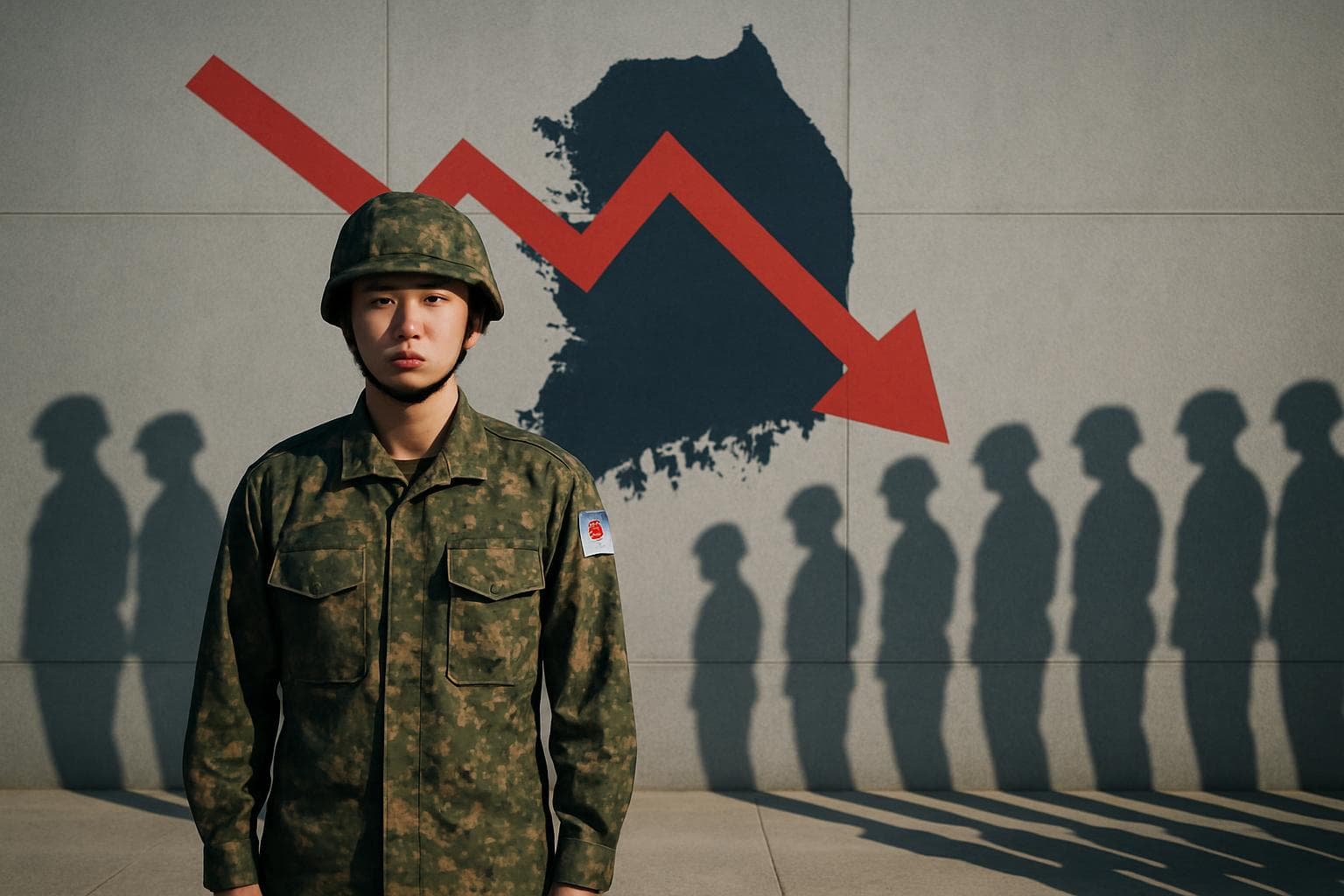
South Korea's military has experienced a significant reduction in its ranks, shrinking by 20% over the past six years, according to a recent defense ministry report. The decline, which brings the current number of active-duty troops to approximately 450,000, is primarily attributed to the country's persistently low birthrate, now the lowest in the world at 0.75 babies per woman.
Demographic Challenges and Defense Readiness
The shrinking pool of enlistment-age men has led to a shortfall in military personnel, particularly among non-commissioned officers. The defense ministry report, presented to ruling Democratic party member Choo Mi-ae, underscores the operational challenges posed by this shortfall. With North Korea's military boasting an estimated 1.2 million active-duty members, South Korea finds itself in a precarious position, requiring at least 500,000 soldiers to maintain defense readiness.
Financial and Strategic Adjustments
In response to these challenges, South Korea has increased its defense budget, allocating over 60 trillion won ($43bn) for 2025, a figure that exceeds North Korea's GDP. This budget aims to bolster the country's military capabilities through technological advancements and a robust alliance with the United States. Despite these efforts, the military remains 50,000 troops short of the ideal number needed for optimal defense operations.
Societal Implications and Gender Debate
Compulsory military service, which mandates 18 months of service for all able-bodied men, continues to spark debate. Critics argue that it disrupts young men's careers, while some conservatives advocate for the inclusion of women in the draft to address the demographic crisis. The ongoing discussion reflects broader societal concerns about gender equality and the future of South Korea's workforce.
WHAT THIS MIGHT MEAN
Looking ahead, South Korea faces significant challenges in maintaining its military strength amid a declining population. Experts warn that without decisive action, the country's population could halve within 60 years, further exacerbating recruitment issues. The government may need to explore alternative solutions, such as extending service periods or increasing incentives for enlistment. Additionally, the debate over gender equality in military service could lead to policy changes, potentially reshaping the nation's defense strategy. As geopolitical tensions persist, South Korea's ability to adapt to these demographic and societal shifts will be crucial in ensuring its national security.
Related Articles
China Sets Lowest GDP Growth Target in Decades Amid Economic Challenges
Cuba Faces Widespread Blackout Amid Deepening Fuel Crisis

UK Faces Dilemmas Amid Iran Conflict and China Spying Allegations

Google Faces Legal Battle Over AI Chatbot's Alleged Role in Tragic Death
Iran Postpones Khamenei Funeral Amid Escalating US-Israeli Strikes

James Talarico Secures Democratic Nomination in Texas Senate Race Amidst Republican Runoff
South Korea's Military Faces Shrinking Numbers Amid Low Birthrate Crisis
In This Article
 Daniel Rivera| Published
 HIGHLIGHTS
- South Korea's military has decreased by 20% to 450,000 troops over the past six years due to the world's lowest birthrate of 0.75 babies per woman.
- The country's defense ministry highlights a 50,000 troop shortfall, with a significant gap in non-commissioned officer ranks.
- South Korea's defense budget for 2025 is set at over 60 trillion won ($43bn), surpassing North Korea's GDP.
- Compulsory military service remains a contentious issue, with debates on gender equality and the impact on young men's careers.
- Experts warn that South Korea's population could halve in 60 years if the current demographic trends persist.
South Korea's military has experienced a significant reduction in its ranks, shrinking by 20% over the past six years, according to a recent defense ministry report. The decline, which brings the current number of active-duty troops to approximately 450,000, is primarily attributed to the country's persistently low birthrate, now the lowest in the world at 0.75 babies per woman.
Demographic Challenges and Defense Readiness
The shrinking pool of enlistment-age men has led to a shortfall in military personnel, particularly among non-commissioned officers. The defense ministry report, presented to ruling Democratic party member Choo Mi-ae, underscores the operational challenges posed by this shortfall. With North Korea's military boasting an estimated 1.2 million active-duty members, South Korea finds itself in a precarious position, requiring at least 500,000 soldiers to maintain defense readiness.
Financial and Strategic Adjustments
In response to these challenges, South Korea has increased its defense budget, allocating over 60 trillion won ($43bn) for 2025, a figure that exceeds North Korea's GDP. This budget aims to bolster the country's military capabilities through technological advancements and a robust alliance with the United States. Despite these efforts, the military remains 50,000 troops short of the ideal number needed for optimal defense operations.
Societal Implications and Gender Debate
Compulsory military service, which mandates 18 months of service for all able-bodied men, continues to spark debate. Critics argue that it disrupts young men's careers, while some conservatives advocate for the inclusion of women in the draft to address the demographic crisis. The ongoing discussion reflects broader societal concerns about gender equality and the future of South Korea's workforce.
WHAT THIS MIGHT MEAN
Looking ahead, South Korea faces significant challenges in maintaining its military strength amid a declining population. Experts warn that without decisive action, the country's population could halve within 60 years, further exacerbating recruitment issues. The government may need to explore alternative solutions, such as extending service periods or increasing incentives for enlistment. Additionally, the debate over gender equality in military service could lead to policy changes, potentially reshaping the nation's defense strategy. As geopolitical tensions persist, South Korea's ability to adapt to these demographic and societal shifts will be crucial in ensuring its national security.
Related Articles
China Sets Lowest GDP Growth Target in Decades Amid Economic Challenges
Cuba Faces Widespread Blackout Amid Deepening Fuel Crisis
UK Faces Dilemmas Amid Iran Conflict and China Spying Allegations
Google Faces Legal Battle Over AI Chatbot's Alleged Role in Tragic Death
Iran Postpones Khamenei Funeral Amid Escalating US-Israeli Strikes
James Talarico Secures Democratic Nomination in Texas Senate Race Amidst Republican Runoff