
Spain Mourns as Investigation Begins into Deadly Train Crash
In This Article
HIGHLIGHTS
- Spain declared three days of mourning following a high-speed train crash near Adamuz, killing at least 40 and injuring over 120.
- The collision involved two trains, with one derailing and colliding with an oncoming train, marking Spain's worst rail disaster in over a decade.
- Prime Minister Pedro Sanchez promised a thorough investigation into the crash, with initial reports suggesting a faulty rail joint might be involved.
- Emergency services continue to search for victims, with 41 people, including children, still hospitalized, and 12 in critical condition.
- Local communities have rallied to support rescue efforts, with the town of Adamuz deeply affected by the tragedy.
Spain has entered a period of national mourning after a catastrophic train collision near Adamuz claimed at least 40 lives and left over 120 injured. The tragedy, which occurred on Sunday evening, has been described as the worst rail disaster the country has faced in more than a decade.
The Incident and Immediate Response
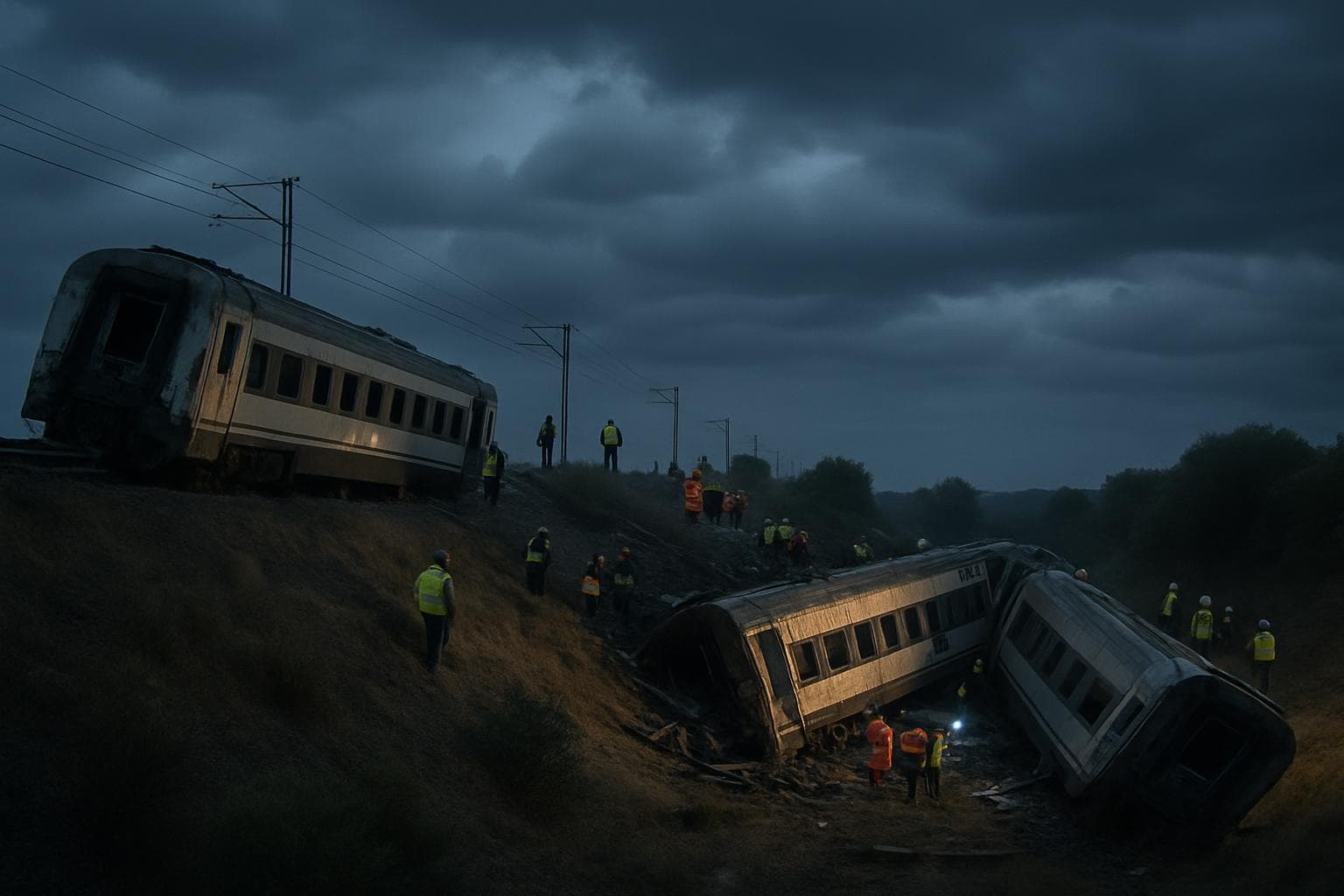
The collision happened when a high-speed train traveling from Málaga to Madrid derailed on a straight stretch of track, crashing into an oncoming train heading from Madrid to Huelva. The impact was so severe that it sent carriages tumbling down a four-meter embankment, complicating rescue efforts. Transport Minister Óscar Puente described the incident as "extremely strange," noting that the section of track had been renovated recently.
Investigation Underway
Prime Minister Pedro Sanchez, who visited the crash site, has vowed a full and transparent investigation to uncover the cause of the disaster. Initial findings suggest a faulty rail joint may have played a role, though it remains unclear if it was a cause or consequence of the crash. The investigation is expected to take at least a month, with authorities working diligently to identify victims and provide answers to grieving families.
Community and National Impact
The town of Adamuz, located in the Córdoba province, has been deeply affected by the tragedy. Local residents have shown immense solidarity, providing blankets and support to rescue teams. Rafael Moreno, the mayor of Adamuz, recounted the harrowing scenes at the crash site, while Francisco Carmona, Córdoba’s firefighting chief, described the challenging rescue operations.
Personal Stories and Ongoing Efforts
Among the victims were families traveling together, with some still unaccounted for. Juan Barroso, a relative of five passengers, shared his anguish as he searched hospitals for his missing family members. Meanwhile, emergency services continue to work tirelessly, with 41 people, including children, still hospitalized and 12 in critical condition.
WHAT THIS MIGHT MEAN
As the investigation unfolds, the focus will likely shift to Spain's railway safety protocols and infrastructure maintenance. Should the faulty rail joint be confirmed as a contributing factor, it may prompt a nationwide review of rail safety measures and maintenance practices. Politically, the incident could lead to increased scrutiny of the government's handling of rail infrastructure, potentially influencing future policy decisions. Experts suggest that the findings of the investigation could have significant implications for railway operations, not only in Spain but across Europe, as countries strive to prevent similar tragedies.
Related Articles

Spain's Sánchez Stands Firm Against Trump's Trade Threat Over Iran Stance

US-Europe Tensions Rise Over Greenland Amid Strategic and Political Disputes
German Chancellor Warns of Eroding Global Order at Munich Security Conference

Munich Security Conference to Address Strained US-Europe Relations

Colombia's Petro and Trump Seek Diplomatic Reset Amid Regional Challenges

UK PM Keir Starmer Calls for Stronger European Defence Ties at Munich Conference
Spain Mourns as Investigation Begins into Deadly Train Crash
In This Article
 Ethan Brooks| Published
 HIGHLIGHTS
- Spain declared three days of mourning following a high-speed train crash near Adamuz, killing at least 40 and injuring over 120.
- The collision involved two trains, with one derailing and colliding with an oncoming train, marking Spain's worst rail disaster in over a decade.
- Prime Minister Pedro Sanchez promised a thorough investigation into the crash, with initial reports suggesting a faulty rail joint might be involved.
- Emergency services continue to search for victims, with 41 people, including children, still hospitalized, and 12 in critical condition.
- Local communities have rallied to support rescue efforts, with the town of Adamuz deeply affected by the tragedy.
Spain has entered a period of national mourning after a catastrophic train collision near Adamuz claimed at least 40 lives and left over 120 injured. The tragedy, which occurred on Sunday evening, has been described as the worst rail disaster the country has faced in more than a decade.
The Incident and Immediate Response
The collision happened when a high-speed train traveling from Málaga to Madrid derailed on a straight stretch of track, crashing into an oncoming train heading from Madrid to Huelva. The impact was so severe that it sent carriages tumbling down a four-meter embankment, complicating rescue efforts. Transport Minister Óscar Puente described the incident as "extremely strange," noting that the section of track had been renovated recently.
Investigation Underway
Prime Minister Pedro Sanchez, who visited the crash site, has vowed a full and transparent investigation to uncover the cause of the disaster. Initial findings suggest a faulty rail joint may have played a role, though it remains unclear if it was a cause or consequence of the crash. The investigation is expected to take at least a month, with authorities working diligently to identify victims and provide answers to grieving families.
Community and National Impact
The town of Adamuz, located in the Córdoba province, has been deeply affected by the tragedy. Local residents have shown immense solidarity, providing blankets and support to rescue teams. Rafael Moreno, the mayor of Adamuz, recounted the harrowing scenes at the crash site, while Francisco Carmona, Córdoba’s firefighting chief, described the challenging rescue operations.
Personal Stories and Ongoing Efforts
Among the victims were families traveling together, with some still unaccounted for. Juan Barroso, a relative of five passengers, shared his anguish as he searched hospitals for his missing family members. Meanwhile, emergency services continue to work tirelessly, with 41 people, including children, still hospitalized and 12 in critical condition.
WHAT THIS MIGHT MEAN
As the investigation unfolds, the focus will likely shift to Spain's railway safety protocols and infrastructure maintenance. Should the faulty rail joint be confirmed as a contributing factor, it may prompt a nationwide review of rail safety measures and maintenance practices. Politically, the incident could lead to increased scrutiny of the government's handling of rail infrastructure, potentially influencing future policy decisions. Experts suggest that the findings of the investigation could have significant implications for railway operations, not only in Spain but across Europe, as countries strive to prevent similar tragedies.
Related Articles
Spain's Sánchez Stands Firm Against Trump's Trade Threat Over Iran Stance
US-Europe Tensions Rise Over Greenland Amid Strategic and Political Disputes
German Chancellor Warns of Eroding Global Order at Munich Security Conference
Munich Security Conference to Address Strained US-Europe Relations
Colombia's Petro and Trump Seek Diplomatic Reset Amid Regional Challenges
UK PM Keir Starmer Calls for Stronger European Defence Ties at Munich Conference