
Keir Starmer Reshuffles Downing Street Team to Bolster Economic Control
In This Article
HIGHLIGHTS
- Keir Starmer has restructured his Downing Street team, introducing new roles to strengthen economic policy control.
- Darren Jones and Minouche Shafik have been appointed to key positions, aiming to enhance economic expertise.
- The reshuffle reflects Starmer's intent to assert greater control over the Treasury ahead of a critical autumn Budget.
- The changes come amid Labour's sliding poll ratings and internal criticism of Starmer's leadership approach.
- Starmer's move is seen as a response to external pressures, including economic challenges and migration issues.
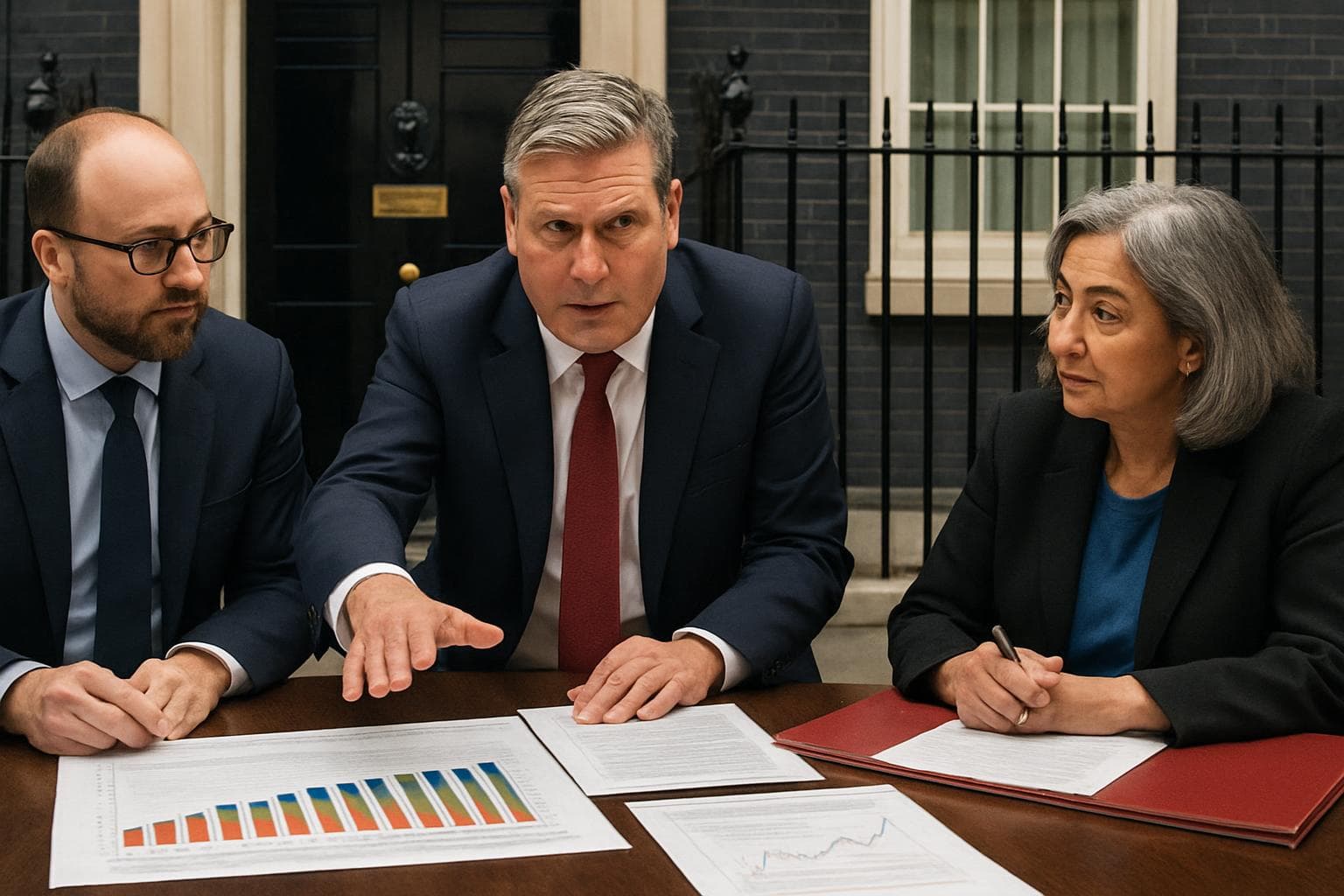
In a strategic move to regain control over economic policy, UK Prime Minister Keir Starmer has announced a significant reshuffle of his Downing Street team. The changes, revealed as MPs reconvene in Westminster, introduce new senior roles aimed at reinforcing the government's economic strategy ahead of a potentially tumultuous autumn.
New Appointments to Strengthen Economic Expertise
Central to the reshuffle is the appointment of Darren Jones as Chief Secretary and Minouche Shafik as Chief Economic Adviser. Jones, previously second-in-command to Chancellor Rachel Reeves, will oversee day-to-day operations, while Shafik, a former deputy governor of the Bank of England, brings a wealth of economic expertise to the team. These appointments underscore Starmer's commitment to enhancing economic know-how within his administration, particularly as the government prepares for an autumn Budget that could define its tenure.
A Response to Internal and External Pressures
The reshuffle is seen as a response to both internal dissatisfaction and external challenges. Labour insiders suggest that Starmer is attempting to seize control over economic policy from the Treasury, a move prompted by frustrations with the Chancellor's performance. The changes also reflect a broader strategy to address Labour's declining poll ratings and to tackle pressing issues such as migration and economic growth.
Starmer's Vision for a Command and Control Operation
Starmer has framed the reshuffle as a transition to a new phase of governance, rather than a crisis-driven response. "This should be seen more as moving on to the second phase than a reshuffle," he stated. Downing Street insiders describe the changes as part of a "command and control" approach, designed to give Starmer a direct line of sight over government operations and to align the economic agenda with his vision.
WHAT THIS MIGHT MEAN
The reshuffle marks a pivotal moment for Starmer's leadership, with significant implications for the Labour Party's future. By asserting greater control over economic policy, Starmer aims to navigate the challenges of the upcoming autumn Budget, which may require difficult decisions such as tax increases. The success of this strategy could determine Labour's standing in the polls and its ability to present a cohesive narrative to the public.
However, the reshuffle also risks internal discord, particularly if perceived as undermining key figures like Rachel Reeves. Starmer's ability to balance these dynamics will be crucial in maintaining party unity and ensuring effective governance. As the government faces ongoing economic and political pressures, the effectiveness of Starmer's new team will be closely scrutinized in the coming months.
Related Articles

Middle East Conflict Drives UK Energy Prices to New Highs
UK Achieves Record Budget Surplus Amid Calls for Fiscal Policy Reform
Reform UK to Reinstate Two-Child Benefit Cap Amidst Political Controversy

UK Faces Dilemmas Amid Iran Conflict and China Spying Allegations

Labour MP's Husband Arrested in UK-China Espionage Probe
Diplomatic Tensions Rise as Trump Criticizes Starmer's Iran Policy
Keir Starmer Reshuffles Downing Street Team to Bolster Economic Control
In This Article
 Daniel Rivera| Published
 HIGHLIGHTS
- Keir Starmer has restructured his Downing Street team, introducing new roles to strengthen economic policy control.
- Darren Jones and Minouche Shafik have been appointed to key positions, aiming to enhance economic expertise.
- The reshuffle reflects Starmer's intent to assert greater control over the Treasury ahead of a critical autumn Budget.
- The changes come amid Labour's sliding poll ratings and internal criticism of Starmer's leadership approach.
- Starmer's move is seen as a response to external pressures, including economic challenges and migration issues.
In a strategic move to regain control over economic policy, UK Prime Minister Keir Starmer has announced a significant reshuffle of his Downing Street team. The changes, revealed as MPs reconvene in Westminster, introduce new senior roles aimed at reinforcing the government's economic strategy ahead of a potentially tumultuous autumn.
New Appointments to Strengthen Economic Expertise
Central to the reshuffle is the appointment of Darren Jones as Chief Secretary and Minouche Shafik as Chief Economic Adviser. Jones, previously second-in-command to Chancellor Rachel Reeves, will oversee day-to-day operations, while Shafik, a former deputy governor of the Bank of England, brings a wealth of economic expertise to the team. These appointments underscore Starmer's commitment to enhancing economic know-how within his administration, particularly as the government prepares for an autumn Budget that could define its tenure.
A Response to Internal and External Pressures
The reshuffle is seen as a response to both internal dissatisfaction and external challenges. Labour insiders suggest that Starmer is attempting to seize control over economic policy from the Treasury, a move prompted by frustrations with the Chancellor's performance. The changes also reflect a broader strategy to address Labour's declining poll ratings and to tackle pressing issues such as migration and economic growth.
Starmer's Vision for a Command and Control Operation
Starmer has framed the reshuffle as a transition to a new phase of governance, rather than a crisis-driven response. "This should be seen more as moving on to the second phase than a reshuffle," he stated. Downing Street insiders describe the changes as part of a "command and control" approach, designed to give Starmer a direct line of sight over government operations and to align the economic agenda with his vision.
WHAT THIS MIGHT MEAN
The reshuffle marks a pivotal moment for Starmer's leadership, with significant implications for the Labour Party's future. By asserting greater control over economic policy, Starmer aims to navigate the challenges of the upcoming autumn Budget, which may require difficult decisions such as tax increases. The success of this strategy could determine Labour's standing in the polls and its ability to present a cohesive narrative to the public.
However, the reshuffle also risks internal discord, particularly if perceived as undermining key figures like Rachel Reeves. Starmer's ability to balance these dynamics will be crucial in maintaining party unity and ensuring effective governance. As the government faces ongoing economic and political pressures, the effectiveness of Starmer's new team will be closely scrutinized in the coming months.
Related Articles
Middle East Conflict Drives UK Energy Prices to New Highs
UK Achieves Record Budget Surplus Amid Calls for Fiscal Policy Reform
Reform UK to Reinstate Two-Child Benefit Cap Amidst Political Controversy
UK Faces Dilemmas Amid Iran Conflict and China Spying Allegations
Labour MP's Husband Arrested in UK-China Espionage Probe
Diplomatic Tensions Rise as Trump Criticizes Starmer's Iran Policy