
Starmer's Downing Street Shake-Up: A Bid for Economic Control
In This Article
HIGHLIGHTS
- Keir Starmer has restructured his Downing Street team, creating new roles to enhance economic policy control.
- Darren Jones and Minouche Shafik have been appointed to key positions, reflecting a focus on economic expertise.
- The reshuffle aims to address Labour's declining poll ratings and prepare for a challenging autumn Budget.
- Starmer's changes are seen as an attempt to regain control from the Treasury and improve government efficiency.
- The shake-up signals a shift to a more centralized "command and control" approach within No 10.
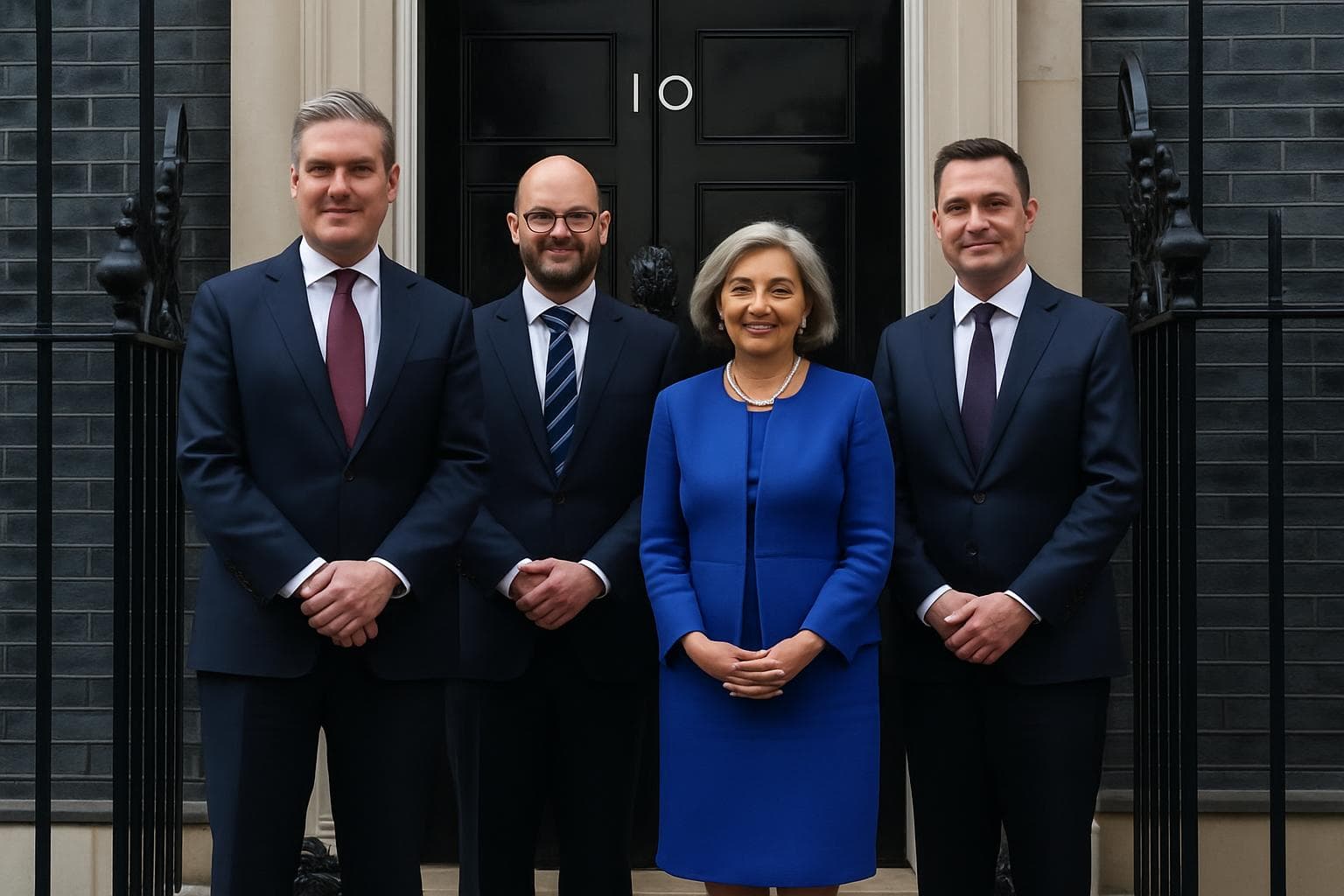
In a significant reshuffle, UK Labour leader Keir Starmer has revamped his Downing Street team, aiming to assert greater control over economic policy and address internal inefficiencies. This strategic move comes as the government braces for a challenging autumn, with a critical Budget looming.
New Roles and Economic Focus
Starmer has introduced two pivotal roles: Darren Jones as Chief Secretary and Minouche Shafik as Chief Economic Adviser. Jones, previously second-in-command to Chancellor Rachel Reeves, will oversee day-to-day operations, while Shafik, a former deputy governor of the Bank of England, brings substantial economic expertise. These appointments underscore Starmer's intent to bolster economic acumen within his team, a move seen as crucial ahead of the autumn Budget.
Addressing Internal Challenges
The reshuffle reflects Starmer's acknowledgment of the need for a more streamlined and effective government operation. By consolidating roles and enhancing economic oversight, Starmer aims to rectify perceived shortcomings in his administration's first year. The changes also suggest a strategic shift towards a more centralized "command and control" structure, allowing Starmer to have a direct line of sight over key policy areas.
Political Implications and Reactions
The shake-up has sparked varied reactions. While some view it as a necessary step to regain control from the Treasury, others see it as a response to Labour's slipping poll ratings and recent challenges, including migration issues and the rise of Reform UK. Despite criticisms, Starmer maintains that the changes mark a new phase of governance rather than a crisis response.
WHAT THIS MIGHT MEAN
Looking ahead, Starmer's reshuffle could redefine the dynamics within the Labour Party and its approach to economic policy. By centralizing control, Starmer may strengthen his leadership and improve government efficiency. However, the success of this strategy will largely depend on the upcoming autumn Budget and its reception by the public and political analysts. If successful, Starmer's approach could solidify his position and boost Labour's standing in future polls. Conversely, any missteps could exacerbate existing challenges and fuel criticism of his leadership style.
Related Articles
Reform UK to Reinstate Two-Child Benefit Cap Amidst Political Controversy

Middle East Conflict Drives UK Energy Prices to New Highs
Starmer Condemns Reform UK's Plan to Repeal Equality Act as Un-British
UK Achieves Record Budget Surplus Amid Calls for Fiscal Policy Reform
Diplomatic Tensions Rise as Trump Criticizes Starmer's Iran Policy
UK Denies US Use of Military Bases for Potential Iran Strikes Amid Chagos Islands Dispute
Starmer's Downing Street Shake-Up: A Bid for Economic Control
In This Article
 Daniel Rivera| Published
 HIGHLIGHTS
- Keir Starmer has restructured his Downing Street team, creating new roles to enhance economic policy control.
- Darren Jones and Minouche Shafik have been appointed to key positions, reflecting a focus on economic expertise.
- The reshuffle aims to address Labour's declining poll ratings and prepare for a challenging autumn Budget.
- Starmer's changes are seen as an attempt to regain control from the Treasury and improve government efficiency.
- The shake-up signals a shift to a more centralized "command and control" approach within No 10.
In a significant reshuffle, UK Labour leader Keir Starmer has revamped his Downing Street team, aiming to assert greater control over economic policy and address internal inefficiencies. This strategic move comes as the government braces for a challenging autumn, with a critical Budget looming.
New Roles and Economic Focus
Starmer has introduced two pivotal roles: Darren Jones as Chief Secretary and Minouche Shafik as Chief Economic Adviser. Jones, previously second-in-command to Chancellor Rachel Reeves, will oversee day-to-day operations, while Shafik, a former deputy governor of the Bank of England, brings substantial economic expertise. These appointments underscore Starmer's intent to bolster economic acumen within his team, a move seen as crucial ahead of the autumn Budget.
Addressing Internal Challenges
The reshuffle reflects Starmer's acknowledgment of the need for a more streamlined and effective government operation. By consolidating roles and enhancing economic oversight, Starmer aims to rectify perceived shortcomings in his administration's first year. The changes also suggest a strategic shift towards a more centralized "command and control" structure, allowing Starmer to have a direct line of sight over key policy areas.
Political Implications and Reactions
The shake-up has sparked varied reactions. While some view it as a necessary step to regain control from the Treasury, others see it as a response to Labour's slipping poll ratings and recent challenges, including migration issues and the rise of Reform UK. Despite criticisms, Starmer maintains that the changes mark a new phase of governance rather than a crisis response.
WHAT THIS MIGHT MEAN
Looking ahead, Starmer's reshuffle could redefine the dynamics within the Labour Party and its approach to economic policy. By centralizing control, Starmer may strengthen his leadership and improve government efficiency. However, the success of this strategy will largely depend on the upcoming autumn Budget and its reception by the public and political analysts. If successful, Starmer's approach could solidify his position and boost Labour's standing in future polls. Conversely, any missteps could exacerbate existing challenges and fuel criticism of his leadership style.
Related Articles
Reform UK to Reinstate Two-Child Benefit Cap Amidst Political Controversy
Middle East Conflict Drives UK Energy Prices to New Highs
Starmer Condemns Reform UK's Plan to Repeal Equality Act as Un-British
UK Achieves Record Budget Surplus Amid Calls for Fiscal Policy Reform
Diplomatic Tensions Rise as Trump Criticizes Starmer's Iran Policy
UK Denies US Use of Military Bases for Potential Iran Strikes Amid Chagos Islands Dispute