
US Supreme Court Blocks Trump's National Guard Deployment to Chicago
In This Article
HIGHLIGHTS
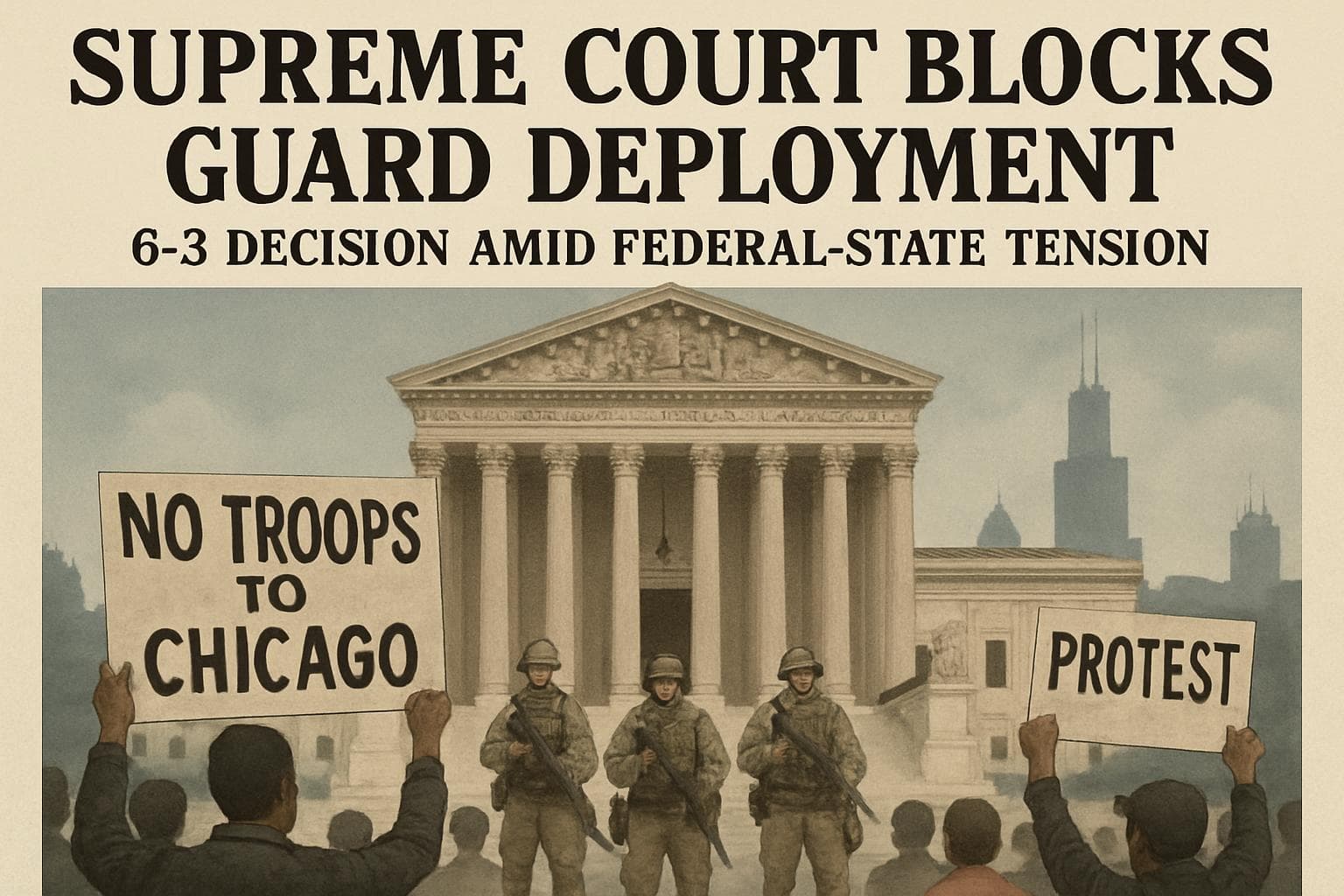
- The US Supreme Court rejected the Trump administration's bid to deploy National Guard troops in Chicago, marking a rare departure from its usual support for the president.
- The court's 6-3 decision upheld a lower court ruling that blocked the deployment, citing a lack of legal authority for federal military intervention in Illinois.
- Illinois officials opposed the deployment, arguing it was unnecessary for immigration enforcement and violated state sovereignty.
- The ruling could influence other legal challenges against Trump's attempts to use military forces in Democratic-led cities.
- The White House has not yet responded to the Supreme Court's decision, which maintains the status quo in Chicago.
In a significant legal setback for the Trump administration, the US Supreme Court has denied a request to deploy National Guard troops to the Chicago area. The decision, delivered in a 6-3 vote, upholds a previous ruling by a lower court that blocked the deployment, citing insufficient legal grounds for federal military intervention in Illinois.
Legal Context and Court's Decision
The Supreme Court's ruling marks a notable divergence from its recent trend of siding with the Trump administration. The court's conservative majority, however, was not unanimous, with Justices Clarence Thomas, Samuel Alito, and Neil Gorsuch dissenting. The majority opinion emphasized that the government had failed to demonstrate a legal basis for deploying the National Guard to enforce laws in Illinois, a state-led challenge that had been ongoing since October.
Local Opposition and Federal Intentions
Illinois Governor JB Pritzker hailed the decision as a victory for state sovereignty and democracy. Local officials had resisted the federalization of the National Guard, arguing that it was unnecessary for immigration enforcement and could exacerbate tensions amid ongoing protests. The Trump administration had sought to deploy troops as part of a broader strategy to address what it described as violence in Democratic-controlled cities and to support immigration enforcement efforts.
Implications for Future Deployments
The Supreme Court's decision could have broader implications for similar legal challenges in other Democratic-led cities where the Trump administration has attempted to deploy military forces. While the ruling is not a final judgment, it sets a precedent that may influence future cases involving federal military intervention in domestic affairs.
White House Response and Future Developments
The White House has yet to issue a statement regarding the Supreme Court's decision. The ruling maintains the status quo in Chicago, where local authorities continue to manage protests and law enforcement without federal military assistance. The decision underscores the ongoing legal and political battles over the scope of presidential power in domestic military deployments.
WHAT THIS MIGHT MEAN
The Supreme Court's decision to block the National Guard deployment in Chicago could signal a judicial check on the executive branch's attempts to use military forces in domestic settings. This ruling may embolden other states and cities to challenge similar federal interventions, potentially leading to a reevaluation of the balance between state and federal authority. Legal experts suggest that the decision could prompt the Trump administration to reassess its strategies for addressing protests and immigration enforcement in Democratic-led jurisdictions. As the legal landscape evolves, the administration may face increased scrutiny over its use of military resources in domestic affairs, potentially influencing future policy decisions and legal interpretations.
Related Articles
Trump Criticizes Supreme Court After Tariff Ruling, Imposes New Global Tariff
Trump's Tariff Strategy Faces Supreme Court Setback, Sparks New Trade Policy
Spain's Sánchez Stands Firm Against Trump's Trade Threat Over Iran Stance

US Supreme Court Ruling on Tariffs Sparks Uncertainty for UK and Global Trade
US-Iran Tensions Escalate Amid Military Buildup and Diplomatic Talks
US Military Strikes on Alleged Drug Boats Raise Legal Concerns
US Supreme Court Blocks Trump's National Guard Deployment to Chicago
In This Article
 Ethan Brooks| Published
 HIGHLIGHTS
- The US Supreme Court rejected the Trump administration's bid to deploy National Guard troops in Chicago, marking a rare departure from its usual support for the president.
- The court's 6-3 decision upheld a lower court ruling that blocked the deployment, citing a lack of legal authority for federal military intervention in Illinois.
- Illinois officials opposed the deployment, arguing it was unnecessary for immigration enforcement and violated state sovereignty.
- The ruling could influence other legal challenges against Trump's attempts to use military forces in Democratic-led cities.
- The White House has not yet responded to the Supreme Court's decision, which maintains the status quo in Chicago.
In a significant legal setback for the Trump administration, the US Supreme Court has denied a request to deploy National Guard troops to the Chicago area. The decision, delivered in a 6-3 vote, upholds a previous ruling by a lower court that blocked the deployment, citing insufficient legal grounds for federal military intervention in Illinois.
Legal Context and Court's Decision
The Supreme Court's ruling marks a notable divergence from its recent trend of siding with the Trump administration. The court's conservative majority, however, was not unanimous, with Justices Clarence Thomas, Samuel Alito, and Neil Gorsuch dissenting. The majority opinion emphasized that the government had failed to demonstrate a legal basis for deploying the National Guard to enforce laws in Illinois, a state-led challenge that had been ongoing since October.
Local Opposition and Federal Intentions
Illinois Governor JB Pritzker hailed the decision as a victory for state sovereignty and democracy. Local officials had resisted the federalization of the National Guard, arguing that it was unnecessary for immigration enforcement and could exacerbate tensions amid ongoing protests. The Trump administration had sought to deploy troops as part of a broader strategy to address what it described as violence in Democratic-controlled cities and to support immigration enforcement efforts.
Implications for Future Deployments
The Supreme Court's decision could have broader implications for similar legal challenges in other Democratic-led cities where the Trump administration has attempted to deploy military forces. While the ruling is not a final judgment, it sets a precedent that may influence future cases involving federal military intervention in domestic affairs.
White House Response and Future Developments
The White House has yet to issue a statement regarding the Supreme Court's decision. The ruling maintains the status quo in Chicago, where local authorities continue to manage protests and law enforcement without federal military assistance. The decision underscores the ongoing legal and political battles over the scope of presidential power in domestic military deployments.
WHAT THIS MIGHT MEAN
The Supreme Court's decision to block the National Guard deployment in Chicago could signal a judicial check on the executive branch's attempts to use military forces in domestic settings. This ruling may embolden other states and cities to challenge similar federal interventions, potentially leading to a reevaluation of the balance between state and federal authority. Legal experts suggest that the decision could prompt the Trump administration to reassess its strategies for addressing protests and immigration enforcement in Democratic-led jurisdictions. As the legal landscape evolves, the administration may face increased scrutiny over its use of military resources in domestic affairs, potentially influencing future policy decisions and legal interpretations.
Related Articles
Trump Criticizes Supreme Court After Tariff Ruling, Imposes New Global Tariff
Trump's Tariff Strategy Faces Supreme Court Setback, Sparks New Trade Policy
Spain's Sánchez Stands Firm Against Trump's Trade Threat Over Iran Stance
US Supreme Court Ruling on Tariffs Sparks Uncertainty for UK and Global Trade
US-Iran Tensions Escalate Amid Military Buildup and Diplomatic Talks
US Military Strikes on Alleged Drug Boats Raise Legal Concerns