
Landmark Trial Begins as Tech Giants Face Allegations of Fueling Social Media Addiction
In This Article
HIGHLIGHTS
- A landmark trial in California is examining claims that social media platforms' algorithms contribute to addiction and mental health issues among youth.
- The case involves major tech companies like Meta, TikTok, and YouTube, with Snapchat having settled out of court.
- The trial, featuring testimony from top executives including Meta's Mark Zuckerberg, could reshape legal accountability for tech firms.
- Plaintiffs, including 1,600 individuals and 250 school districts, seek damages and changes to platform designs to enhance online safety.
- The outcome could challenge the protections offered by Section 230 of the Communications Decency Act, impacting future legal actions against tech companies.
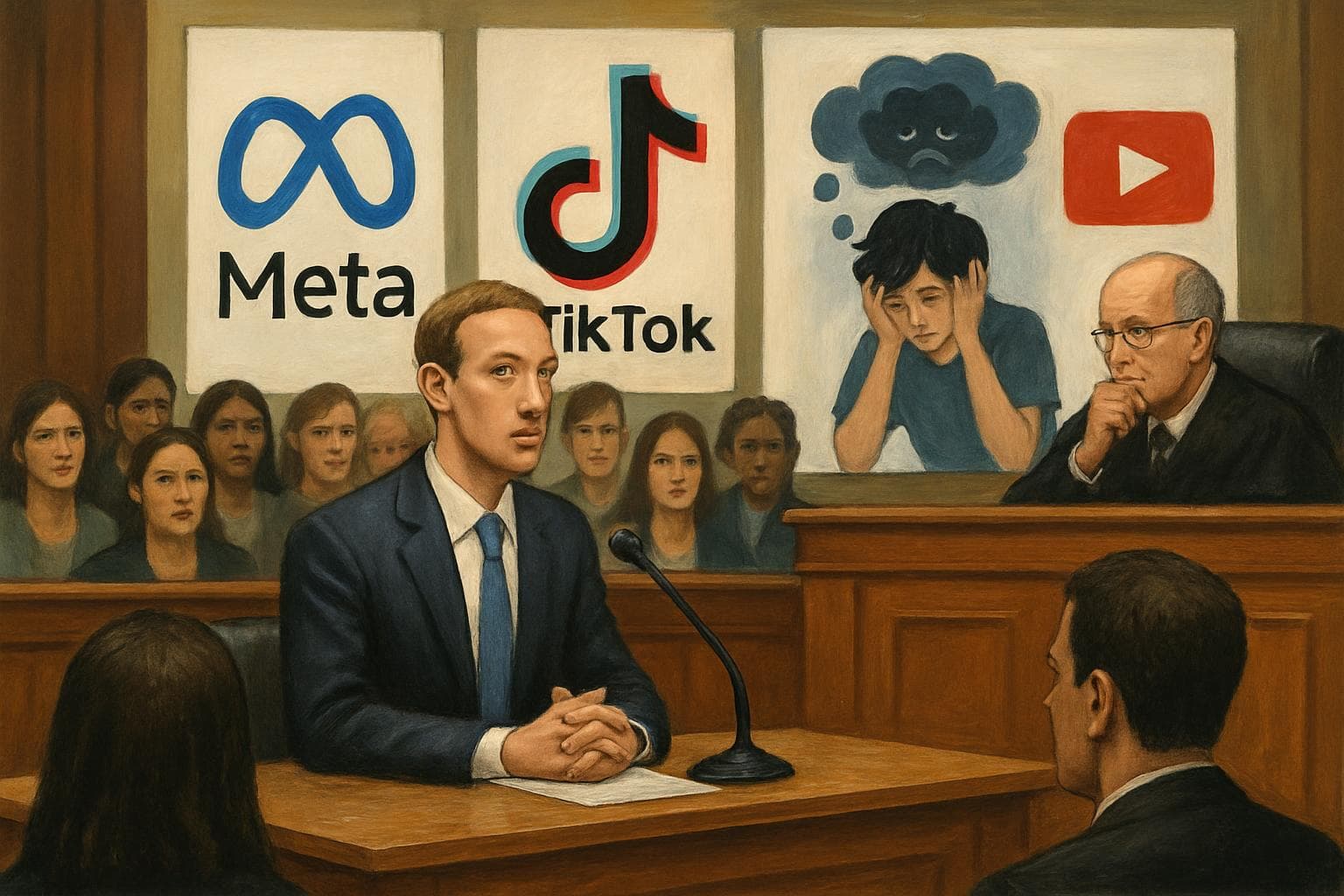
A groundbreaking trial commenced in California this week, scrutinizing the role of social media giants in fostering addictive behaviors and mental health issues among young users. The proceedings, held at the Los Angeles Superior Court, mark a pivotal moment as tech behemoths like Meta, TikTok, and YouTube confront allegations that their platforms' algorithm designs have detrimental effects on youth mental health.
The Case and Its Implications
The trial centers around a 19-year-old plaintiff, identified as KGM, who claims that her addiction to social media led to significant mental health challenges. This case is the first of approximately 22 "bellwether" trials, intended to gauge jury responses and potential outcomes for a broader set of lawsuits involving over 1,600 plaintiffs, including more than 350 families and 250 school districts.
The plaintiffs argue that the platforms' design choices, particularly their algorithms and notification systems, are intentionally addictive, leading to issues such as depression and eating disorders. They seek financial compensation and demand changes to platform designs to establish industry-wide safety standards.
Tech Giants Under Scrutiny
The trial is set to feature testimony from high-profile executives, including Meta's CEO Mark Zuckerberg, who will be questioned about the company's practices. The case challenges the long-standing legal shield provided by Section 230 of the Communications Decency Act, which tech companies have used to avoid liability for user-generated content.
Snapchat, one of the defendants, recently settled with KGM, though the terms remain undisclosed. Meanwhile, other companies, including YouTube, have denied the allegations, asserting their commitment to providing safe and age-appropriate experiences for young users.
Potential Outcomes and Industry Impact
Legal experts suggest that a ruling against the tech companies could lead to significant changes in how social media platforms are designed and regulated. Mary Graw Leary, a law professor, noted that the trial could expose internal company documents, shedding light on practices previously hidden from public view.
WHAT THIS MIGHT MEAN
Should the plaintiffs succeed, the trial could set a precedent for holding tech companies accountable for the mental health impacts of their platforms, potentially leading to stricter regulations and design changes. A ruling against the tech giants might also prompt a reevaluation of Section 230, influencing future legal strategies against these companies.
Conversely, if the tech companies prevail, it could reinforce their current legal protections, though the public scrutiny and revelations from the trial may still pressure them to voluntarily enhance safety measures. As the trial unfolds, the tech industry and legal experts alike will be closely monitoring its implications for the future of online safety and corporate responsibility.
Related Articles

Zuckerberg Defends Meta in Landmark Social Media Addiction Trial
EU Challenges Meta Over AI Chatbot Restrictions on WhatsApp
Tech Giants Pledge to Cover AI Data Center Energy Costs Amid Rising Electricity Concerns

Instagram CEO Defends Platform Amidst Addiction Allegations in Landmark Trial
EU Demands TikTok Overhaul 'Addictive Design' or Face Hefty Fines

BBC Faces Major Budget Cuts Amid Declining Licence Fee Income
Landmark Trial Begins as Tech Giants Face Allegations of Fueling Social Media Addiction
In This Article
 Himanshu Kaushik| Published
 HIGHLIGHTS
- A landmark trial in California is examining claims that social media platforms' algorithms contribute to addiction and mental health issues among youth.
- The case involves major tech companies like Meta, TikTok, and YouTube, with Snapchat having settled out of court.
- The trial, featuring testimony from top executives including Meta's Mark Zuckerberg, could reshape legal accountability for tech firms.
- Plaintiffs, including 1,600 individuals and 250 school districts, seek damages and changes to platform designs to enhance online safety.
- The outcome could challenge the protections offered by Section 230 of the Communications Decency Act, impacting future legal actions against tech companies.
A groundbreaking trial commenced in California this week, scrutinizing the role of social media giants in fostering addictive behaviors and mental health issues among young users. The proceedings, held at the Los Angeles Superior Court, mark a pivotal moment as tech behemoths like Meta, TikTok, and YouTube confront allegations that their platforms' algorithm designs have detrimental effects on youth mental health.
The Case and Its Implications
The trial centers around a 19-year-old plaintiff, identified as KGM, who claims that her addiction to social media led to significant mental health challenges. This case is the first of approximately 22 "bellwether" trials, intended to gauge jury responses and potential outcomes for a broader set of lawsuits involving over 1,600 plaintiffs, including more than 350 families and 250 school districts.
The plaintiffs argue that the platforms' design choices, particularly their algorithms and notification systems, are intentionally addictive, leading to issues such as depression and eating disorders. They seek financial compensation and demand changes to platform designs to establish industry-wide safety standards.
Tech Giants Under Scrutiny
The trial is set to feature testimony from high-profile executives, including Meta's CEO Mark Zuckerberg, who will be questioned about the company's practices. The case challenges the long-standing legal shield provided by Section 230 of the Communications Decency Act, which tech companies have used to avoid liability for user-generated content.
Snapchat, one of the defendants, recently settled with KGM, though the terms remain undisclosed. Meanwhile, other companies, including YouTube, have denied the allegations, asserting their commitment to providing safe and age-appropriate experiences for young users.
Potential Outcomes and Industry Impact
Legal experts suggest that a ruling against the tech companies could lead to significant changes in how social media platforms are designed and regulated. Mary Graw Leary, a law professor, noted that the trial could expose internal company documents, shedding light on practices previously hidden from public view.
WHAT THIS MIGHT MEAN
Should the plaintiffs succeed, the trial could set a precedent for holding tech companies accountable for the mental health impacts of their platforms, potentially leading to stricter regulations and design changes. A ruling against the tech giants might also prompt a reevaluation of Section 230, influencing future legal strategies against these companies.
Conversely, if the tech companies prevail, it could reinforce their current legal protections, though the public scrutiny and revelations from the trial may still pressure them to voluntarily enhance safety measures. As the trial unfolds, the tech industry and legal experts alike will be closely monitoring its implications for the future of online safety and corporate responsibility.
Related Articles
Zuckerberg Defends Meta in Landmark Social Media Addiction Trial
EU Challenges Meta Over AI Chatbot Restrictions on WhatsApp
Tech Giants Pledge to Cover AI Data Center Energy Costs Amid Rising Electricity Concerns
Instagram CEO Defends Platform Amidst Addiction Allegations in Landmark Trial
EU Demands TikTok Overhaul 'Addictive Design' or Face Hefty Fines
BBC Faces Major Budget Cuts Amid Declining Licence Fee Income