
Growing Tensions Over ICE Funding Amid Minneapolis Protests and Fatal Shootings
In This Article
HIGHLIGHTS
- Republican lawmakers are distancing themselves from ICE following the fatal shootings of two US citizens by federal agents in Minneapolis.
- Senate Democrats, led by Chuck Schumer, are demanding reforms to ICE before agreeing to a DHS funding bill, risking a potential government shutdown.
- Public opinion is divided, with 61% of voters believing ICE's tactics have "gone too far," according to a recent poll.
- Progressive caucus leader Greg Casar has outlined five key reforms, including independent investigations into federal agent killings.
- Senate Republicans are pushing to pass the DHS funding bill, which includes $10 billion for ICE, despite Democratic opposition.
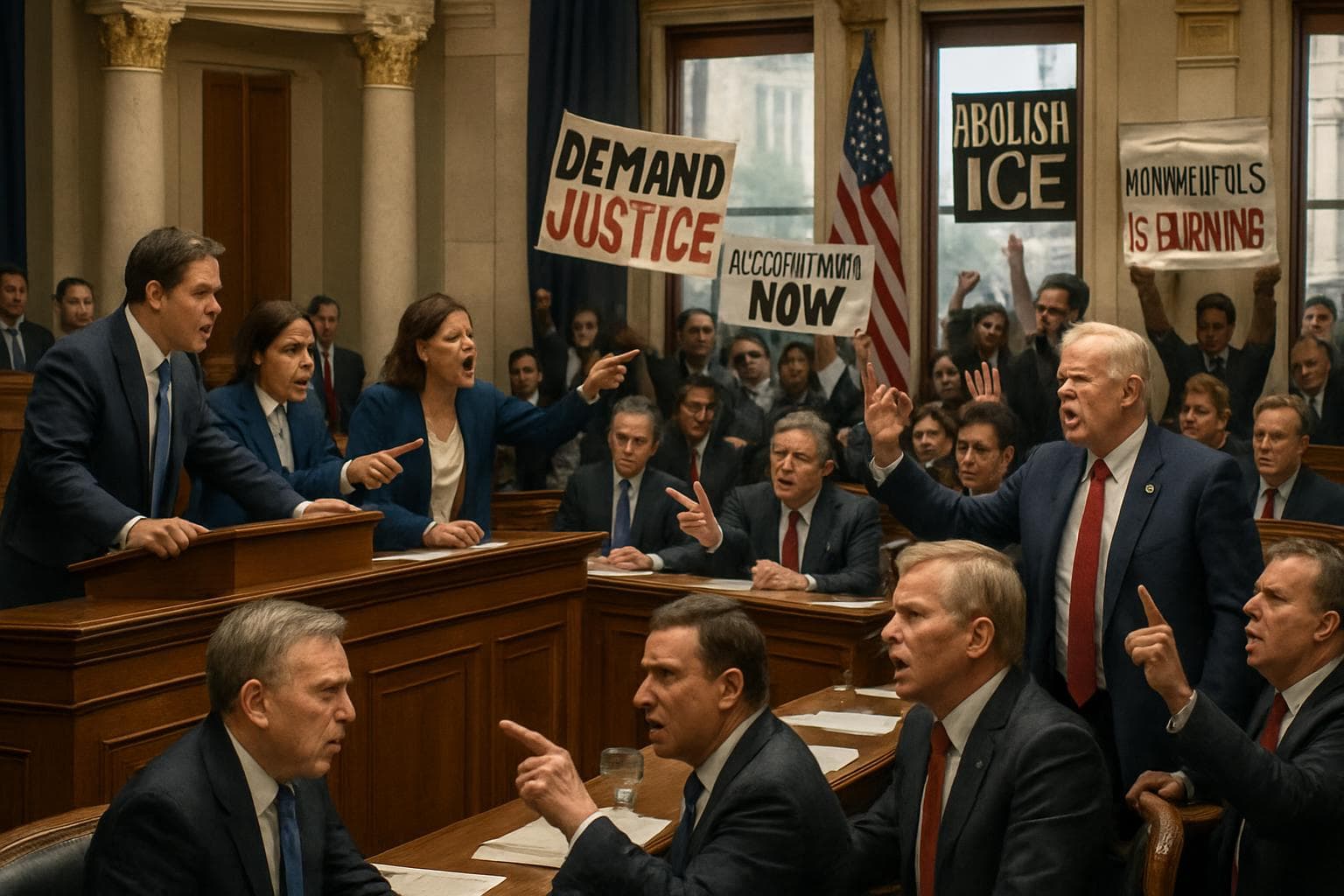
In the wake of two fatal shootings by federal agents in Minneapolis, Republican lawmakers are beginning to distance themselves from the Trump administration's immigration policies, particularly the actions of the US Immigration and Customs Enforcement (ICE). The deaths of US citizens Renee Good and Alex Pretti have sparked nationwide protests and intensified scrutiny on ICE's tactics, which many Americans believe have overstepped boundaries.
Republican Dilemma and Public Opinion
As the midterm elections approach, Republicans face a challenging balancing act. While they have historically supported President Trump's immigration agenda, recent events have prompted some to criticize ICE's methods. A New York Times/Siena poll revealed that 61% of voters feel ICE's tactics have "gone too far," yet opinions remain split on broader immigration policies.
Democratic Demands for Reform
Meanwhile, Senate Democrats, led by minority leader Chuck Schumer, are leveraging the situation to demand significant reforms to ICE before agreeing to a Department of Homeland Security (DHS) funding bill. The bill, which includes $10 billion for ICE, is crucial to avoid a government shutdown. Greg Casar, chair of the Congressional Progressive Caucus, has proposed five non-negotiable reforms, including independent investigations into federal agent killings and a prohibition on federal agents wearing masks.
Republican Push for Funding
Despite Democratic resistance, Senate Republicans are determined to pass the DHS funding bill. John Thune, the Senate majority leader, emphasized the importance of avoiding a government shutdown, stating, "A government shutdown, even a partial one, does not serve the American people well." The House of Representatives has already approved the bill, but any amendments would require another vote.
Calls for Oversight and Accountability
In response to the public outcry, Senator Rand Paul has called for ICE leaders to testify before the Senate Committee on Homeland Security & Governmental Affairs. Senator Lisa Murkowski of Alaska, a frequent Trump critic, expressed her shock at the events in Minneapolis, stating, "ICE agents do not have carte blanche in carrying out their duties."
WHAT THIS MIGHT MEAN
As the deadline for government funding approaches, the standoff between Senate Democrats and Republicans could lead to a partial government shutdown if no agreement is reached. The demand for ICE reforms reflects broader public dissatisfaction with current immigration enforcement practices, potentially influencing future legislative priorities. If Democrats succeed in securing reforms, it could mark a significant shift in US immigration policy. However, failure to reach a consensus may exacerbate political tensions and impact voter sentiment in the upcoming elections.
Related Articles
Senate Stalemate Over DHS Funding Amid Immigration Reform Dispute
DHS Spokesperson Tricia McLaughlin to Depart Amidst Immigration Policy Controversy
Don Lemon Pleads Not Guilty in Minnesota Church Protest Case
US Homeland Security Shutdown Sparks Concerns Over Travel Delays and Immigration Reforms
Senate Blocks Resolution to Limit Trump's Military Actions in Iran
US Supreme Court Ruling on Trump's Tariffs Sparks Trade Policy Uncertainty
Growing Tensions Over ICE Funding Amid Minneapolis Protests and Fatal Shootings
In This Article
 Alex Carter| Published
 HIGHLIGHTS
- Republican lawmakers are distancing themselves from ICE following the fatal shootings of two US citizens by federal agents in Minneapolis.
- Senate Democrats, led by Chuck Schumer, are demanding reforms to ICE before agreeing to a DHS funding bill, risking a potential government shutdown.
- Public opinion is divided, with 61% of voters believing ICE's tactics have "gone too far," according to a recent poll.
- Progressive caucus leader Greg Casar has outlined five key reforms, including independent investigations into federal agent killings.
- Senate Republicans are pushing to pass the DHS funding bill, which includes $10 billion for ICE, despite Democratic opposition.
In the wake of two fatal shootings by federal agents in Minneapolis, Republican lawmakers are beginning to distance themselves from the Trump administration's immigration policies, particularly the actions of the US Immigration and Customs Enforcement (ICE). The deaths of US citizens Renee Good and Alex Pretti have sparked nationwide protests and intensified scrutiny on ICE's tactics, which many Americans believe have overstepped boundaries.
Republican Dilemma and Public Opinion
As the midterm elections approach, Republicans face a challenging balancing act. While they have historically supported President Trump's immigration agenda, recent events have prompted some to criticize ICE's methods. A New York Times/Siena poll revealed that 61% of voters feel ICE's tactics have "gone too far," yet opinions remain split on broader immigration policies.
Democratic Demands for Reform
Meanwhile, Senate Democrats, led by minority leader Chuck Schumer, are leveraging the situation to demand significant reforms to ICE before agreeing to a Department of Homeland Security (DHS) funding bill. The bill, which includes $10 billion for ICE, is crucial to avoid a government shutdown. Greg Casar, chair of the Congressional Progressive Caucus, has proposed five non-negotiable reforms, including independent investigations into federal agent killings and a prohibition on federal agents wearing masks.
Republican Push for Funding
Despite Democratic resistance, Senate Republicans are determined to pass the DHS funding bill. John Thune, the Senate majority leader, emphasized the importance of avoiding a government shutdown, stating, "A government shutdown, even a partial one, does not serve the American people well." The House of Representatives has already approved the bill, but any amendments would require another vote.
Calls for Oversight and Accountability
In response to the public outcry, Senator Rand Paul has called for ICE leaders to testify before the Senate Committee on Homeland Security & Governmental Affairs. Senator Lisa Murkowski of Alaska, a frequent Trump critic, expressed her shock at the events in Minneapolis, stating, "ICE agents do not have carte blanche in carrying out their duties."
WHAT THIS MIGHT MEAN
As the deadline for government funding approaches, the standoff between Senate Democrats and Republicans could lead to a partial government shutdown if no agreement is reached. The demand for ICE reforms reflects broader public dissatisfaction with current immigration enforcement practices, potentially influencing future legislative priorities. If Democrats succeed in securing reforms, it could mark a significant shift in US immigration policy. However, failure to reach a consensus may exacerbate political tensions and impact voter sentiment in the upcoming elections.
Related Articles
Senate Stalemate Over DHS Funding Amid Immigration Reform Dispute
DHS Spokesperson Tricia McLaughlin to Depart Amidst Immigration Policy Controversy
Don Lemon Pleads Not Guilty in Minnesota Church Protest Case
US Homeland Security Shutdown Sparks Concerns Over Travel Delays and Immigration Reforms
Senate Blocks Resolution to Limit Trump's Military Actions in Iran
US Supreme Court Ruling on Trump's Tariffs Sparks Trade Policy Uncertainty