
Tesla Faces Financial Challenges Amidst Market Competition and Political Controversies
In This Article
HIGHLIGHTS
- Tesla reported a 12% drop in revenue and a 16% decline in profits for the second quarter, citing reduced vehicle deliveries and lower regulatory credit revenue.
- The electric vehicle maker is facing increased competition from Chinese carmakers and a reduction in US government support for electric cars.
- CEO Elon Musk announced plans for a more affordable Tesla model and the potential approval of self-driving software in Europe, starting with the Netherlands.
- Tesla's stock has experienced significant volatility, dropping nearly 13% this year, partly due to Musk's political activities and his role in the Trump administration.
- Analysts and investors have expressed concerns about Musk's focus on politics, urging the Tesla board to ensure his political ambitions align with his responsibilities as CEO.
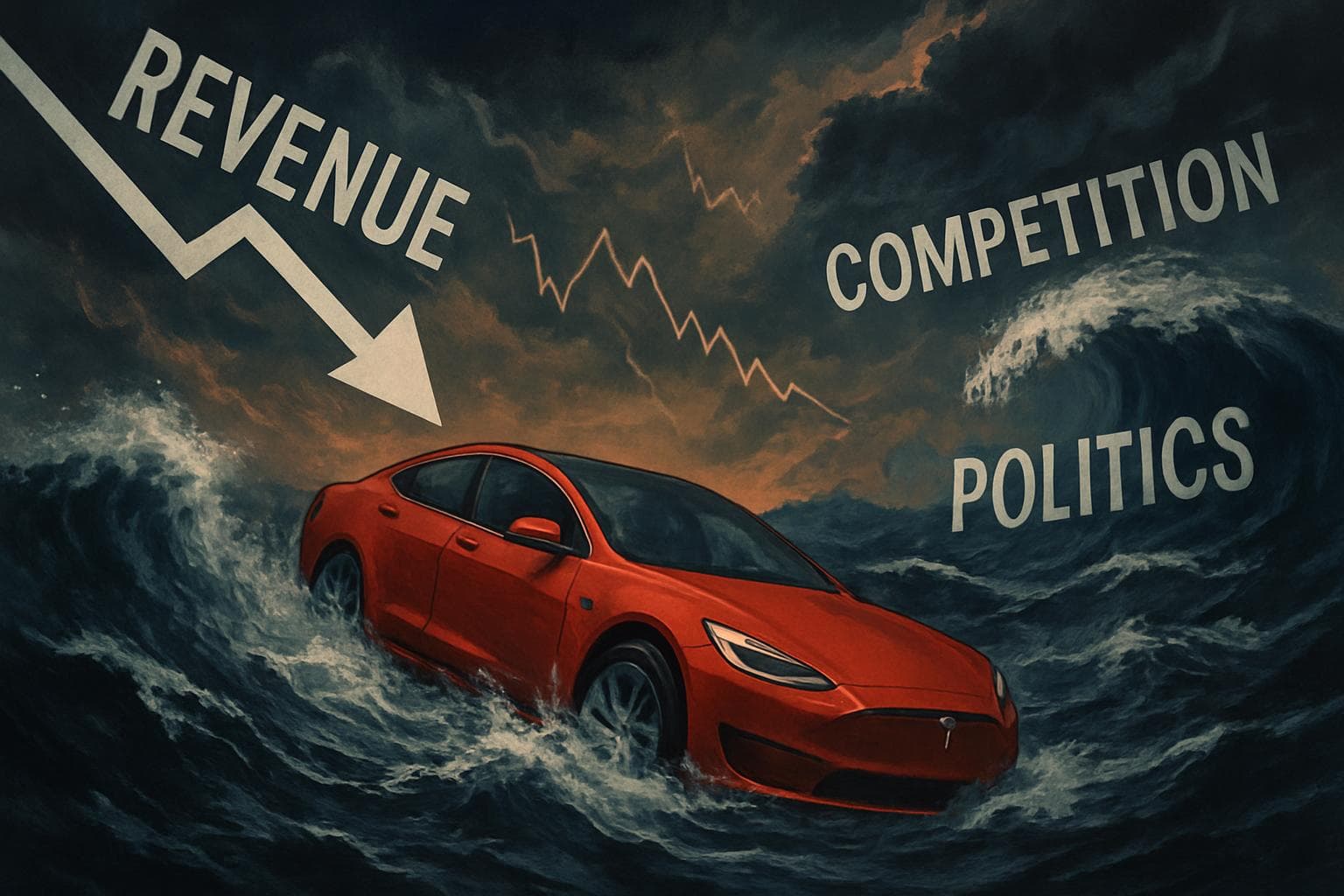
Tesla, the pioneering electric vehicle manufacturer, is navigating a turbulent financial landscape as it grapples with declining revenue, increased competition, and CEO Elon Musk's controversial political activities. The company reported a 12% drop in revenue to $22.5 billion for the second quarter, falling short of Wall Street's expectations. Profits also fell by 16%, marking a second consecutive quarterly decline.
Financial Struggles and Market Competition
The decline in Tesla's financial performance is attributed to a 14% decrease in vehicle deliveries and a reduction in regulatory credit revenue. The company is also facing stiff competition from Chinese carmakers, which are rapidly expanding their presence in the electric vehicle market. Additionally, the reduction of US government support for electric cars is expected to further impact Tesla's financial outlook.
Strategic Initiatives and European Expansion
In response to these challenges, Elon Musk announced plans to introduce a more affordable Tesla model, with initial builds starting in June. Musk also expressed optimism about gaining approval for Tesla's self-driving software in Europe, beginning with the Netherlands. "Autonomy is the story," Musk stated, emphasizing the potential value of self-driving technology for the company.
Stock Volatility and Political Controversies
Tesla's stock has experienced significant fluctuations, dropping nearly 13% this year. The volatility is partly attributed to Musk's involvement in the Trump administration and his subsequent political ambitions. The CEO's role as the head of the "department of government efficiency" led to widespread protests and calls for a boycott of Tesla. The strained relationship between Musk and former President Trump further exacerbated the situation, impacting Tesla's brand perception.
Investor Concerns and Board Oversight
Investors and analysts have voiced concerns about Musk's focus on politics, urging the Tesla board to ensure his political ambitions do not interfere with his responsibilities as CEO. Analyst Dan Ives called for the board to impose guardrails, prompting a dismissive response from Musk on social media. Despite these challenges, Musk remains optimistic about Tesla's future, describing the recent quarter as "very exciting" and highlighting the company's innovations, including the launch of driverless cars in Austin, Texas.
WHAT THIS MIGHT MEAN
Looking ahead, Tesla's ability to navigate its financial challenges will depend on its strategic initiatives, including the successful launch of a more affordable model and the expansion of self-driving technology in Europe. The company's financial performance may also be influenced by shifts in global trade and fiscal policies, as well as the evolving competitive landscape in the electric vehicle market.
Elon Musk's political activities and their impact on Tesla's brand perception remain a critical concern for investors. The Tesla board may need to take a more active role in ensuring that Musk's political ambitions align with his responsibilities as CEO to maintain investor confidence and stabilize the company's stock.
As Tesla continues to innovate and expand its product offerings, the company's ability to regain its market leadership will be closely watched by industry analysts and investors alike.
Related Articles
Elon Musk Defends Tweets in Twitter Takeover Trial
Rubio Reaffirms US Commitment to Europe Amid Criticisms at Munich Conference

Goldman Sachs Top Lawyer Resigns Amid Epstein Ties

Tech Giants Pledge to Cover AI Data Center Energy Costs Amid Rising Electricity Concerns

Trial Begins for 2003 Rape Case That Led to Notorious Miscarriage of Justice

US Military Strikes on Alleged Drug Boats Raise Legal Concerns
Tesla Faces Financial Challenges Amidst Market Competition and Political Controversies
In This Article
 Daniel Rivera| Published
 HIGHLIGHTS
- Tesla reported a 12% drop in revenue and a 16% decline in profits for the second quarter, citing reduced vehicle deliveries and lower regulatory credit revenue.
- The electric vehicle maker is facing increased competition from Chinese carmakers and a reduction in US government support for electric cars.
- CEO Elon Musk announced plans for a more affordable Tesla model and the potential approval of self-driving software in Europe, starting with the Netherlands.
- Tesla's stock has experienced significant volatility, dropping nearly 13% this year, partly due to Musk's political activities and his role in the Trump administration.
- Analysts and investors have expressed concerns about Musk's focus on politics, urging the Tesla board to ensure his political ambitions align with his responsibilities as CEO.
Tesla, the pioneering electric vehicle manufacturer, is navigating a turbulent financial landscape as it grapples with declining revenue, increased competition, and CEO Elon Musk's controversial political activities. The company reported a 12% drop in revenue to $22.5 billion for the second quarter, falling short of Wall Street's expectations. Profits also fell by 16%, marking a second consecutive quarterly decline.
Financial Struggles and Market Competition
The decline in Tesla's financial performance is attributed to a 14% decrease in vehicle deliveries and a reduction in regulatory credit revenue. The company is also facing stiff competition from Chinese carmakers, which are rapidly expanding their presence in the electric vehicle market. Additionally, the reduction of US government support for electric cars is expected to further impact Tesla's financial outlook.
Strategic Initiatives and European Expansion
In response to these challenges, Elon Musk announced plans to introduce a more affordable Tesla model, with initial builds starting in June. Musk also expressed optimism about gaining approval for Tesla's self-driving software in Europe, beginning with the Netherlands. "Autonomy is the story," Musk stated, emphasizing the potential value of self-driving technology for the company.
Stock Volatility and Political Controversies
Tesla's stock has experienced significant fluctuations, dropping nearly 13% this year. The volatility is partly attributed to Musk's involvement in the Trump administration and his subsequent political ambitions. The CEO's role as the head of the "department of government efficiency" led to widespread protests and calls for a boycott of Tesla. The strained relationship between Musk and former President Trump further exacerbated the situation, impacting Tesla's brand perception.
Investor Concerns and Board Oversight
Investors and analysts have voiced concerns about Musk's focus on politics, urging the Tesla board to ensure his political ambitions do not interfere with his responsibilities as CEO. Analyst Dan Ives called for the board to impose guardrails, prompting a dismissive response from Musk on social media. Despite these challenges, Musk remains optimistic about Tesla's future, describing the recent quarter as "very exciting" and highlighting the company's innovations, including the launch of driverless cars in Austin, Texas.
WHAT THIS MIGHT MEAN
Looking ahead, Tesla's ability to navigate its financial challenges will depend on its strategic initiatives, including the successful launch of a more affordable model and the expansion of self-driving technology in Europe. The company's financial performance may also be influenced by shifts in global trade and fiscal policies, as well as the evolving competitive landscape in the electric vehicle market.
Elon Musk's political activities and their impact on Tesla's brand perception remain a critical concern for investors. The Tesla board may need to take a more active role in ensuring that Musk's political ambitions align with his responsibilities as CEO to maintain investor confidence and stabilize the company's stock.
As Tesla continues to innovate and expand its product offerings, the company's ability to regain its market leadership will be closely watched by industry analysts and investors alike.
Related Articles
Elon Musk Defends Tweets in Twitter Takeover Trial
Rubio Reaffirms US Commitment to Europe Amid Criticisms at Munich Conference
Goldman Sachs Top Lawyer Resigns Amid Epstein Ties
Tech Giants Pledge to Cover AI Data Center Energy Costs Amid Rising Electricity Concerns
Trial Begins for 2003 Rape Case That Led to Notorious Miscarriage of Justice
US Military Strikes on Alleged Drug Boats Raise Legal Concerns