
Texas Floods: Delayed Alerts and Rising Death Toll Spark Concerns
In This Article
HIGHLIGHTS
- At least 120 people have died in the Texas Hill Country floods, with 96 fatalities in Kerr County alone.
- Emergency alerts were delayed, with residents notified hours after the Guadalupe River began to rise.
- Over 160 individuals remain missing, including campers from Camp Mystic, a nearby Christian camp.
- FEMA and other federal resources have been deployed to assist in ongoing rescue and recovery efforts.
- Discussions are ongoing about potentially reducing FEMA's role, raising concerns about future disaster responses.
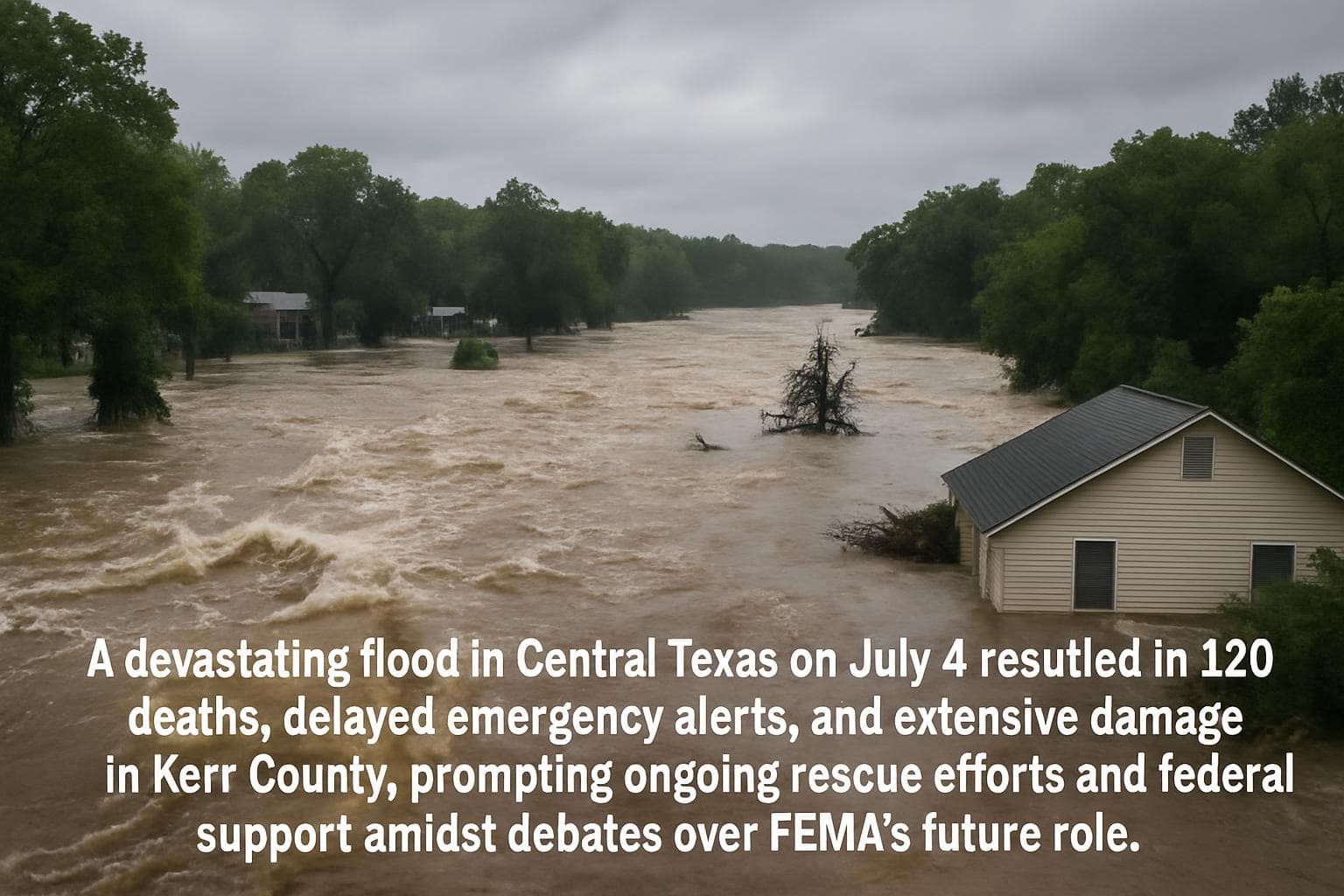
The devastating flash floods that swept through central Texas on July 4 have claimed at least 120 lives, with Kerr County bearing the brunt of the disaster. As recovery efforts continue, questions are mounting over the delayed emergency alerts that left residents vulnerable to the rapidly rising waters of the Guadalupe River.
Delayed Emergency Alerts
In the wake of the floods, Texas officials are under scrutiny for the timing of emergency notifications. An audio recording obtained by ABC News reveals that a firefighter requested an alert for residents at 4:22 AM on July 4, but the first official notification was not sent until nearly six hours later. The delay has raised concerns about the effectiveness of the emergency communication systems in place.
Impact on Kerr County
Kerr County, including the city of Kerrville, has been the hardest hit, with 96 confirmed deaths, including 36 children. Many of these young victims were attending Camp Mystic, a Christian summer camp that was engulfed by the floodwaters. As of Thursday, more than 160 people remain missing, prompting ongoing search and rescue operations.
Federal Response and FEMA's Role
In response to the disaster, President Trump declared the flooding a "major disaster," facilitating the deployment of federal resources, including FEMA, to assist in rescue and recovery efforts. However, recent discussions about reducing FEMA's role and shifting responsibilities to state levels have sparked debate. Kristi Noem, Secretary of the Department of Homeland Security, emphasized the need to streamline FEMA, but experts warn that such changes could leave critical gaps in emergency responses.
Community and Recovery Efforts
Over 2,100 personnel, including a team of Mexican firefighters, are currently on the ground in Texas, working tirelessly to reunite families and provide aid. As the community begins to assess the damage, the resilience and solidarity among residents are evident. President Trump and the First Lady are scheduled to visit the affected areas to offer support and witness the devastation firsthand.
WHAT THIS MIGHT MEAN
As recovery efforts continue, the focus will likely shift to evaluating the emergency response and addressing the communication failures that exacerbated the tragedy. The potential restructuring of FEMA could have significant implications for future disaster management, particularly in states prone to natural disasters. Experts stress the importance of maintaining robust federal support to ensure timely and effective responses to emergencies. Meanwhile, the community's resilience and the ongoing support from federal and local agencies will be crucial in the long road to recovery.
Related Articles

DHS Spokesperson Tricia McLaughlin to Depart Amidst Immigration Policy Controversy

US Immigration Policy Under Scrutiny Amid Rising Tensions and Calls for Transparency

Don Lemon Pleads Not Guilty in Minnesota Church Protest Case

US Homeland Security Shutdown Sparks Concerns Over Travel Delays and Immigration Reforms

Senate Stalemate Over DHS Funding Amid Immigration Reform Dispute

El Paso Airspace Closure Sparks Confusion Amid Drone Concerns
Texas Floods: Delayed Alerts and Rising Death Toll Spark Concerns
In This Article
 Ethan Brooks| Published
 HIGHLIGHTS
- At least 120 people have died in the Texas Hill Country floods, with 96 fatalities in Kerr County alone.
- Emergency alerts were delayed, with residents notified hours after the Guadalupe River began to rise.
- Over 160 individuals remain missing, including campers from Camp Mystic, a nearby Christian camp.
- FEMA and other federal resources have been deployed to assist in ongoing rescue and recovery efforts.
- Discussions are ongoing about potentially reducing FEMA's role, raising concerns about future disaster responses.
The devastating flash floods that swept through central Texas on July 4 have claimed at least 120 lives, with Kerr County bearing the brunt of the disaster. As recovery efforts continue, questions are mounting over the delayed emergency alerts that left residents vulnerable to the rapidly rising waters of the Guadalupe River.
Delayed Emergency Alerts
In the wake of the floods, Texas officials are under scrutiny for the timing of emergency notifications. An audio recording obtained by ABC News reveals that a firefighter requested an alert for residents at 4:22 AM on July 4, but the first official notification was not sent until nearly six hours later. The delay has raised concerns about the effectiveness of the emergency communication systems in place.
Impact on Kerr County
Kerr County, including the city of Kerrville, has been the hardest hit, with 96 confirmed deaths, including 36 children. Many of these young victims were attending Camp Mystic, a Christian summer camp that was engulfed by the floodwaters. As of Thursday, more than 160 people remain missing, prompting ongoing search and rescue operations.
Federal Response and FEMA's Role
In response to the disaster, President Trump declared the flooding a "major disaster," facilitating the deployment of federal resources, including FEMA, to assist in rescue and recovery efforts. However, recent discussions about reducing FEMA's role and shifting responsibilities to state levels have sparked debate. Kristi Noem, Secretary of the Department of Homeland Security, emphasized the need to streamline FEMA, but experts warn that such changes could leave critical gaps in emergency responses.
Community and Recovery Efforts
Over 2,100 personnel, including a team of Mexican firefighters, are currently on the ground in Texas, working tirelessly to reunite families and provide aid. As the community begins to assess the damage, the resilience and solidarity among residents are evident. President Trump and the First Lady are scheduled to visit the affected areas to offer support and witness the devastation firsthand.
WHAT THIS MIGHT MEAN
As recovery efforts continue, the focus will likely shift to evaluating the emergency response and addressing the communication failures that exacerbated the tragedy. The potential restructuring of FEMA could have significant implications for future disaster management, particularly in states prone to natural disasters. Experts stress the importance of maintaining robust federal support to ensure timely and effective responses to emergencies. Meanwhile, the community's resilience and the ongoing support from federal and local agencies will be crucial in the long road to recovery.
Related Articles
DHS Spokesperson Tricia McLaughlin to Depart Amidst Immigration Policy Controversy
US Immigration Policy Under Scrutiny Amid Rising Tensions and Calls for Transparency
Don Lemon Pleads Not Guilty in Minnesota Church Protest Case
US Homeland Security Shutdown Sparks Concerns Over Travel Delays and Immigration Reforms
Senate Stalemate Over DHS Funding Amid Immigration Reform Dispute
El Paso Airspace Closure Sparks Confusion Amid Drone Concerns