
Renewed Clashes Erupt on Thailand-Cambodia Border Amid Calls for Peace
In This Article
HIGHLIGHTS
- Renewed clashes between Thailand and Cambodia have resulted in at least 10 deaths and the displacement of hundreds of thousands.
- The US, under President Donald Trump, has urged both nations to adhere to a peace accord established in October.
- Both countries accuse each other of violating the ceasefire, with military actions escalating along the disputed border.
- The century-old territorial dispute has intensified, affecting civilian areas and historic sites.
- International bodies, including the UN, have called for restraint to prevent further escalation.
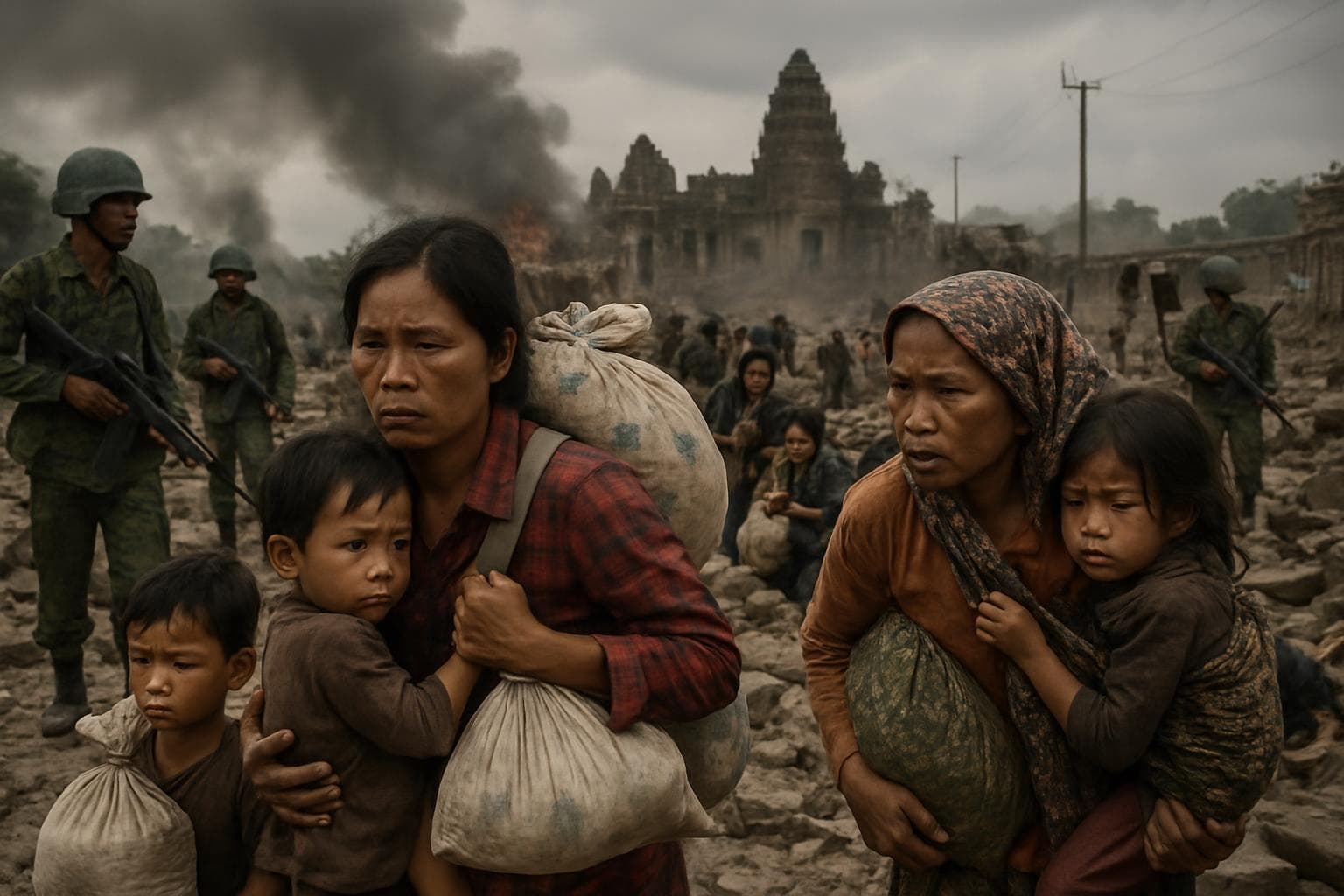
The longstanding territorial dispute between Thailand and Cambodia has once again erupted into violence, leading to significant casualties and mass displacement. This latest escalation, which has claimed at least 10 lives, marks the most severe outbreak of hostilities since a US-brokered ceasefire was established in October.
Escalation of Conflict
Fighting resumed along the 800-kilometer border, with both nations blaming each other for reigniting tensions. The conflict has resulted in the displacement of hundreds of thousands, with Thai officials reporting over 400,000 evacuations and Cambodia relocating 100,000 people to shelters. The violence has spread across multiple provinces, affecting civilian infrastructure and cultural sites.
International Response
US President Donald Trump, who previously brokered a peace deal between the two nations, has expressed his intent to intervene once more. Speaking at a rally, Trump emphasized his role in global peacemaking and indicated he would make a call to halt the fighting. Meanwhile, US Secretary of State Marco Rubio has urged both countries to adhere to the de-escalation measures outlined in the October accord.
Historical Context and Current Developments
The border dispute dates back to the early 20th century when France mapped the boundary during its occupation of Cambodia. The Preah Vihear temple, a UNESCO World Heritage site, remains a focal point of contention. Despite the ceasefire agreement signed in Malaysia, tensions have simmered, exacerbated by political dynamics and nationalist sentiments in both countries.
Calls for Restraint
The United Nations Secretary-General António Guterres has called for restraint, highlighting the significant civilian impact and urging both sides to avoid further escalation. The international community, including countries like the UK and Japan, has issued travel warnings for the border areas due to the renewed fighting.
WHAT THIS MIGHT MEAN
The ongoing conflict between Thailand and Cambodia poses significant challenges to regional stability in Southeast Asia. If hostilities continue, there could be increased international pressure for a more robust intervention, potentially involving ASEAN or other global powers. The situation also underscores the need for a sustainable resolution to the territorial dispute, which may require renewed diplomatic efforts and confidence-building measures. As nationalist sentiments run high, both governments face domestic pressures that could influence their willingness to negotiate. The role of international mediators, including the US, will be crucial in steering both nations towards a peaceful resolution.
Related Articles
UK-Iran Tensions: Starmer Defends Cautious Approach Amid Trump Criticism
Canada and Australia Forge Strategic Partnership Amid Global Uncertainty

Tech Giants Pledge to Cover AI Data Center Energy Costs Amid Rising Electricity Concerns

Middle East Conflict Drives UK Energy Prices to New Highs

UK Faces Dilemmas Amid Iran Conflict and China Spying Allegations

Intensified US-Israel Strikes on Iran Spark Global Outcry
Renewed Clashes Erupt on Thailand-Cambodia Border Amid Calls for Peace
In This Article
HIGHLIGHTS
- Renewed clashes between Thailand and Cambodia have resulted in at least 10 deaths and the displacement of hundreds of thousands.
- The US, under President Donald Trump, has urged both nations to adhere to a peace accord established in October.
- Both countries accuse each other of violating the ceasefire, with military actions escalating along the disputed border.
- The century-old territorial dispute has intensified, affecting civilian areas and historic sites.
- International bodies, including the UN, have called for restraint to prevent further escalation.
The longstanding territorial dispute between Thailand and Cambodia has once again erupted into violence, leading to significant casualties and mass displacement. This latest escalation, which has claimed at least 10 lives, marks the most severe outbreak of hostilities since a US-brokered ceasefire was established in October.
Escalation of Conflict
Fighting resumed along the 800-kilometer border, with both nations blaming each other for reigniting tensions. The conflict has resulted in the displacement of hundreds of thousands, with Thai officials reporting over 400,000 evacuations and Cambodia relocating 100,000 people to shelters. The violence has spread across multiple provinces, affecting civilian infrastructure and cultural sites.
International Response
US President Donald Trump, who previously brokered a peace deal between the two nations, has expressed his intent to intervene once more. Speaking at a rally, Trump emphasized his role in global peacemaking and indicated he would make a call to halt the fighting. Meanwhile, US Secretary of State Marco Rubio has urged both countries to adhere to the de-escalation measures outlined in the October accord.
Historical Context and Current Developments
The border dispute dates back to the early 20th century when France mapped the boundary during its occupation of Cambodia. The Preah Vihear temple, a UNESCO World Heritage site, remains a focal point of contention. Despite the ceasefire agreement signed in Malaysia, tensions have simmered, exacerbated by political dynamics and nationalist sentiments in both countries.
Calls for Restraint
The United Nations Secretary-General António Guterres has called for restraint, highlighting the significant civilian impact and urging both sides to avoid further escalation. The international community, including countries like the UK and Japan, has issued travel warnings for the border areas due to the renewed fighting.
WHAT THIS MIGHT MEAN
The ongoing conflict between Thailand and Cambodia poses significant challenges to regional stability in Southeast Asia. If hostilities continue, there could be increased international pressure for a more robust intervention, potentially involving ASEAN or other global powers. The situation also underscores the need for a sustainable resolution to the territorial dispute, which may require renewed diplomatic efforts and confidence-building measures. As nationalist sentiments run high, both governments face domestic pressures that could influence their willingness to negotiate. The role of international mediators, including the US, will be crucial in steering both nations towards a peaceful resolution.
Related Articles
UK-Iran Tensions: Starmer Defends Cautious Approach Amid Trump Criticism
Canada and Australia Forge Strategic Partnership Amid Global Uncertainty
Tech Giants Pledge to Cover AI Data Center Energy Costs Amid Rising Electricity Concerns
Middle East Conflict Drives UK Energy Prices to New Highs
UK Faces Dilemmas Amid Iran Conflict and China Spying Allegations
Intensified US-Israel Strikes on Iran Spark Global Outcry