
Thailand-Cambodia Border Tensions Escalate Amid Fears of War
In This Article
HIGHLIGHTS
- Intense fighting between Thailand and Cambodia has resulted in at least 16 deaths and displaced over 138,000 people.
- Acting Thai Prime Minister Phumtham Wechayachai warned the conflict could escalate into war if not resolved.
- ASEAN, led by Malaysian PM Anwar Ibrahim, and other global leaders have called for an immediate ceasefire.
- The UN Security Council is set to hold an emergency meeting to address the escalating violence.
- Both nations accuse each other of initiating the conflict, which involves disputed border territories.
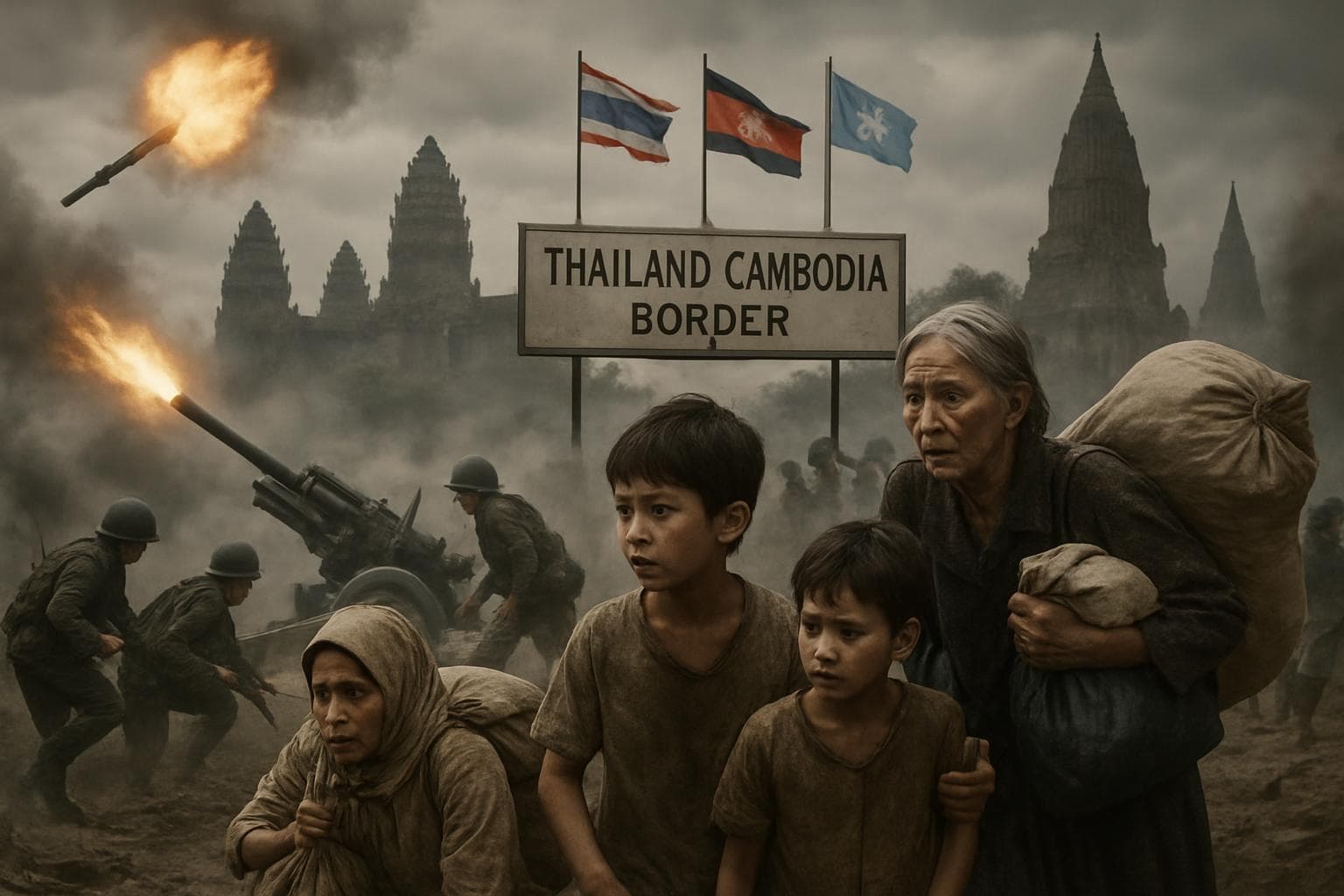
The border conflict between Thailand and Cambodia has intensified, with fears mounting that the situation could escalate into a full-scale war. Acting Thai Prime Minister Phumtham Wechayachai has expressed grave concerns over the ongoing clashes, which have already claimed at least 16 lives and displaced more than 138,000 civilians.
Rising Tensions and Evacuations
The conflict, which erupted along the disputed border, has seen both nations engage in heavy artillery exchanges. Thailand reports that 14 civilians and one soldier have died, while Cambodia confirms the death of one civilian. The violence has forced the evacuation of over 138,000 people from Thailand's border regions, with thousands more displaced in Cambodia's Oddar Meanchey province.
Global Calls for Ceasefire
In response to the escalating violence, global leaders, including Malaysian Prime Minister Anwar Ibrahim, who chairs ASEAN, have urged both countries to agree to an immediate ceasefire. "I welcome the positive signals and willingness shown by both Bangkok and Phnom Penh to consider this path forward," Anwar stated. The United States, China, Australia, the European Union, and France have also called for peace and the protection of civilians.
Historical Dispute and Accusations
The border dispute between Thailand and Cambodia dates back over a century, with sporadic clashes occurring over the years. The latest tensions were triggered by a clash in May, resulting in the death of a Cambodian soldier. Both countries accuse each other of initiating the current conflict, with Thailand alleging that Cambodia used drones for surveillance, while Cambodia claims Thai troops violated agreements by advancing on a temple near the border.
International Intervention
The United Nations Security Council is expected to convene an emergency meeting to address the crisis. Cambodia's Prime Minister Hun Manet has appealed to the council to intervene and halt what he describes as "Thailand's aggression." The international community remains deeply concerned about the potential for further escalation and the humanitarian impact on civilians.
WHAT THIS MIGHT MEAN
The ongoing conflict between Thailand and Cambodia poses significant risks of further military escalation, potentially drawing in regional and international actors. If diplomatic efforts, such as those led by ASEAN, fail to secure a ceasefire, the situation could deteriorate, leading to increased casualties and displacement. The UN Security Council's involvement may provide a platform for dialogue, but achieving a lasting resolution will require addressing the historical grievances and territorial disputes at the heart of the conflict. Experts suggest that sustained international pressure and mediation could be crucial in preventing a full-scale war and ensuring regional stability.
Related Articles
US Supreme Court Ruling Sparks Trade Uncertainty in Asia and Beyond
China Sets Lowest GDP Growth Target in Decades Amid Economic Challenges

UK Faces Dilemmas Amid Iran Conflict and China Spying Allegations
Canada Calls for De-escalation Amid US-Israel Strikes on Iran
Trump's New Tariff Strategy Sparks Global Trade Uncertainty
Canada and Australia Forge Strategic Partnership Amid Global Uncertainty
Thailand-Cambodia Border Tensions Escalate Amid Fears of War
In This Article
HIGHLIGHTS
- Intense fighting between Thailand and Cambodia has resulted in at least 16 deaths and displaced over 138,000 people.
- Acting Thai Prime Minister Phumtham Wechayachai warned the conflict could escalate into war if not resolved.
- ASEAN, led by Malaysian PM Anwar Ibrahim, and other global leaders have called for an immediate ceasefire.
- The UN Security Council is set to hold an emergency meeting to address the escalating violence.
- Both nations accuse each other of initiating the conflict, which involves disputed border territories.
The border conflict between Thailand and Cambodia has intensified, with fears mounting that the situation could escalate into a full-scale war. Acting Thai Prime Minister Phumtham Wechayachai has expressed grave concerns over the ongoing clashes, which have already claimed at least 16 lives and displaced more than 138,000 civilians.
Rising Tensions and Evacuations
The conflict, which erupted along the disputed border, has seen both nations engage in heavy artillery exchanges. Thailand reports that 14 civilians and one soldier have died, while Cambodia confirms the death of one civilian. The violence has forced the evacuation of over 138,000 people from Thailand's border regions, with thousands more displaced in Cambodia's Oddar Meanchey province.
Global Calls for Ceasefire
In response to the escalating violence, global leaders, including Malaysian Prime Minister Anwar Ibrahim, who chairs ASEAN, have urged both countries to agree to an immediate ceasefire. "I welcome the positive signals and willingness shown by both Bangkok and Phnom Penh to consider this path forward," Anwar stated. The United States, China, Australia, the European Union, and France have also called for peace and the protection of civilians.
Historical Dispute and Accusations
The border dispute between Thailand and Cambodia dates back over a century, with sporadic clashes occurring over the years. The latest tensions were triggered by a clash in May, resulting in the death of a Cambodian soldier. Both countries accuse each other of initiating the current conflict, with Thailand alleging that Cambodia used drones for surveillance, while Cambodia claims Thai troops violated agreements by advancing on a temple near the border.
International Intervention
The United Nations Security Council is expected to convene an emergency meeting to address the crisis. Cambodia's Prime Minister Hun Manet has appealed to the council to intervene and halt what he describes as "Thailand's aggression." The international community remains deeply concerned about the potential for further escalation and the humanitarian impact on civilians.
WHAT THIS MIGHT MEAN
The ongoing conflict between Thailand and Cambodia poses significant risks of further military escalation, potentially drawing in regional and international actors. If diplomatic efforts, such as those led by ASEAN, fail to secure a ceasefire, the situation could deteriorate, leading to increased casualties and displacement. The UN Security Council's involvement may provide a platform for dialogue, but achieving a lasting resolution will require addressing the historical grievances and territorial disputes at the heart of the conflict. Experts suggest that sustained international pressure and mediation could be crucial in preventing a full-scale war and ensuring regional stability.
Related Articles
US Supreme Court Ruling Sparks Trade Uncertainty in Asia and Beyond
China Sets Lowest GDP Growth Target in Decades Amid Economic Challenges
UK Faces Dilemmas Amid Iran Conflict and China Spying Allegations
Canada Calls for De-escalation Amid US-Israel Strikes on Iran
Trump's New Tariff Strategy Sparks Global Trade Uncertainty
Canada and Australia Forge Strategic Partnership Amid Global Uncertainty