
Thailand and Cambodia's Fragile Ceasefire Faces Immediate Challenges
In This Article
HIGHLIGHTS
- Thailand and Cambodia agreed to an "immediate and unconditional ceasefire" after five days of border clashes killed at least 38 people and displaced over 300,000.
- The ceasefire was brokered by Malaysia, with significant pressure from US President Donald Trump, who threatened to pause tariff negotiations.
- Despite the ceasefire, Thailand accused Cambodia of violating the agreement, while Cambodia denied any new hostilities.
- The century-old border dispute has seen sporadic violence, with recent tensions escalating after a Cambodian soldier was killed in May.
- ASEAN, along with the US and China, is involved in monitoring the ceasefire to ensure both sides pull back their armies and prevent further clashes.
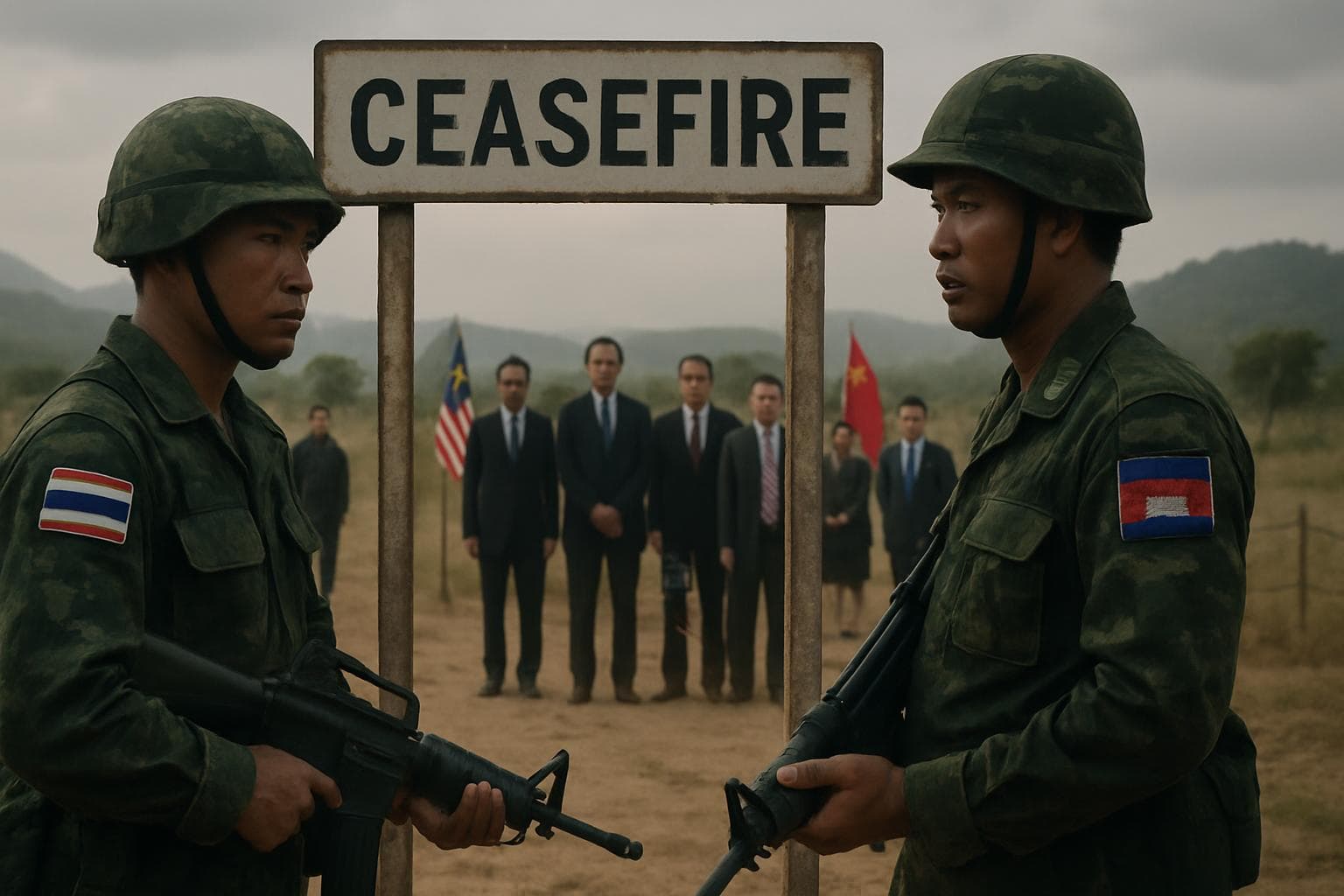
In a bid to halt the worst fighting between Thailand and Cambodia in over a decade, the two nations have agreed to an "immediate and unconditional ceasefire." Brokered by Malaysia and underpinned by US diplomatic pressure, the agreement aims to end five days of intense border clashes that have resulted in at least 38 deaths and the displacement of more than 300,000 people.
Ceasefire Agreement and Immediate Accusations
The ceasefire, announced by Malaysian Prime Minister Anwar Ibrahim, was hailed as a crucial step towards peace. However, just hours after the agreement took effect at midnight on Monday, Thailand accused Cambodia of violating the ceasefire by attacking Thai territory. Cambodian officials denied these allegations, asserting that no new fighting had occurred.
Historical Context and Recent Escalations
The border dispute between Thailand and Cambodia dates back over a century, with tensions flaring periodically. The latest escalation began in May when a Cambodian soldier was killed, leading to a series of retaliatory actions. The situation worsened last week after a Thai soldier was injured by a landmine, prompting both countries to exchange gunfire and rocket attacks.
International Mediation and Pressure
The ceasefire talks were facilitated by Malaysia, the current chair of ASEAN, and attended by officials from the US and China. US President Donald Trump played a pivotal role by threatening to halt trade negotiations unless hostilities ceased. Following the ceasefire announcement, Trump declared himself the "President of PEACE" on social media, emphasizing his role in the resolution.
Future Monitoring and Challenges
Both nations have agreed to pull back their armies and accept independent monitoring to prevent further clashes. ASEAN, along with the US and China, will oversee the ceasefire's implementation. Despite these efforts, skepticism remains among affected communities, with Thai authorities advising evacuees not to return home yet.
WHAT THIS MIGHT MEAN
The immediate future of the Thailand-Cambodia ceasefire remains uncertain, with accusations of violations already casting doubt on its durability. If the ceasefire holds, it could pave the way for more comprehensive peace talks and a long-term resolution to the border dispute. However, continued violations could reignite hostilities, complicating diplomatic efforts and potentially impacting regional stability.
The involvement of international players like the US and ASEAN underscores the geopolitical significance of the conflict. A sustained ceasefire could enhance ASEAN's credibility as a regional mediator, while failure might necessitate further international intervention. As both countries navigate domestic pressures and international expectations, the coming weeks will be critical in determining the ceasefire's success.
Related Articles

Tech Giants Pledge to Cover AI Data Center Energy Costs Amid Rising Electricity Concerns

UK Faces Dilemmas Amid Iran Conflict and China Spying Allegations

UK-Iran Tensions: Starmer Defends Cautious Approach Amid Trump Criticism
Diplomatic Tensions Rise as Trump Criticizes Starmer's Iran Policy
China Sets Lowest GDP Growth Target in Decades Amid Economic Challenges
Canada and Australia Forge Strategic Partnership Amid Global Uncertainty
Thailand and Cambodia's Fragile Ceasefire Faces Immediate Challenges
In This Article
HIGHLIGHTS
- Thailand and Cambodia agreed to an "immediate and unconditional ceasefire" after five days of border clashes killed at least 38 people and displaced over 300,000.
- The ceasefire was brokered by Malaysia, with significant pressure from US President Donald Trump, who threatened to pause tariff negotiations.
- Despite the ceasefire, Thailand accused Cambodia of violating the agreement, while Cambodia denied any new hostilities.
- The century-old border dispute has seen sporadic violence, with recent tensions escalating after a Cambodian soldier was killed in May.
- ASEAN, along with the US and China, is involved in monitoring the ceasefire to ensure both sides pull back their armies and prevent further clashes.
In a bid to halt the worst fighting between Thailand and Cambodia in over a decade, the two nations have agreed to an "immediate and unconditional ceasefire." Brokered by Malaysia and underpinned by US diplomatic pressure, the agreement aims to end five days of intense border clashes that have resulted in at least 38 deaths and the displacement of more than 300,000 people.
Ceasefire Agreement and Immediate Accusations
The ceasefire, announced by Malaysian Prime Minister Anwar Ibrahim, was hailed as a crucial step towards peace. However, just hours after the agreement took effect at midnight on Monday, Thailand accused Cambodia of violating the ceasefire by attacking Thai territory. Cambodian officials denied these allegations, asserting that no new fighting had occurred.
Historical Context and Recent Escalations
The border dispute between Thailand and Cambodia dates back over a century, with tensions flaring periodically. The latest escalation began in May when a Cambodian soldier was killed, leading to a series of retaliatory actions. The situation worsened last week after a Thai soldier was injured by a landmine, prompting both countries to exchange gunfire and rocket attacks.
International Mediation and Pressure
The ceasefire talks were facilitated by Malaysia, the current chair of ASEAN, and attended by officials from the US and China. US President Donald Trump played a pivotal role by threatening to halt trade negotiations unless hostilities ceased. Following the ceasefire announcement, Trump declared himself the "President of PEACE" on social media, emphasizing his role in the resolution.
Future Monitoring and Challenges
Both nations have agreed to pull back their armies and accept independent monitoring to prevent further clashes. ASEAN, along with the US and China, will oversee the ceasefire's implementation. Despite these efforts, skepticism remains among affected communities, with Thai authorities advising evacuees not to return home yet.
WHAT THIS MIGHT MEAN
The immediate future of the Thailand-Cambodia ceasefire remains uncertain, with accusations of violations already casting doubt on its durability. If the ceasefire holds, it could pave the way for more comprehensive peace talks and a long-term resolution to the border dispute. However, continued violations could reignite hostilities, complicating diplomatic efforts and potentially impacting regional stability.
The involvement of international players like the US and ASEAN underscores the geopolitical significance of the conflict. A sustained ceasefire could enhance ASEAN's credibility as a regional mediator, while failure might necessitate further international intervention. As both countries navigate domestic pressures and international expectations, the coming weeks will be critical in determining the ceasefire's success.
Related Articles
Tech Giants Pledge to Cover AI Data Center Energy Costs Amid Rising Electricity Concerns
UK Faces Dilemmas Amid Iran Conflict and China Spying Allegations
UK-Iran Tensions: Starmer Defends Cautious Approach Amid Trump Criticism
Diplomatic Tensions Rise as Trump Criticizes Starmer's Iran Policy
China Sets Lowest GDP Growth Target in Decades Amid Economic Challenges
Canada and Australia Forge Strategic Partnership Amid Global Uncertainty