
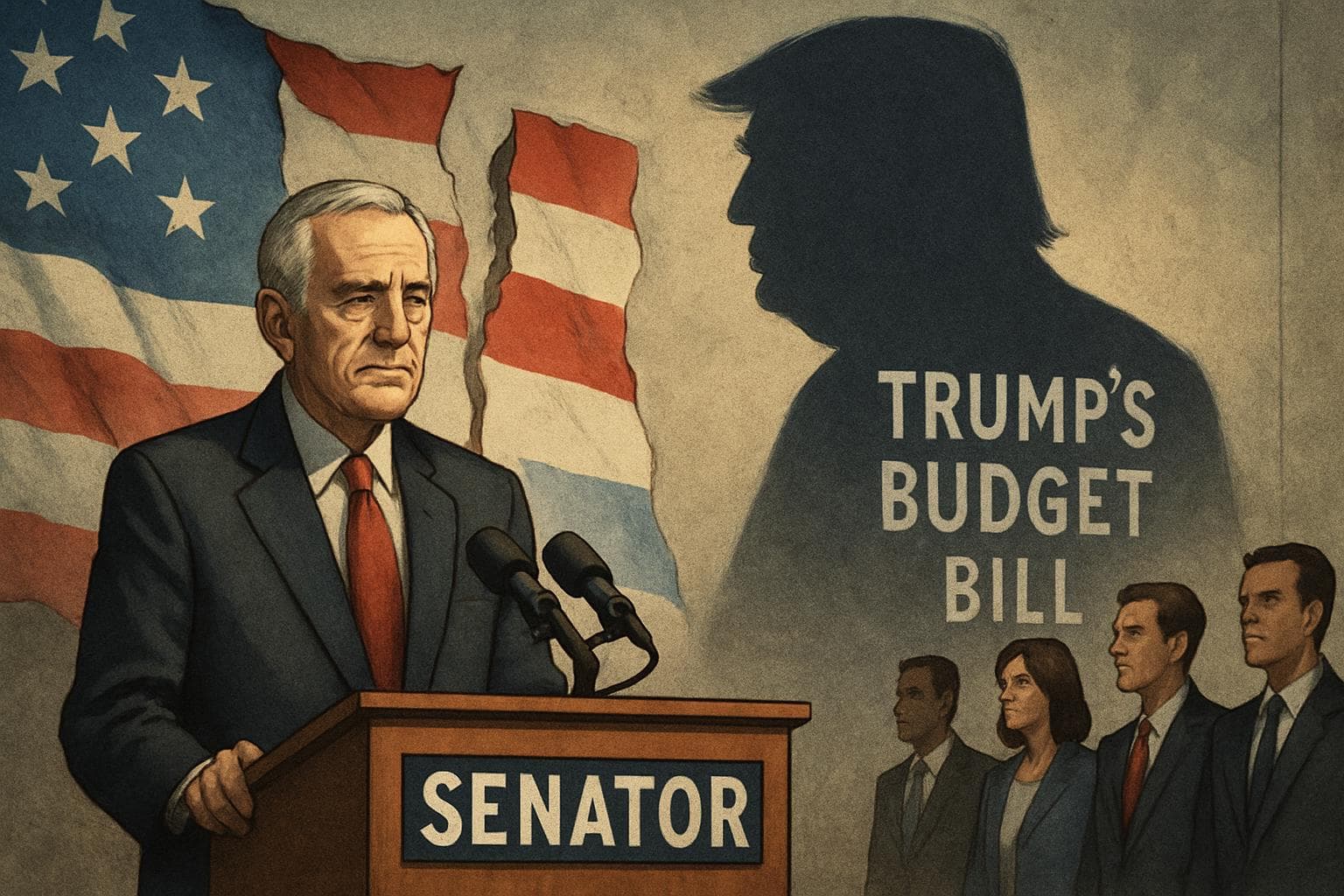
Thom Tillis to Retire from Senate Following Clash with Trump Over Budget Bill
In This Article
HIGHLIGHTS
- Thom Tillis, a Republican senator from North Carolina, announced he will not seek re-election after opposing President Trump's budget bill.
- Tillis criticized the bill for its proposed Medicaid cuts, which he said would harm North Carolina's healthcare system.
- President Trump has publicly criticized Tillis and threatened to support a primary challenger in the upcoming Republican Senate primary.
- Speculation has arisen that Lara Trump, the president's daughter-in-law, may run for Tillis's Senate seat.
- Tillis emphasized the diminishing presence of bipartisan and independent thinkers in Washington as a reason for his decision.
Republican Senator Thom Tillis of North Carolina has announced he will not seek re-election, citing a growing lack of bipartisan cooperation in Washington. This decision comes shortly after Tillis opposed a major budget bill championed by President Donald Trump, which has sparked a public feud between the two.
Opposition to Trump's Budget Bill
Tillis, who has served in the Senate since 2015, was one of two Republican senators to vote against advancing Trump's "One Big Beautiful Bill Act," a sweeping package of tax and spending cuts. The bill, which narrowly passed the House of Representatives, has been criticized for its proposed cuts to Medicaid, a program that provides healthcare to millions of Americans. Tillis argued that these cuts would be "devastating" to North Carolina, potentially resulting in tens of billions of dollars in lost funding for the state.
Trump's Reaction and Political Implications
President Trump responded to Tillis's opposition with a series of attacks on social media, labeling him a "talker and complainer" and threatening to support a primary challenger in the upcoming Republican Senate primary. Trump has hinted at meeting with potential candidates, including Lara Trump, his daughter-in-law and a North Carolina native, who is reportedly considering a run for the seat.
A Call for Bipartisanship
In his announcement, Tillis lamented the decline of bipartisan efforts in Congress, stating that independent thinkers have become "an endangered species." He expressed pride in his career and the bipartisan victories he achieved, despite facing criticism from within his own party. Tillis's departure could shift the political landscape in North Carolina, a key battleground state, potentially making it easier for Democrats to gain a Senate seat.
WHAT THIS MIGHT MEAN
With Thom Tillis stepping down, the Republican primary for his Senate seat is likely to become a focal point of political intrigue. If Lara Trump decides to run, her candidacy could galvanize Trump's base in North Carolina, potentially reshaping the state's political dynamics. Meanwhile, Democrats may see an opportunity to capitalize on the division within the GOP and strengthen their position in the Senate.
The broader implications of Tillis's retirement highlight the ongoing struggle within the Republican Party between traditional conservatives and those aligned with Trump's agenda. As the party navigates this internal conflict, the outcome of the North Carolina Senate race could serve as a bellwether for the GOP's future direction on a national scale.
Related Articles
Congress Subpoenas Attorney General Bondi in Epstein Investigation
Senate Blocks Resolution to Limit Trump's Military Actions in Iran

James Talarico Secures Democratic Nomination in Texas Senate Race Amidst Republican Runoff

Tech Giants Pledge to Cover AI Data Center Energy Costs Amid Rising Electricity Concerns

Cuba Faces Widespread Blackout Amid Deepening Fuel Crisis

UK Faces Dilemmas Amid Iran Conflict and China Spying Allegations
Thom Tillis to Retire from Senate Following Clash with Trump Over Budget Bill
In This Article
 Alex Carter| Published
 HIGHLIGHTS
- Thom Tillis, a Republican senator from North Carolina, announced he will not seek re-election after opposing President Trump's budget bill.
- Tillis criticized the bill for its proposed Medicaid cuts, which he said would harm North Carolina's healthcare system.
- President Trump has publicly criticized Tillis and threatened to support a primary challenger in the upcoming Republican Senate primary.
- Speculation has arisen that Lara Trump, the president's daughter-in-law, may run for Tillis's Senate seat.
- Tillis emphasized the diminishing presence of bipartisan and independent thinkers in Washington as a reason for his decision.
Republican Senator Thom Tillis of North Carolina has announced he will not seek re-election, citing a growing lack of bipartisan cooperation in Washington. This decision comes shortly after Tillis opposed a major budget bill championed by President Donald Trump, which has sparked a public feud between the two.
Opposition to Trump's Budget Bill
Tillis, who has served in the Senate since 2015, was one of two Republican senators to vote against advancing Trump's "One Big Beautiful Bill Act," a sweeping package of tax and spending cuts. The bill, which narrowly passed the House of Representatives, has been criticized for its proposed cuts to Medicaid, a program that provides healthcare to millions of Americans. Tillis argued that these cuts would be "devastating" to North Carolina, potentially resulting in tens of billions of dollars in lost funding for the state.
Trump's Reaction and Political Implications
President Trump responded to Tillis's opposition with a series of attacks on social media, labeling him a "talker and complainer" and threatening to support a primary challenger in the upcoming Republican Senate primary. Trump has hinted at meeting with potential candidates, including Lara Trump, his daughter-in-law and a North Carolina native, who is reportedly considering a run for the seat.
A Call for Bipartisanship
In his announcement, Tillis lamented the decline of bipartisan efforts in Congress, stating that independent thinkers have become "an endangered species." He expressed pride in his career and the bipartisan victories he achieved, despite facing criticism from within his own party. Tillis's departure could shift the political landscape in North Carolina, a key battleground state, potentially making it easier for Democrats to gain a Senate seat.
WHAT THIS MIGHT MEAN
With Thom Tillis stepping down, the Republican primary for his Senate seat is likely to become a focal point of political intrigue. If Lara Trump decides to run, her candidacy could galvanize Trump's base in North Carolina, potentially reshaping the state's political dynamics. Meanwhile, Democrats may see an opportunity to capitalize on the division within the GOP and strengthen their position in the Senate.
The broader implications of Tillis's retirement highlight the ongoing struggle within the Republican Party between traditional conservatives and those aligned with Trump's agenda. As the party navigates this internal conflict, the outcome of the North Carolina Senate race could serve as a bellwether for the GOP's future direction on a national scale.
Related Articles
Congress Subpoenas Attorney General Bondi in Epstein Investigation
Senate Blocks Resolution to Limit Trump's Military Actions in Iran
James Talarico Secures Democratic Nomination in Texas Senate Race Amidst Republican Runoff
Tech Giants Pledge to Cover AI Data Center Energy Costs Amid Rising Electricity Concerns
Cuba Faces Widespread Blackout Amid Deepening Fuel Crisis
UK Faces Dilemmas Amid Iran Conflict and China Spying Allegations