
Trump Administration Alters Human Rights Report, Softens Criticism of Allies
In This Article
HIGHLIGHTS
- The Trump administration has revised the US State Department's annual human rights report, reducing criticism of allies like Israel and El Salvador.
- Criticism of countries like Brazil and South Africa has increased, while sections on LGBTQ+ rights and government corruption have been minimized.
- The report's language reflects the administration's stance on free speech, particularly criticizing European regulations on online hate speech.
- The report omits references to the International Criminal Court's arrest warrants for Israeli and Hamas leaders.
- Critics argue the changes signal a shift away from traditional US human rights advocacy, aligning with "America First" values.
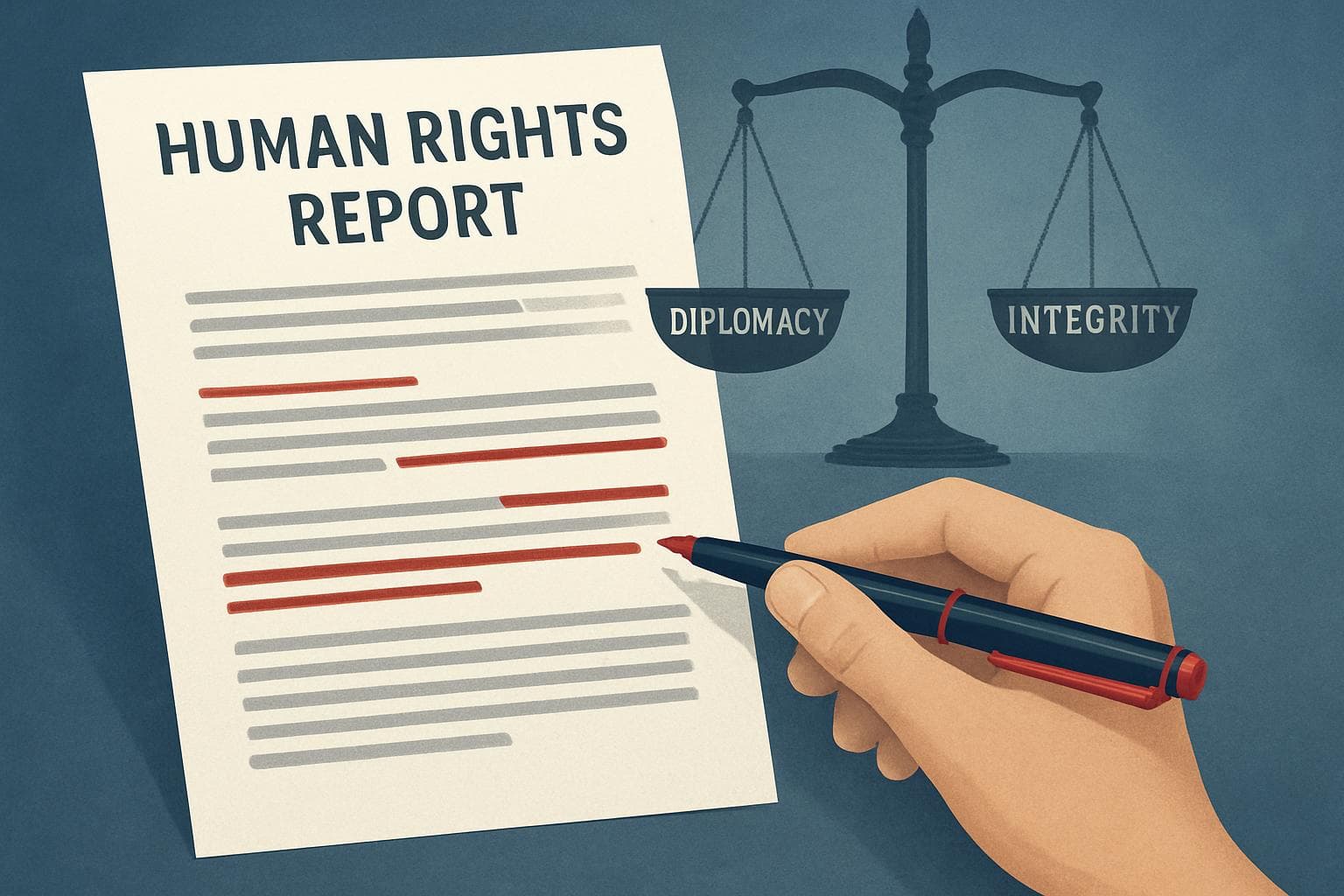
The Trump administration has made significant changes to the US State Department's annual human rights report, drawing criticism for its perceived leniency towards certain allied nations. The revised document, traditionally a comprehensive review of global human rights abuses, now features reduced scrutiny of countries like Israel and El Salvador, while amplifying criticism of others such as Brazil and South Africa.
Restructuring the Report
State Department officials have described the report's restructuring as an effort to "remove redundancies" and "increase readability." However, the changes have sparked controversy, particularly the omission of sections on LGBTQ+ rights and government corruption. Critics argue that these omissions reflect a departure from the US's longstanding commitment to human rights advocacy.
Shifting Focus and Criticism
The report notably criticizes European countries, including the UK, France, and Germany, for their regulations on online hate speech, which the Trump administration views as restrictions on free speech. This stance aligns with previous criticisms from US tech leaders and echoes the administration's broader "America First" policy. In contrast, the report softens its tone on El Salvador, despite previous allegations of human rights abuses, highlighting strengthened bilateral ties under President Nayib Bukele.
Controversial Omissions
Notably absent from the report are references to the International Criminal Court's arrest warrants for Israeli Prime Minister Benjamin Netanyahu and Hamas commander Mohammed Deif, both accused of war crimes. The omission has raised questions about the administration's selective criticism and its implications for international relations.
Reactions and Criticism
Uzra Zeya, a former senior State Department official, criticized the report's revisions, accusing the administration of "gutting" decades of respected human rights work. She warned that the changes signal a willingness to overlook abuses by governments that align with the administration's interests. Meanwhile, a UK government spokesperson defended the country's commitment to free speech, emphasizing the balance between upholding freedoms and ensuring public safety.
WHAT THIS MIGHT MEAN
The alterations to the human rights report could have significant implications for US foreign policy and international relations. By softening criticism of allied nations, the Trump administration may strengthen diplomatic ties but risk undermining the US's credibility as a global human rights advocate. The selective criticism could also impact the US's ability to influence international human rights standards and policies.
Moving forward, the report's changes may prompt increased scrutiny from human rights organizations and international bodies. The administration's approach could lead to tensions with European allies over differing views on free speech and human rights, potentially affecting transatlantic relations. As the global landscape evolves, the US's stance on human rights will likely remain a contentious issue, shaping its role on the world stage.
Related Articles
US and Israel Intensify Military Campaign as Iran's Capabilities Dwindle
Intensified US-Israel Strikes on Iran Spark Global Outcry
Senate Blocks Resolution to Limit Trump's Military Actions in Iran
Iran Postpones Khamenei Funeral Amid Escalating US-Israeli Strikes
Middle East Conflict Drives UK Energy Prices to New Highs

UK Faces Dilemmas Amid Iran Conflict and China Spying Allegations
Trump Administration Alters Human Rights Report, Softens Criticism of Allies
In This Article
 Ethan Brooks| Published
 HIGHLIGHTS
- The Trump administration has revised the US State Department's annual human rights report, reducing criticism of allies like Israel and El Salvador.
- Criticism of countries like Brazil and South Africa has increased, while sections on LGBTQ+ rights and government corruption have been minimized.
- The report's language reflects the administration's stance on free speech, particularly criticizing European regulations on online hate speech.
- The report omits references to the International Criminal Court's arrest warrants for Israeli and Hamas leaders.
- Critics argue the changes signal a shift away from traditional US human rights advocacy, aligning with "America First" values.
The Trump administration has made significant changes to the US State Department's annual human rights report, drawing criticism for its perceived leniency towards certain allied nations. The revised document, traditionally a comprehensive review of global human rights abuses, now features reduced scrutiny of countries like Israel and El Salvador, while amplifying criticism of others such as Brazil and South Africa.
Restructuring the Report
State Department officials have described the report's restructuring as an effort to "remove redundancies" and "increase readability." However, the changes have sparked controversy, particularly the omission of sections on LGBTQ+ rights and government corruption. Critics argue that these omissions reflect a departure from the US's longstanding commitment to human rights advocacy.
Shifting Focus and Criticism
The report notably criticizes European countries, including the UK, France, and Germany, for their regulations on online hate speech, which the Trump administration views as restrictions on free speech. This stance aligns with previous criticisms from US tech leaders and echoes the administration's broader "America First" policy. In contrast, the report softens its tone on El Salvador, despite previous allegations of human rights abuses, highlighting strengthened bilateral ties under President Nayib Bukele.
Controversial Omissions
Notably absent from the report are references to the International Criminal Court's arrest warrants for Israeli Prime Minister Benjamin Netanyahu and Hamas commander Mohammed Deif, both accused of war crimes. The omission has raised questions about the administration's selective criticism and its implications for international relations.
Reactions and Criticism
Uzra Zeya, a former senior State Department official, criticized the report's revisions, accusing the administration of "gutting" decades of respected human rights work. She warned that the changes signal a willingness to overlook abuses by governments that align with the administration's interests. Meanwhile, a UK government spokesperson defended the country's commitment to free speech, emphasizing the balance between upholding freedoms and ensuring public safety.
WHAT THIS MIGHT MEAN
The alterations to the human rights report could have significant implications for US foreign policy and international relations. By softening criticism of allied nations, the Trump administration may strengthen diplomatic ties but risk undermining the US's credibility as a global human rights advocate. The selective criticism could also impact the US's ability to influence international human rights standards and policies.
Moving forward, the report's changes may prompt increased scrutiny from human rights organizations and international bodies. The administration's approach could lead to tensions with European allies over differing views on free speech and human rights, potentially affecting transatlantic relations. As the global landscape evolves, the US's stance on human rights will likely remain a contentious issue, shaping its role on the world stage.
Related Articles
US and Israel Intensify Military Campaign as Iran's Capabilities Dwindle
Intensified US-Israel Strikes on Iran Spark Global Outcry
Senate Blocks Resolution to Limit Trump's Military Actions in Iran
Iran Postpones Khamenei Funeral Amid Escalating US-Israeli Strikes
Middle East Conflict Drives UK Energy Prices to New Highs
UK Faces Dilemmas Amid Iran Conflict and China Spying Allegations