
Trump Approves Nvidia AI Chip Sales to China Amidst Geopolitical Tensions
In This Article
HIGHLIGHTS
- President Trump has authorized Nvidia to sell its H200 AI chips to approved customers in China, reversing a previous ban.
- Nvidia will pay 25% of its Chinese revenues to the US government as part of the deal.
- The decision follows extensive lobbying by Nvidia CEO Jensen Huang and has sparked criticism from some US lawmakers.
- The move aims to balance national security with economic interests, amid ongoing US-China tech tensions.
- China's tech sector is expected to benefit, but Beijing continues to push for domestic chip development.
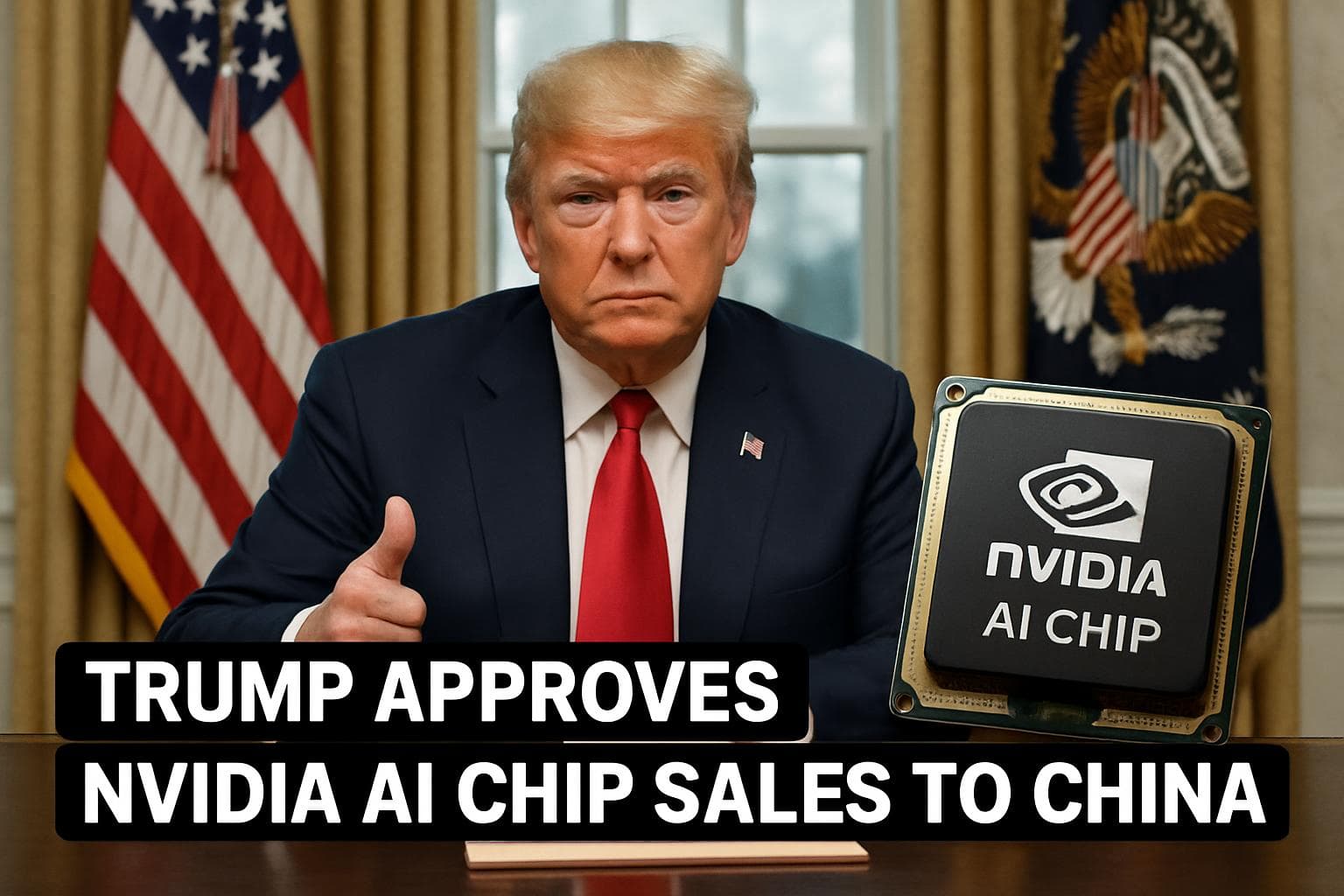
In a significant policy shift, President Donald Trump has granted Nvidia permission to sell its H200 AI chips to select customers in China, a move that has stirred both economic optimism and national security concerns. This decision, announced on Monday, marks a reversal of a previous ban and comes after persistent lobbying by Nvidia CEO Jensen Huang.
Economic and Security Balance
The authorization allows Nvidia, the world's leading chip manufacturer, to regain access to the lucrative Chinese market under the condition that 25% of its revenues from these sales are paid to the US government. This arrangement, which also applies to other American chip companies like AMD and Intel, aims to protect national security while fostering economic growth. "We will protect National Security, create American Jobs, and keep America's lead in AI," Trump stated on social media.
Industry and Political Reactions
Nvidia has welcomed the decision, emphasizing that it strikes a "thoughtful balance" beneficial to the US. However, the move has faced criticism from several Democratic senators, who argue that it risks empowering China's military and surveillance capabilities. Senators Elizabeth Warren and Andy Kim have voiced their concerns, urging the administration to reconsider the deal.
Geopolitical Implications
The decision comes amid heightened US-China tech tensions, with both nations vying for dominance in AI and semiconductor technologies. While the sale of H200 chips could bolster China's tech sector, experts like Alex Capri from the National University of Singapore suggest that Beijing will continue to pursue self-reliance in chip production. This development also highlights the strategic importance of rare earth minerals, predominantly processed in China, which are crucial for electronics manufacturing.
WHAT THIS MIGHT MEAN
The approval of Nvidia's chip sales to China could have far-reaching implications for US-China relations and the global tech landscape. In the short term, it may ease tensions and provide a temporary economic boost for Nvidia and other US chipmakers. However, the decision could also accelerate China's efforts to develop its semiconductor industry, potentially reducing its reliance on US technology in the long run.
Politically, the move may face further scrutiny from US lawmakers concerned about national security risks. As the Department of Commerce finalizes the details, the administration will need to navigate these domestic and international challenges carefully. The outcome of this policy shift could influence future negotiations on tech trade and national security between the two superpowers.
Related Articles
China Sets Lowest GDP Growth Target in Decades Amid Economic Challenges
Trump's New Tariff Strategy Sparks Global Trade Uncertainty

UK Faces Dilemmas Amid Iran Conflict and China Spying Allegations

Tech Giants Pledge to Cover AI Data Center Energy Costs Amid Rising Electricity Concerns

US Supreme Court Ruling Sparks Trade Uncertainty in Asia and Beyond

Congress Subpoenas Attorney General Bondi in Epstein Investigation
Trump Approves Nvidia AI Chip Sales to China Amidst Geopolitical Tensions
In This Article
 Daniel Rivera| Published
 HIGHLIGHTS
- President Trump has authorized Nvidia to sell its H200 AI chips to approved customers in China, reversing a previous ban.
- Nvidia will pay 25% of its Chinese revenues to the US government as part of the deal.
- The decision follows extensive lobbying by Nvidia CEO Jensen Huang and has sparked criticism from some US lawmakers.
- The move aims to balance national security with economic interests, amid ongoing US-China tech tensions.
- China's tech sector is expected to benefit, but Beijing continues to push for domestic chip development.
In a significant policy shift, President Donald Trump has granted Nvidia permission to sell its H200 AI chips to select customers in China, a move that has stirred both economic optimism and national security concerns. This decision, announced on Monday, marks a reversal of a previous ban and comes after persistent lobbying by Nvidia CEO Jensen Huang.
Economic and Security Balance
The authorization allows Nvidia, the world's leading chip manufacturer, to regain access to the lucrative Chinese market under the condition that 25% of its revenues from these sales are paid to the US government. This arrangement, which also applies to other American chip companies like AMD and Intel, aims to protect national security while fostering economic growth. "We will protect National Security, create American Jobs, and keep America's lead in AI," Trump stated on social media.
Industry and Political Reactions
Nvidia has welcomed the decision, emphasizing that it strikes a "thoughtful balance" beneficial to the US. However, the move has faced criticism from several Democratic senators, who argue that it risks empowering China's military and surveillance capabilities. Senators Elizabeth Warren and Andy Kim have voiced their concerns, urging the administration to reconsider the deal.
Geopolitical Implications
The decision comes amid heightened US-China tech tensions, with both nations vying for dominance in AI and semiconductor technologies. While the sale of H200 chips could bolster China's tech sector, experts like Alex Capri from the National University of Singapore suggest that Beijing will continue to pursue self-reliance in chip production. This development also highlights the strategic importance of rare earth minerals, predominantly processed in China, which are crucial for electronics manufacturing.
WHAT THIS MIGHT MEAN
The approval of Nvidia's chip sales to China could have far-reaching implications for US-China relations and the global tech landscape. In the short term, it may ease tensions and provide a temporary economic boost for Nvidia and other US chipmakers. However, the decision could also accelerate China's efforts to develop its semiconductor industry, potentially reducing its reliance on US technology in the long run.
Politically, the move may face further scrutiny from US lawmakers concerned about national security risks. As the Department of Commerce finalizes the details, the administration will need to navigate these domestic and international challenges carefully. The outcome of this policy shift could influence future negotiations on tech trade and national security between the two superpowers.
Related Articles
China Sets Lowest GDP Growth Target in Decades Amid Economic Challenges
Trump's New Tariff Strategy Sparks Global Trade Uncertainty
UK Faces Dilemmas Amid Iran Conflict and China Spying Allegations
Tech Giants Pledge to Cover AI Data Center Energy Costs Amid Rising Electricity Concerns
US Supreme Court Ruling Sparks Trade Uncertainty in Asia and Beyond
Congress Subpoenas Attorney General Bondi in Epstein Investigation