
Trump Weighs Military Options as Iran Protests Intensify

In This Article
HIGHLIGHTS
- President Trump is considering military options in response to Iran's crackdown on protests, with airstrikes among the possibilities.
- The White House has reiterated its willingness to use "lethal force" if necessary, while emphasizing diplomacy as the first option.
- Trump announced a 25% tariff on any country doing business with Iran, intensifying economic pressure.
- The Iranian government has downplayed the protests, attributing them to "American-Zionist terrorism."
- Historical context, such as the failed 1980 US hostage rescue, influences current US military considerations.
As Iran faces its largest wave of protests since 2009, the Trump administration is contemplating a range of responses, including potential military action. President Trump has issued stern warnings to Iran's leadership, emphasizing that the US is prepared to use "lethal force" if necessary. This comes amid violent crackdowns on demonstrators in Iran, which have drawn international attention and condemnation.
US Military Options on the Table
The White House has made it clear that while diplomacy remains the preferred route, military options are being actively considered. Airstrikes are among the possibilities, as President Trump seeks to respond to the Iranian regime's actions. "He’s made it quite clear he certainly doesn’t want to see people being killed in the streets of Tehran," said White House Press Secretary Karoline Leavitt, highlighting the administration's stance.
Economic Measures and Historical Context
In addition to military considerations, President Trump has announced a 25% tariff on any country engaging in business with Iran, aiming to further isolate the Islamic Republic economically. This move underscores the administration's strategy of exerting maximum pressure on Tehran. The historical backdrop of US-Iran relations, including the failed 1980 hostage rescue mission, looms large in current decision-making, reminding the administration of the complexities involved in military interventions.
Iran's Response and International Reactions
The Iranian government has sought to downplay the protests, attributing them to "American-Zionist terrorism." Despite these claims, the unrest continues to challenge the regime's authority. The international community watches closely as the situation unfolds, with many nations urging restraint and dialogue.
WHAT THIS MIGHT MEAN
The Trump administration's decision on how to respond to the Iranian protests could have significant implications for US-Iran relations. A military intervention, while demonstrating US resolve, risks escalating tensions and potentially drawing the region into further conflict. Conversely, a focus on diplomatic solutions could open pathways for negotiation, though it may be perceived as a sign of weakness by hardliners in Tehran.
Economic measures, such as the newly announced tariffs, are likely to increase pressure on Iran, potentially leading to further unrest within the country. However, these actions could also strain US relations with allies who maintain economic ties with Iran. As the situation evolves, the administration's choices will be closely scrutinized for their impact on regional stability and global diplomatic dynamics.
Related Articles
Intensified US-Israel Strikes on Iran Spark Global Outcry
US-Iran Tensions Escalate Amid Renewed Nuclear Talks and Protests
US and Israel Intensify Military Campaign as Iran's Capabilities Dwindle
Spain's Sánchez Stands Firm Against Trump's Trade Threat Over Iran Stance

Tech Giants Pledge to Cover AI Data Center Energy Costs Amid Rising Electricity Concerns
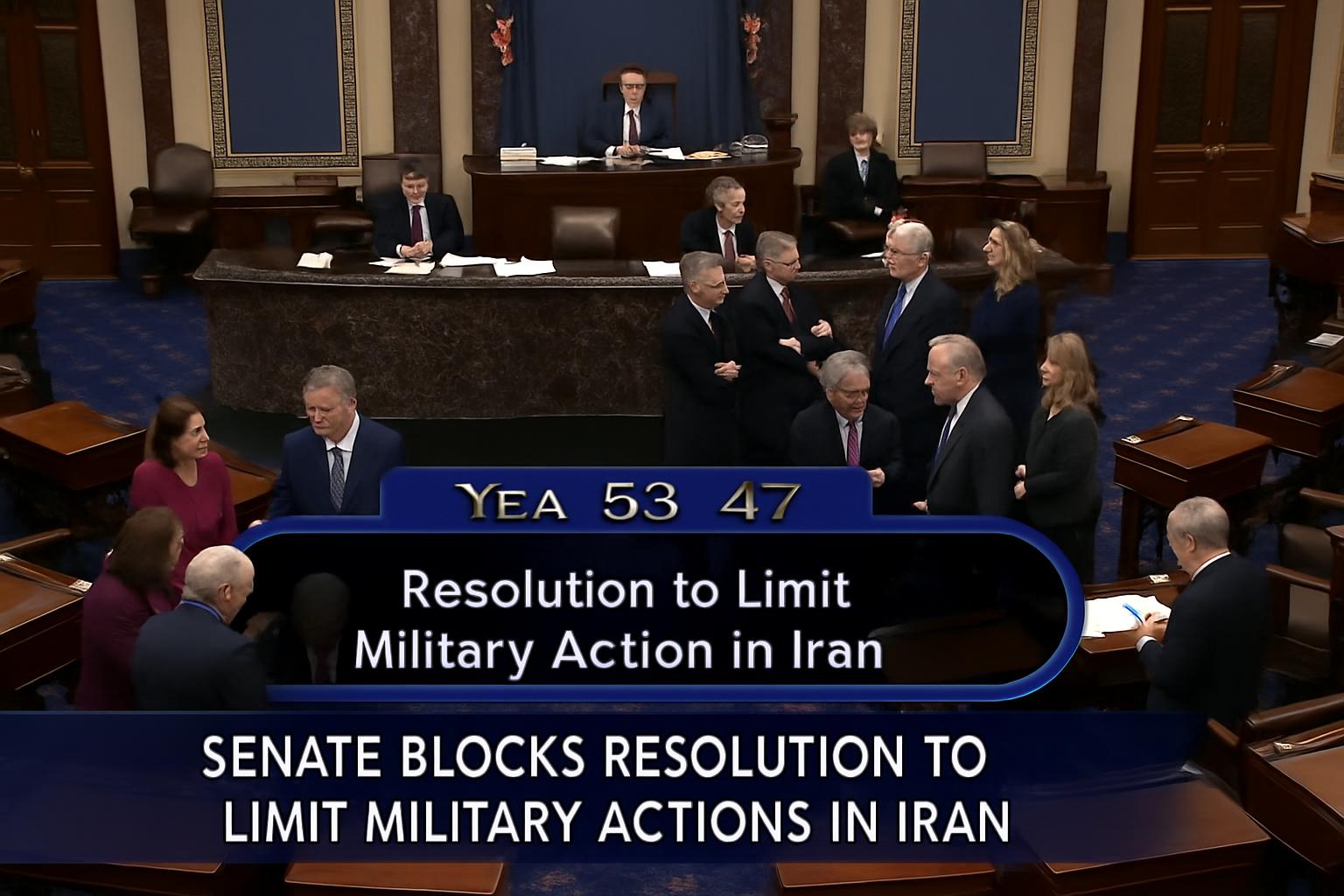
Senate Blocks Resolution to Limit Trump's Military Actions in Iran
Trump Weighs Military Options as Iran Protests Intensify
In This Article
 Ethan Brooks| Published
 HIGHLIGHTS
- President Trump is considering military options in response to Iran's crackdown on protests, with airstrikes among the possibilities.
- The White House has reiterated its willingness to use "lethal force" if necessary, while emphasizing diplomacy as the first option.
- Trump announced a 25% tariff on any country doing business with Iran, intensifying economic pressure.
- The Iranian government has downplayed the protests, attributing them to "American-Zionist terrorism."
- Historical context, such as the failed 1980 US hostage rescue, influences current US military considerations.
As Iran faces its largest wave of protests since 2009, the Trump administration is contemplating a range of responses, including potential military action. President Trump has issued stern warnings to Iran's leadership, emphasizing that the US is prepared to use "lethal force" if necessary. This comes amid violent crackdowns on demonstrators in Iran, which have drawn international attention and condemnation.
US Military Options on the Table
The White House has made it clear that while diplomacy remains the preferred route, military options are being actively considered. Airstrikes are among the possibilities, as President Trump seeks to respond to the Iranian regime's actions. "He’s made it quite clear he certainly doesn’t want to see people being killed in the streets of Tehran," said White House Press Secretary Karoline Leavitt, highlighting the administration's stance.
Economic Measures and Historical Context
In addition to military considerations, President Trump has announced a 25% tariff on any country engaging in business with Iran, aiming to further isolate the Islamic Republic economically. This move underscores the administration's strategy of exerting maximum pressure on Tehran. The historical backdrop of US-Iran relations, including the failed 1980 hostage rescue mission, looms large in current decision-making, reminding the administration of the complexities involved in military interventions.
Iran's Response and International Reactions
The Iranian government has sought to downplay the protests, attributing them to "American-Zionist terrorism." Despite these claims, the unrest continues to challenge the regime's authority. The international community watches closely as the situation unfolds, with many nations urging restraint and dialogue.
WHAT THIS MIGHT MEAN
The Trump administration's decision on how to respond to the Iranian protests could have significant implications for US-Iran relations. A military intervention, while demonstrating US resolve, risks escalating tensions and potentially drawing the region into further conflict. Conversely, a focus on diplomatic solutions could open pathways for negotiation, though it may be perceived as a sign of weakness by hardliners in Tehran.
Economic measures, such as the newly announced tariffs, are likely to increase pressure on Iran, potentially leading to further unrest within the country. However, these actions could also strain US relations with allies who maintain economic ties with Iran. As the situation evolves, the administration's choices will be closely scrutinized for their impact on regional stability and global diplomatic dynamics.
Related Articles
Intensified US-Israel Strikes on Iran Spark Global Outcry
US-Iran Tensions Escalate Amid Renewed Nuclear Talks and Protests
US and Israel Intensify Military Campaign as Iran's Capabilities Dwindle
Spain's Sánchez Stands Firm Against Trump's Trade Threat Over Iran Stance
Tech Giants Pledge to Cover AI Data Center Energy Costs Amid Rising Electricity Concerns
Senate Blocks Resolution to Limit Trump's Military Actions in Iran