
Trump Faces Economic Criticism Amid Controversial Remarks at Pennsylvania Rally
In This Article
HIGHLIGHTS
- President Donald Trump addressed economic concerns in a rally in Pennsylvania, claiming prices are falling, despite mixed economic data.
- Trump blamed Democrats for the affordability crisis, labeling it a "hoax," while his approval rating on the economy has dropped.
- The US inflation rate stood at 3% in September, with consumer confidence at its lowest since April.
- Trump made controversial remarks about immigrants, including false claims about Congresswoman Ilhan Omar.
- Democrats have capitalized on economic dissatisfaction, gaining ground in recent elections, posing challenges for Republicans in upcoming midterms.
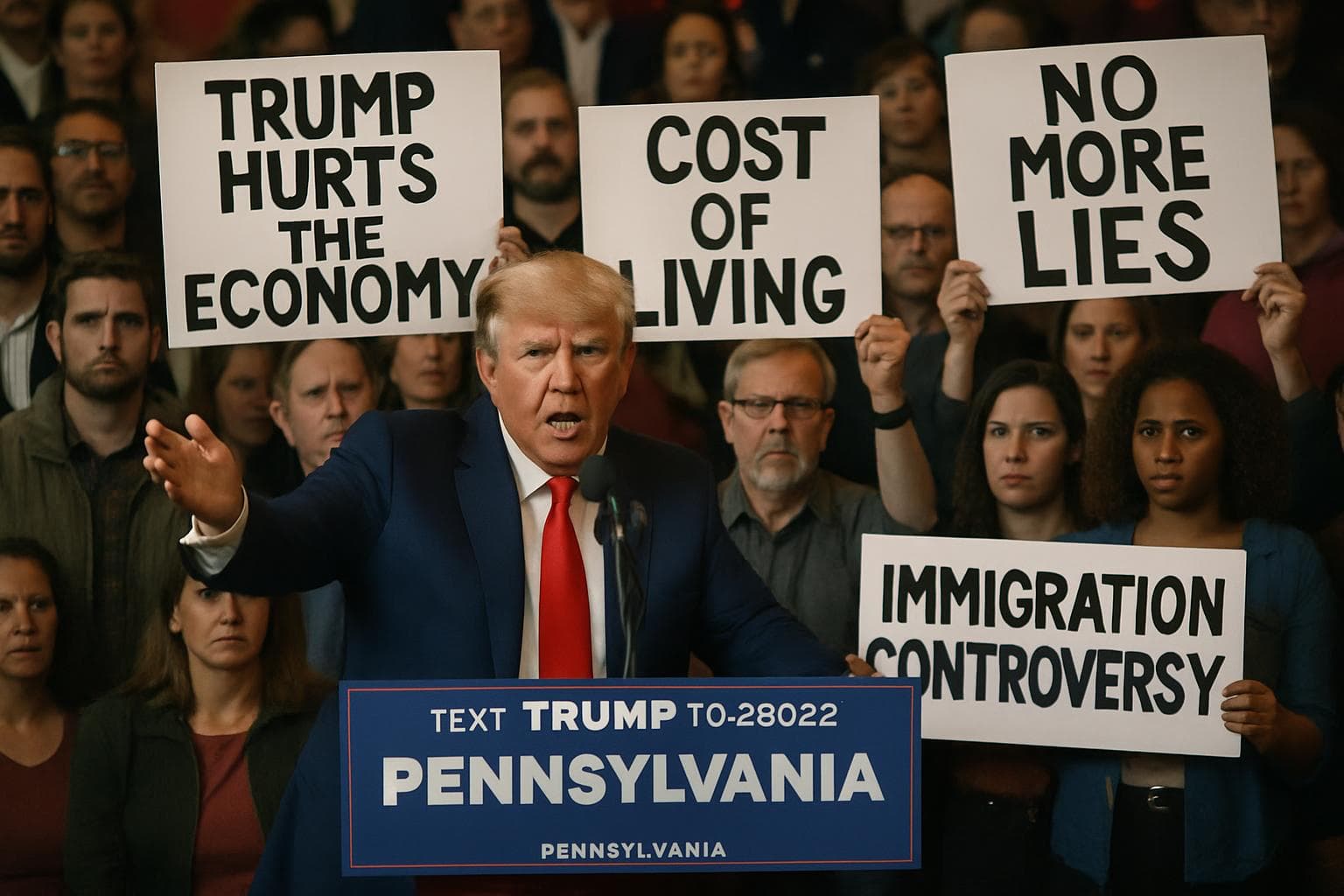
President Donald Trump took to the stage in Mount Pocono, Pennsylvania, on Tuesday, aiming to bolster his economic record amid growing voter concerns over the rising cost of living. The rally, held in a crucial swing state, was part of a broader effort by the White House to address economic anxieties ahead of next year's midterm elections.
Economic Claims and Public Sentiment
During the rally, Trump asserted that consumer prices are "tremendously" falling, despite economic indicators showing a more complex picture. While gas and egg prices have decreased, other essential goods remain costly, contributing to public dissatisfaction. The US inflation rate was recorded at 3% in September, and consumer confidence has plummeted to its lowest since April. Trump's approval rating on economic management has also seen a decline, with a CBS News/YouGov poll indicating a 15-point drop since March.
Political Blame and Policy Defense
Trump attributed the affordability crisis to Democratic policies, dismissing it as a "hoax" orchestrated by his political opponents. He emphasized his administration's efforts to reduce costs through tariff removals and regulatory rollbacks. However, Democrats have effectively leveraged economic discontent in recent elections, securing victories in states like Virginia and New Jersey, and posing a significant challenge for Republicans in the upcoming midterms.
Controversial Remarks on Immigration
The rally was not without controversy, as Trump made inflammatory remarks about immigrants, particularly targeting Congresswoman Ilhan Omar. He repeated unfounded claims about Omar's immigration status, prompting xenophobic chants from the crowd. These comments have drawn widespread criticism and highlight ongoing tensions over immigration policy in the US.
Economic Outlook and Public Perception
Despite Trump's optimistic portrayal, economic data presents a mixed outlook. The stock market remains near record highs, and the economy is projected to grow by 1.9% this year, albeit slower than the previous year's 2.8%. However, many Americans, like Alaina Hunt from Oklahoma City, continue to feel the pinch, with rising grocery bills and job market challenges exacerbating financial strains.
WHAT THIS MIGHT MEAN
As the US approaches the midterm elections, the economic narrative will likely remain a focal point for both parties. Trump's efforts to reshape the economic discourse may face hurdles if public sentiment continues to reflect dissatisfaction with affordability issues. The Democrats' recent electoral successes suggest that economic concerns could be a decisive factor in the upcoming political contests.
Trump's controversial remarks on immigration could further polarize voters, potentially energizing his base while alienating moderate constituents. The ongoing debate over economic policies and immigration will likely shape the political landscape in the lead-up to the 2026 midterms, with both parties vying to address the pressing concerns of American voters.
Images from the Web


Related Articles
Tech Giants Pledge to Cover AI Data Center Energy Costs Amid Rising Electricity Concerns
Diplomatic Tensions Rise as Trump Criticizes Starmer's Iran Policy
UK-Iran Tensions: Starmer Defends Cautious Approach Amid Trump Criticism
Spain's Sánchez Stands Firm Against Trump's Trade Threat Over Iran Stance

Canada and Australia Forge Strategic Partnership Amid Global Uncertainty
Congress Subpoenas Attorney General Bondi in Epstein Investigation
Trump Faces Economic Criticism Amid Controversial Remarks at Pennsylvania Rally
In This Article
 Daniel Rivera| Published
 HIGHLIGHTS
- President Donald Trump addressed economic concerns in a rally in Pennsylvania, claiming prices are falling, despite mixed economic data.
- Trump blamed Democrats for the affordability crisis, labeling it a "hoax," while his approval rating on the economy has dropped.
- The US inflation rate stood at 3% in September, with consumer confidence at its lowest since April.
- Trump made controversial remarks about immigrants, including false claims about Congresswoman Ilhan Omar.
- Democrats have capitalized on economic dissatisfaction, gaining ground in recent elections, posing challenges for Republicans in upcoming midterms.
President Donald Trump took to the stage in Mount Pocono, Pennsylvania, on Tuesday, aiming to bolster his economic record amid growing voter concerns over the rising cost of living. The rally, held in a crucial swing state, was part of a broader effort by the White House to address economic anxieties ahead of next year's midterm elections.
Economic Claims and Public Sentiment
During the rally, Trump asserted that consumer prices are "tremendously" falling, despite economic indicators showing a more complex picture. While gas and egg prices have decreased, other essential goods remain costly, contributing to public dissatisfaction. The US inflation rate was recorded at 3% in September, and consumer confidence has plummeted to its lowest since April. Trump's approval rating on economic management has also seen a decline, with a CBS News/YouGov poll indicating a 15-point drop since March.
Political Blame and Policy Defense
Trump attributed the affordability crisis to Democratic policies, dismissing it as a "hoax" orchestrated by his political opponents. He emphasized his administration's efforts to reduce costs through tariff removals and regulatory rollbacks. However, Democrats have effectively leveraged economic discontent in recent elections, securing victories in states like Virginia and New Jersey, and posing a significant challenge for Republicans in the upcoming midterms.
Controversial Remarks on Immigration
The rally was not without controversy, as Trump made inflammatory remarks about immigrants, particularly targeting Congresswoman Ilhan Omar. He repeated unfounded claims about Omar's immigration status, prompting xenophobic chants from the crowd. These comments have drawn widespread criticism and highlight ongoing tensions over immigration policy in the US.
Economic Outlook and Public Perception
Despite Trump's optimistic portrayal, economic data presents a mixed outlook. The stock market remains near record highs, and the economy is projected to grow by 1.9% this year, albeit slower than the previous year's 2.8%. However, many Americans, like Alaina Hunt from Oklahoma City, continue to feel the pinch, with rising grocery bills and job market challenges exacerbating financial strains.
WHAT THIS MIGHT MEAN
As the US approaches the midterm elections, the economic narrative will likely remain a focal point for both parties. Trump's efforts to reshape the economic discourse may face hurdles if public sentiment continues to reflect dissatisfaction with affordability issues. The Democrats' recent electoral successes suggest that economic concerns could be a decisive factor in the upcoming political contests.
Trump's controversial remarks on immigration could further polarize voters, potentially energizing his base while alienating moderate constituents. The ongoing debate over economic policies and immigration will likely shape the political landscape in the lead-up to the 2026 midterms, with both parties vying to address the pressing concerns of American voters.
Images from the Web
Related Articles
Tech Giants Pledge to Cover AI Data Center Energy Costs Amid Rising Electricity Concerns
Diplomatic Tensions Rise as Trump Criticizes Starmer's Iran Policy
UK-Iran Tensions: Starmer Defends Cautious Approach Amid Trump Criticism
Spain's Sánchez Stands Firm Against Trump's Trade Threat Over Iran Stance
Canada and Australia Forge Strategic Partnership Amid Global Uncertainty
Congress Subpoenas Attorney General Bondi in Epstein Investigation