
Trump Imposes 25% Tariff Amid Iran Protests and Internet Blackout
In This Article
HIGHLIGHTS
- Donald Trump announced a 25% tariff on countries trading with Iran, potentially escalating US-China trade tensions.
- Iran is experiencing a severe internet blackout amid widespread anti-government protests, with limited access via Starlink.
- The White House signals that diplomacy remains a priority, despite considering military options against Iran.
- Iran's Supreme Leader warns the US against relying on "treacherous mercenaries" amid pro-government rallies.
- Communication between US and Iranian officials continues, with differing public and private messages.
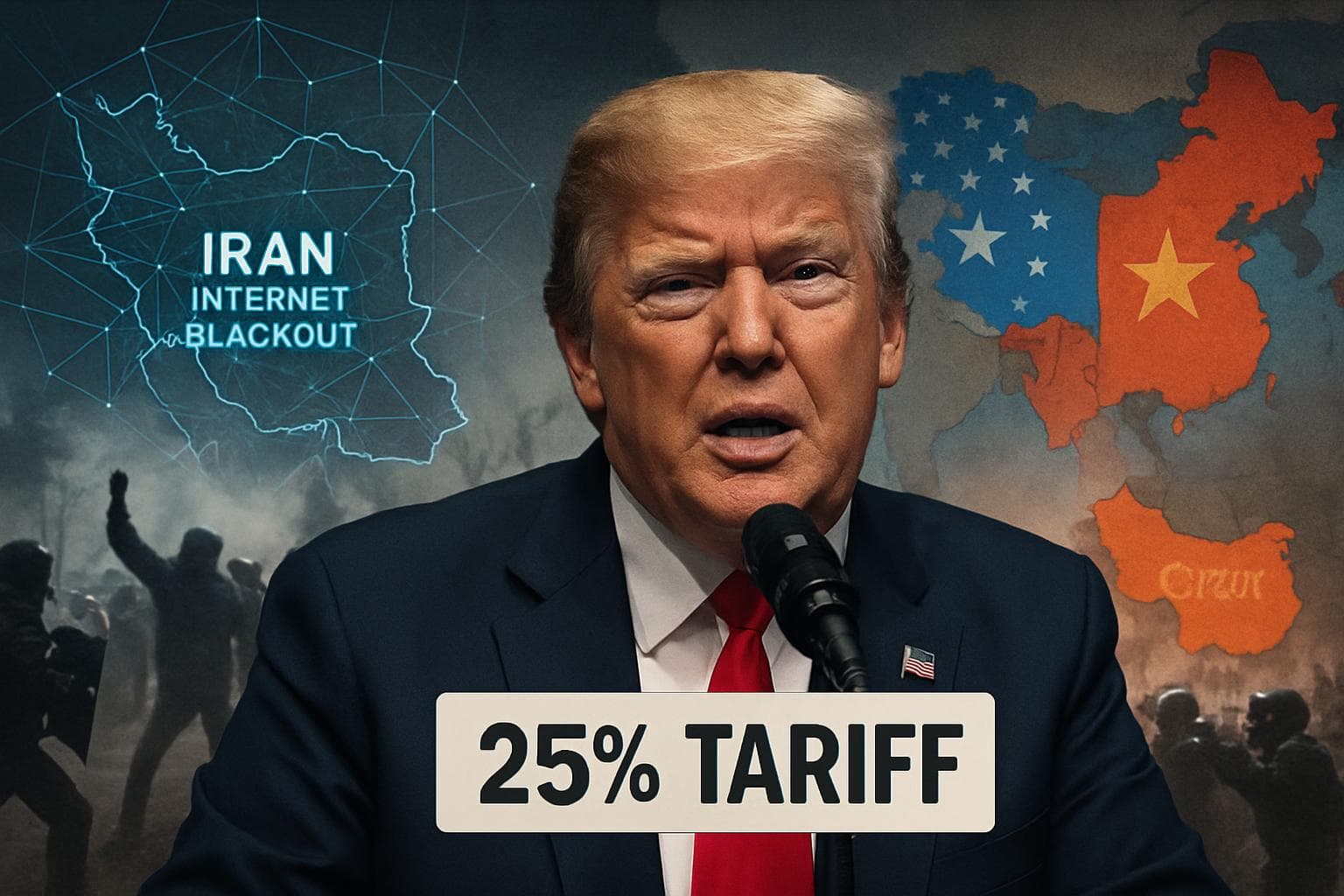
In a move that could heighten tensions between the United States and China, former President Donald Trump has announced a 25% tariff on countries conducting business with Iran. This decision comes as Iran faces its largest anti-government protests in years, coupled with a severe internet blackout that has left millions disconnected.
Iran's Internet Blackout and Protests
The protests in Iran, sparked by economic grievances and political repression, have led to a near-total shutdown of internet services. According to NetBlocks, the blackout has surpassed 108 hours, severely limiting communication within and outside the country. Despite this, some Iranians have managed to access the internet through Elon Musk's Starlink service, which remains operational in certain areas despite government bans.
US Tariffs and Diplomatic Stance
Trump's tariff announcement, made via Truth Social, is "effective immediately" and targets countries like China, Iran's largest trading partner. The tariffs could exacerbate existing trade tensions between the US and China, with Beijing opposing what it calls "illicit unilateral sanctions." Meanwhile, the White House maintains that diplomacy is the preferred approach, although military options remain on the table.
Iran's Response and Internal Dynamics
Iran's Supreme Leader Ayatollah Ali Khamenei has praised pro-government rallies, framing them as a warning to the US. He urged American politicians to "end their deceit" and not rely on "treacherous mercenaries." Despite the public rhetoric, the White House notes that Iran's private communications with the US differ significantly, suggesting potential avenues for negotiation.
Ongoing Communications and Future Prospects
Communication channels between the US and Iran remain open, with both sides expressing interest in dialogue. The situation remains fluid, with the potential for both diplomatic breakthroughs and further escalation.
WHAT THIS MIGHT MEAN
The imposition of tariffs by the US could lead to a new phase of economic confrontation with China, potentially affecting global markets. If diplomatic efforts between the US and Iran progress, it could pave the way for easing tensions and possibly revisiting nuclear negotiations. However, the ongoing protests and government crackdown in Iran may complicate these efforts, as internal instability could limit Tehran's willingness or ability to engage in meaningful dialogue. Experts suggest that the international community's response will be crucial in shaping the next steps in US-Iran relations.
Related Articles

UK Faces Dilemmas Amid Iran Conflict and China Spying Allegations
Intensified US-Israel Strikes on Iran Spark Global Outcry
Senate Blocks Resolution to Limit Trump's Military Actions in Iran
China Sets Lowest GDP Growth Target in Decades Amid Economic Challenges
Elon Musk Defends Tweets in Twitter Takeover Trial
US and Israel Intensify Military Campaign as Iran's Capabilities Dwindle
Trump Imposes 25% Tariff Amid Iran Protests and Internet Blackout
In This Article
 Ethan Brooks| Published
 HIGHLIGHTS
- Donald Trump announced a 25% tariff on countries trading with Iran, potentially escalating US-China trade tensions.
- Iran is experiencing a severe internet blackout amid widespread anti-government protests, with limited access via Starlink.
- The White House signals that diplomacy remains a priority, despite considering military options against Iran.
- Iran's Supreme Leader warns the US against relying on "treacherous mercenaries" amid pro-government rallies.
- Communication between US and Iranian officials continues, with differing public and private messages.
In a move that could heighten tensions between the United States and China, former President Donald Trump has announced a 25% tariff on countries conducting business with Iran. This decision comes as Iran faces its largest anti-government protests in years, coupled with a severe internet blackout that has left millions disconnected.
Iran's Internet Blackout and Protests
The protests in Iran, sparked by economic grievances and political repression, have led to a near-total shutdown of internet services. According to NetBlocks, the blackout has surpassed 108 hours, severely limiting communication within and outside the country. Despite this, some Iranians have managed to access the internet through Elon Musk's Starlink service, which remains operational in certain areas despite government bans.
US Tariffs and Diplomatic Stance
Trump's tariff announcement, made via Truth Social, is "effective immediately" and targets countries like China, Iran's largest trading partner. The tariffs could exacerbate existing trade tensions between the US and China, with Beijing opposing what it calls "illicit unilateral sanctions." Meanwhile, the White House maintains that diplomacy is the preferred approach, although military options remain on the table.
Iran's Response and Internal Dynamics
Iran's Supreme Leader Ayatollah Ali Khamenei has praised pro-government rallies, framing them as a warning to the US. He urged American politicians to "end their deceit" and not rely on "treacherous mercenaries." Despite the public rhetoric, the White House notes that Iran's private communications with the US differ significantly, suggesting potential avenues for negotiation.
Ongoing Communications and Future Prospects
Communication channels between the US and Iran remain open, with both sides expressing interest in dialogue. The situation remains fluid, with the potential for both diplomatic breakthroughs and further escalation.
WHAT THIS MIGHT MEAN
The imposition of tariffs by the US could lead to a new phase of economic confrontation with China, potentially affecting global markets. If diplomatic efforts between the US and Iran progress, it could pave the way for easing tensions and possibly revisiting nuclear negotiations. However, the ongoing protests and government crackdown in Iran may complicate these efforts, as internal instability could limit Tehran's willingness or ability to engage in meaningful dialogue. Experts suggest that the international community's response will be crucial in shaping the next steps in US-Iran relations.
Related Articles
UK Faces Dilemmas Amid Iran Conflict and China Spying Allegations
Intensified US-Israel Strikes on Iran Spark Global Outcry
Senate Blocks Resolution to Limit Trump's Military Actions in Iran
China Sets Lowest GDP Growth Target in Decades Amid Economic Challenges
Elon Musk Defends Tweets in Twitter Takeover Trial
US and Israel Intensify Military Campaign as Iran's Capabilities Dwindle