
Trump Raises Tariffs on South Korean Imports Amid Trade Deal Dispute
In This Article
HIGHLIGHTS
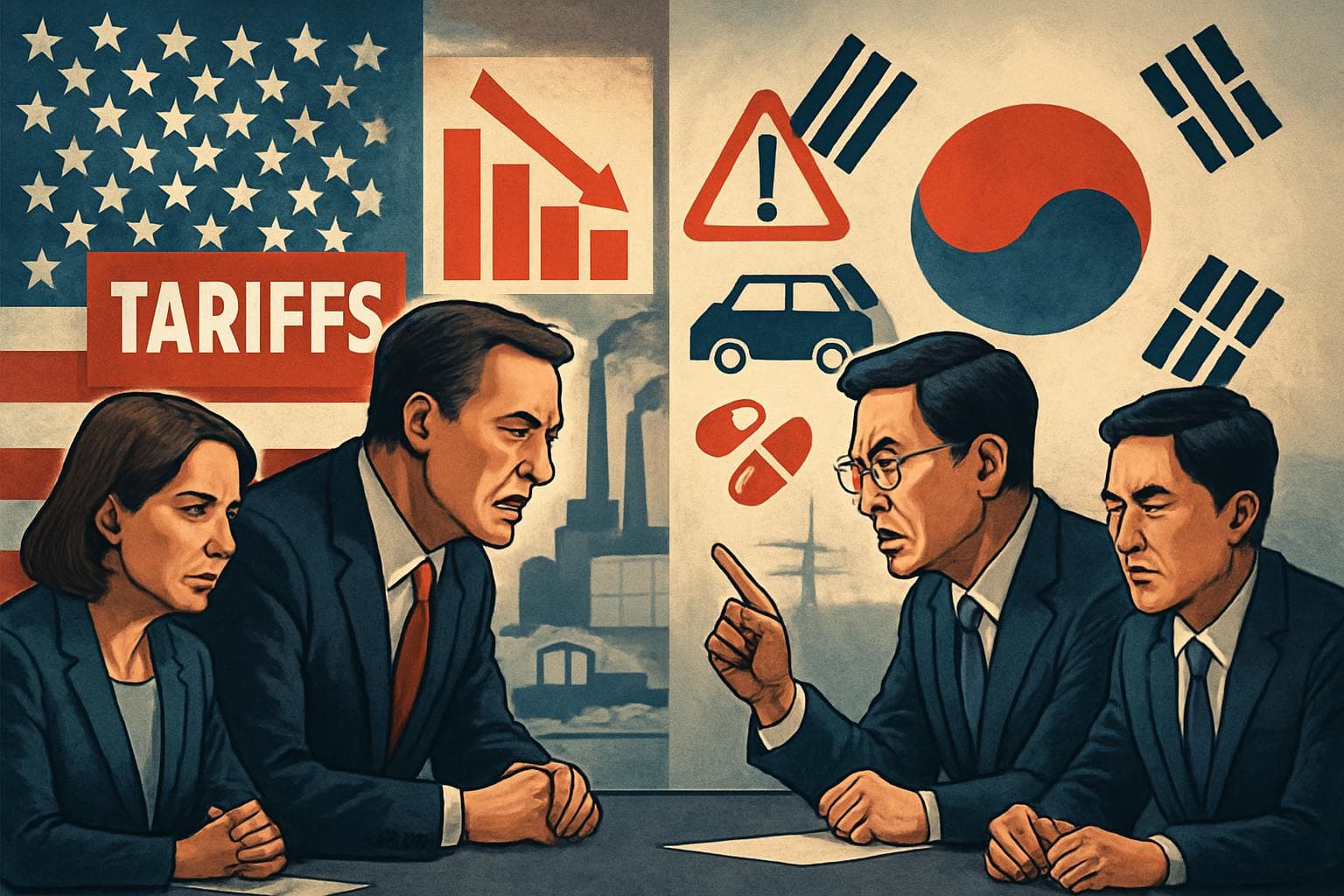
- President Trump announced a tariff increase on South Korean imports from 15% to 25%, citing delays in South Korea's legislative approval of a trade deal.
- The tariff hike affects products like automobiles, lumber, and pharmaceuticals, impacting US companies importing these goods.
- South Korea's government was not officially notified of the tariff increase and seeks urgent discussions with the US.
- The trade deal, agreed upon last October, includes a $350 billion investment pledge from South Korea to the US.
- South Korea's National Assembly is reviewing the trade agreement, with a vote expected in February.
In a move that has stirred international trade tensions, US President Donald Trump announced an increase in tariffs on South Korean imports, raising them from 15% to 25%. This decision comes as a response to what Trump describes as South Korea's failure to expedite legislative approval of a trade agreement reached last year. The tariff hike targets a range of products, including automobiles, lumber, and pharmaceuticals, and has sent ripples through the markets, initially causing a dip in South Korean carmaker shares.
Background and Implications
The trade agreement, finalized in October, involved a significant $350 billion investment commitment from South Korea to the United States. In return, the US agreed to reduce tariffs on certain South Korean goods. However, the deal has been in a state of limbo, with South Korea's National Assembly yet to ratify it. The agreement was submitted for review on November 26, and a vote is anticipated in February.
South Korea's government expressed surprise at the tariff announcement, as it had not received formal notification from the US. The Blue House, South Korea's presidential office, has reiterated its commitment to the trade deal and is seeking urgent talks with US officials. Industry Minister Kim Jung-kwan is expected to travel to Washington to discuss the issue with US Commerce Secretary Howard Lutnick.
Economic and Political Reactions
The tariff increase has raised concerns among US importers who will bear the cost of the 25% tax on South Korean goods. The auto industry, a significant component of South Korea's exports to the US, is particularly affected. The move also underscores Trump's broader strategy of using tariffs as a tool in foreign policy, a tactic he has employed with other nations, including Canada and Denmark.
South Korea's ruling party has pledged to work with the opposition to expedite the legislative process required to implement the trade deal. Officials are considering consolidating several pending bills into a single law to facilitate its passage.
WHAT THIS MIGHT MEAN
The escalation in tariffs could strain US-South Korea relations, potentially impacting future trade negotiations. If South Korea's National Assembly approves the trade deal in February, it may pave the way for a resolution and the eventual lifting of the increased tariffs. However, prolonged delays could lead to further economic repercussions for both nations, particularly in the automotive sector.
Experts suggest that the situation highlights the complexities of international trade policy and the challenges of aligning domestic legislative processes with international agreements. The outcome of the ongoing discussions between South Korean and US officials will be crucial in determining the future trajectory of their trade relations.
Related Articles
China Sets Lowest GDP Growth Target in Decades Amid Economic Challenges

Tech Giants Pledge to Cover AI Data Center Energy Costs Amid Rising Electricity Concerns

Cuba Faces Widespread Blackout Amid Deepening Fuel Crisis

UK Faces Dilemmas Amid Iran Conflict and China Spying Allegations
Canada Calls for De-escalation Amid US-Israel Strikes on Iran
Canada and Australia Forge Strategic Partnership Amid Global Uncertainty
Trump Raises Tariffs on South Korean Imports Amid Trade Deal Dispute
In This Article
 Daniel Rivera| Published
 HIGHLIGHTS
- President Trump announced a tariff increase on South Korean imports from 15% to 25%, citing delays in South Korea's legislative approval of a trade deal.
- The tariff hike affects products like automobiles, lumber, and pharmaceuticals, impacting US companies importing these goods.
- South Korea's government was not officially notified of the tariff increase and seeks urgent discussions with the US.
- The trade deal, agreed upon last October, includes a $350 billion investment pledge from South Korea to the US.
- South Korea's National Assembly is reviewing the trade agreement, with a vote expected in February.
In a move that has stirred international trade tensions, US President Donald Trump announced an increase in tariffs on South Korean imports, raising them from 15% to 25%. This decision comes as a response to what Trump describes as South Korea's failure to expedite legislative approval of a trade agreement reached last year. The tariff hike targets a range of products, including automobiles, lumber, and pharmaceuticals, and has sent ripples through the markets, initially causing a dip in South Korean carmaker shares.
Background and Implications
The trade agreement, finalized in October, involved a significant $350 billion investment commitment from South Korea to the United States. In return, the US agreed to reduce tariffs on certain South Korean goods. However, the deal has been in a state of limbo, with South Korea's National Assembly yet to ratify it. The agreement was submitted for review on November 26, and a vote is anticipated in February.
South Korea's government expressed surprise at the tariff announcement, as it had not received formal notification from the US. The Blue House, South Korea's presidential office, has reiterated its commitment to the trade deal and is seeking urgent talks with US officials. Industry Minister Kim Jung-kwan is expected to travel to Washington to discuss the issue with US Commerce Secretary Howard Lutnick.
Economic and Political Reactions
The tariff increase has raised concerns among US importers who will bear the cost of the 25% tax on South Korean goods. The auto industry, a significant component of South Korea's exports to the US, is particularly affected. The move also underscores Trump's broader strategy of using tariffs as a tool in foreign policy, a tactic he has employed with other nations, including Canada and Denmark.
South Korea's ruling party has pledged to work with the opposition to expedite the legislative process required to implement the trade deal. Officials are considering consolidating several pending bills into a single law to facilitate its passage.
WHAT THIS MIGHT MEAN
The escalation in tariffs could strain US-South Korea relations, potentially impacting future trade negotiations. If South Korea's National Assembly approves the trade deal in February, it may pave the way for a resolution and the eventual lifting of the increased tariffs. However, prolonged delays could lead to further economic repercussions for both nations, particularly in the automotive sector.
Experts suggest that the situation highlights the complexities of international trade policy and the challenges of aligning domestic legislative processes with international agreements. The outcome of the ongoing discussions between South Korean and US officials will be crucial in determining the future trajectory of their trade relations.
Related Articles
China Sets Lowest GDP Growth Target in Decades Amid Economic Challenges
Tech Giants Pledge to Cover AI Data Center Energy Costs Amid Rising Electricity Concerns
Cuba Faces Widespread Blackout Amid Deepening Fuel Crisis
UK Faces Dilemmas Amid Iran Conflict and China Spying Allegations
Canada Calls for De-escalation Amid US-Israel Strikes on Iran
Canada and Australia Forge Strategic Partnership Amid Global Uncertainty